"Six Major Crowd Crush Accidents in the Past 60 Years... Systematic Crowd Management Needed"
Seoul Institute 31st Anniversary Seminar
"New and Complex Disaster Countermeasures Must Be Established"
Ahead of the first anniversary of the Itaewon tragedy, there have been calls to classify large-scale crowd accidents in major cities as complex disasters, emphasizing the necessity of cooperation among various response entities. It is argued that vulnerabilities to mass gatherings should be assessed in advance, and based on this, new and complex disaster countermeasures should be established.
On the afternoon of the 12th, the Seoul Institute will hold a seminar commemorating its 31st anniversary under the theme "Preparing for the City's Tomorrow." At the seminar, Won Jong-seok, a research fellow at the Seoul Institute, is scheduled to present on the topic of "Seoul City's Crowd Safety Management Strategy." This presentation is based on research conducted by the Seoul Institute immediately after last year's Itaewon tragedy. The results were delivered to the Seoul Metropolitan Government earlier this year, which is currently utilizing them to develop and implement various countermeasures.

According to the presentation, there have been 14 cases of crowd crush accidents nationwide over the past 60 years, with 6 of these occurring in Seoul. Given that crowd crush accidents in Seoul happen roughly once every 10 years, there is a clear need for response measures. Research fellow Won stated, "The Itaewon tragedy was a mass gathering disaster different from the usual crowd crushes at cultural, religious, or sports events. It did not occur at a single event venue, and the causes of the spread of damage were complex, so it should be regarded as a complex disaster requiring a tailored response strategy."
Citizens also believe that urgent measures are needed to address crowd accidents. The institute conducted a survey from August 3 to 16 this year, revealing that 43.9% of respondents somewhat agreed and 14.4% strongly agreed with the statement, "Do you agree that a crowd accident will recur within a year?"
Regarding "places where crowd accidents are feared," 70.6% identified "areas around large-scale festivals, events, and performance venues (such as alleyways)" as the highest risk. As for responsibility in the event of a crowd accident, 32.6% pointed to the "relevant local government," followed by 30.9% who indicated "the citizens involved." Additionally, areas such as Itaewon Antique Furniture Street, Hamilton Hotel vicinity, Gwangjang Market, Myeongdong Station, Hoehyeon Station, Hongdae Entrance Station, Sindorim Station, and Gangnam Station were cited as locations of concern for crowd accidents.

Research fellow Won reported that the study investigated the actual conditions of mass gatherings by examining resident population, event status, alleyway distribution, and on-site verification, and delivered these findings to the Seoul Metropolitan Government. Based on these results, Seoul plans to establish a database of vulnerability maps for mass gatherings and implement a prevention plan that includes expanding facilities capable of monitoring and managing safety.
Hot Picks Today
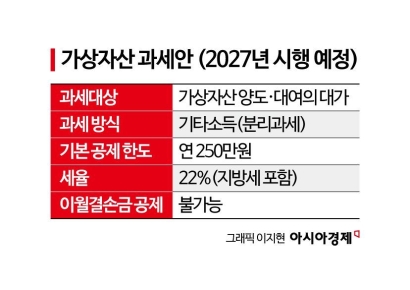 "Stocks Are Not Taxed, but Annual Crypto Gains Over 2.5 Million Won to Be Taxed Next Year... Investors Push Back"
- "Not Jealous of Winning the Lottery"... Entire Village Stunned as 200 Million Won Jackpot of Wild Ginseng Cluster Discovered at Jirisan
- "Even With a 90 Million Won Salary and Bonuses, It Doesn’t Feel Like Much"... A Latecomer Rookie Who Beat 70 to 1 Odds [Scientists Are Disappearing] ③
- General Strike D-1: Final Negotiations Between Samsung Electronics Labor and Management Over One Key Issue
- "How Did an Employee Who Loved Samsung End Up Like This?"... Past Video of Samsung Electronics Union Chairman Resurfaces
Furthermore, it was pointed out that mass gatherings can occur frequently and that vulnerable locations and situations vary by time, making cooperation among various response entities essential. Research fellow Won proposed, "A preemptive system must be established for unpredictable and organizer-less mass gatherings. The processes of information dissemination, on-site verification, and evacuation measures among initial response agencies, district offices, and the Seoul Metropolitan Government should be systematized."
© The Asia Business Daily(www.asiae.co.kr). All rights reserved.