Branch schools in officetels and commercial buildings... Seoul Metropolitan Office of Education promotes 'urban campus' initiative
Measures to Address Sharp Decline in Elementary School Enrollment
Lowering School Establishment Requirements
At Least 2 Classes per Grade and Only 1 Vice Principal
The Seoul Metropolitan Office of Education will establish 'urban campuses' in Seoul to respond to the decline in the number of students. The plan is to maintain the educational environment in the area by reorganizing existing schools or establishing new campuses for elementary schools facing the risk of consolidation due to a sharp decrease in student numbers.
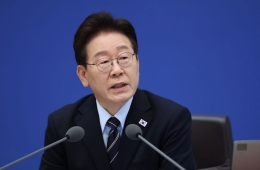
On the morning of the 12th, Cho Hee-yeon, Superintendent of the Seoul Metropolitan Office of Education, held a press conference at the Seoul Metropolitan Office of Education and announced the 'Basic Plan for the Establishment and Operation of Urban Campuses.' Urban campuses refer to branch school types under the Elementary and Secondary Education Act (Enforcement Decree). According to the Ministry of Education's branch school recommendation criteria, these include ▲schools operating multi-grade classes ▲schools with no new students in the past three years ▲schools where the number of staff exceeds the number of students. The primary target for urban campuses is elementary schools.
Considering the trend of rapidly declining school-age population and the regional characteristics of Seoul where housing development projects occur, the Seoul Metropolitan Office of Education presented two types (reorganization type, new establishment type) and six models. The 'reorganization type' includes the 'Second Campus School,' which reorganizes the operation method into a campus form while maintaining existing school facilities, and the 'School-Residential Complex,' which establishes a school on one side of the site and supplies public housing in the remaining space. To promote the School-Residential Complex, the Seoul Metropolitan Office of Education is currently discussing details with the Seoul Housing and Communities Corporation (SH) and the Ministry of Land, Infrastructure and Transport.
![[Image source=Yonhap News]](http://www.asiae.co.kr/news/img_view.htm?img=2023101208513612469_1697068296.jpg)
They also proposed a 'new establishment type' that establishes an urban campus when the number of students does not meet the demand for establishing a regular school. If school land has already been secured in a development project area, a 'Second Campus School' can be established. A 'School-Residential Complex,' where a cooperative independently secures school land within an apartment development area and donates it, can also be established.
When it is difficult to establish a school or secure school land nearby, a 'purchase-type school' model can be promoted, which involves purchasing nearby officetels or commercial buildings to establish an urban campus. There is also a 'Public Facility Complex School,' which is established by obtaining permission to use public facilities operated by autonomous districts.
To establish an urban campus, the number of classes must be at least 12 and no more than 24. The number of students per class should be 15 to 25, with 15 to 20 students in old downtown and population-decreasing areas, and 20 to 25 students in overcrowded and general areas. At least two classes per grade should be organized across all grades. The commuting range is regulated to be within 1 km, approximately a 20-minute walk. The main school is designated as the nearest school of the same school level geographically and in terms of transportation.

Only one vice principal needs to be assigned as an administrator. The principal and administrative director are to be assigned only at the main school. Separate teachers' offices and administrative offices must be organized, but the school operation committee, parent association, and student council can be integrated. Detailed matters such as curriculum and financial management are to be managed in integration with the main school. However, considering the characteristics of small schools, specialized curricula or after-school programs can be developed and supported for each school.
Considerations for establishing urban campuses include ▲student placement ▲commuting conditions ▲educational facility conditions ▲funding plans ▲regional conditions. The possibility of small-scale schools is confirmed by analyzing student number trends over the past five years and enrollment rates compared to the target population, and future population inflow potential is reviewed. Commuting conditions such as safety standards and commuting range must be met. Facility conditions such as facility aging, meeting standard area requirements for teachers and school land must also be fulfilled. In addition, urban campuses can be established after collecting opinions from the local community.
Hot Picks Today
 "Stocks Are Not Taxed, but Annual Crypto Gains Over 2.5 Million Won to Be Taxed Next Year... Investors Push Back"
- "Don't Throw Away Coffee Grounds" Transformed into 'High-Grade Fuel' in Just 90 Seconds [Reading Science]
- Signed Without Viewing for 1.6 Billion Won... Jamsil and Seongbuk Jeonse Prices Jump 200 Million Won in a Month [Real Estate AtoZ]
- "Groups of 5 or More Now Restricted"... Unrelenting Running Craze Leaves Citizens and Police Exhausted
- "Even With a 90 Million Won Salary and Bonuses, It Doesn’t Feel Like Much"... A Latecomer Rookie Who Beat 70 to 1 Odds [Scientists Are Disappearing] ③
Although it is possible under current laws, amendments to laws and regulations will be pursued in preparation for expanding various urban campus models in the future. The Seoul Metropolitan Office of Education plans to promote legislative improvements for law revision and amendment by December this year and review target schools from next year. After surveys and other procedures, administrative notice is expected as early as the second half of next year. Superintendent Cho stated, "Based on this plan, we will actively utilize urban campuses to resolve the issues of population imbalance and educational disparities caused by the decrease in student numbers across Seoul and differences in regional development and preferences, and we will strive to improve and support this."
© The Asia Business Daily(www.asiae.co.kr). All rights reserved.