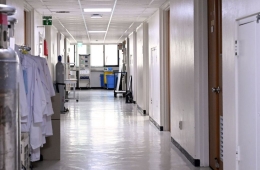
1 Million Non-Capital Region Cancer Patients Visited Seoul Big 5 Hospitals Over 5 Years
It has been found that more than one million cancer patients residing outside the metropolitan area received treatment over five years at Seoul's Big 5 hospitals. Cancer has remained the leading cause of death for 40 years since Statistics Korea began its surveys.
According to an analysis of medical tourism to the Big 5 hospitals (Seoul National University Hospital, Seoul Asan Medical Center, Seoul St. Mary's Hospital, Shinchon Severance Hospital, Samsung Medical Center) conducted by Kim Young-joo, a member of the National Assembly's Health and Welfare Committee from the Democratic Party of Korea, over 1 million cancer patients living outside the metropolitan area received treatment at Seoul's Big 5 hospitals during the five-year period from 2018 to 2022. This is due to a strong preference for receiving higher quality services when suffering from severe illnesses.

Every year, about 200,000 cancer patients residing outside the metropolitan area received cancer treatment at the Big 5 hospitals in Seoul. This accounts for approximately 39% of all patients who received cancer treatment at the Big 5 hospitals.
Patients living in provinces with poorer medical infrastructure compared to metropolitan cities were found to have higher rates of treatment at the Big 5 hospitals. Over five years, the number of patients from each province receiving treatment at the Big 5 hospitals was as follows: Busan 85,000; Daegu 59,000; Gwangju 43,000; Daejeon 66,000; Ulsan 31,000; Sejong 18,000; Gangwon 86,000; Chungbuk 94,000; Chungnam 117,000; Jeonbuk 77,000; Jeonnam 79,000; Gyeongbuk 124,000; Gyeongnam 119,000; Jeju 31,000.
Despite difficulties in mobility caused by pain and physical weakness from cancer, patients residing outside the metropolitan area often travel hundreds of kilometers multiple times, changing transportation modes to receive treatment, or find patient rooms in goshiwon (small dormitory-style rooms) or officetels near the Big 5 hospitals to undergo treatment.
For young pediatric cancer patients or elderly patients aged 70 and above, the physical and mental burden of long-distance medical tourism is inevitably greater. Over the past five years, 5,787 cancer patients under the age of 10 and 55,511 cancer patients aged 70 and above residing outside the metropolitan area visited the Big 5 hospitals for cancer treatment.
Hot Picks Today
!["Rather Than Endure a 1.5 Million KRW Stipend, I'd Rather Earn 500 Million in the U.S." Top Talent from SNU and KAIST Are Leaving [Scientists Are Disappearing] ①](https://cwcontent.asiae.co.kr/asiaresize/93/2026051414165763158_1778735817.jpg) "Rather Than Endure a 1.5 Million KRW Stipend, I'd Rather Earn 500 Million in the U.S." Top Talent from SNU and KAIST Are Leaving [Scientists Are Disappearing] ①
"Rather Than Endure a 1.5 Million KRW Stipend, I'd Rather Earn 500 Million in the U.S." Top Talent from SNU and KAIST Are Leaving [Scientists Are Disappearing] ①
- "I Hated Myself as Much as I Craved It"... Even a Mother's Tears and Brilliant Dreams Were Shattered [ChwiYakGukga] ⑦
- "Most Americans Didn't Want This"... Americans Lose 60 Trillion Won to Soaring Fuel Costs
- Mother of Three Gang-Raped on Bus in India... Outrage as Bus Driver Implicated
- "It's Only May, but Convenience Stores Know... Iced Americano at 24°C, Tube Ice Cream at 31°C: The Thermometer of the Summer Sales Boom"
Assembly member Kim Young-joo stated, "It is financially and physically burdensome for patients with severe illnesses such as cancer to travel long distances for treatment, but due to the lack of infrastructure for treating severe patients in local areas, they have no choice but to come to Seoul reluctantly. In the long term, regional medical infrastructure and workforce for treating severe patients should be strengthened, and through a survey of severe patients outside the metropolitan area, transportation and housing measures for these patients and their caregivers must also be prepared."
© The Asia Business Daily(www.asiae.co.kr). All rights reserved.