Amazon, Artificial Price Manipulation?... New Phase in US Antitrust Lawsuit
U.S. regulators engaged in an antitrust lawsuit against Amazon have alleged that Amazon gained over 1 trillion won in unfair profits through a 'price adjustment algorithm.' If the court recognizes this as decisive evidence of antitrust law violations, the impact on the lawsuit is expected to be significant.
On the 3rd (local time), The Wall Street Journal (WSJ) reported, citing the antitrust complaint filed by the U.S. Federal Trade Commission (FTC) to the U.S. District Court for the Western District of Washington in Seattle, that the FTC presented the 'Nessie Project' as objective evidence proving Amazon's alleged artificial control of consumer prices by leveraging its market monopoly power.
![[Image source=AFP Yonhap News]](http://www.asiae.co.kr/news/img_view.htm?img=2023100409502294423_1696380622.jpeg)
According to WSJ, the FTC stated in the complaint, "Amazon's monopoly power in the e-commerce market created a structure where competitors had no choice but to raise prices, thereby inducing consumers to pay higher prices." It further pointed out, "Amazon's strategy was implemented through an algorithm technology called the Nessie Project," adding, "This algorithm induced competitors to raise prices and manipulated consumer choices to steer them toward specific products."
The core issue of this lawsuit is that Amazon, which has become the 'boss of bosses' in the e-commerce market, is not merely acting as an intermediary but is using its platform monopoly power to raise competitors' prices and force consumers to pay higher prices, causing various harms. WSJ reported that the FTC claims, "Amazon, which accounts for 40% of U.S. e-commerce, artificially inflated prices in the online market through this algorithm, creating a price ceiling that reduced competition, innovation, and consumer choice, harming the interests of both consumers and sellers."
WSJ also cited sources indicating that Amazon earned more than $1 billion (approximately 1.36 trillion won) in total revenue using this algorithm until 2019.

Foreign media have focused on how this allegation might affect the FTC's antitrust lawsuit against Amazon. The key issue is whether the court will recognize this algorithm as decisive evidence proving Amazon's monopoly harms. WSJ noted, "This algorithm could serve as evidence that Amazon exerts enormous influence over price setting in the e-commerce market," adding, "This directly contradicts Amazon's longstanding claim that 'prices are set by the sellers themselves on our platform.'"
In response, Amazon has rebutted, stating that "(the algorithm) was discarded several years ago," making a courtroom battle inevitable. An Amazon spokesperson argued, "The FTC's claim seriously mischaracterizes the nature of this algorithm," asserting, "It was a simple project aimed at preventing prices from becoming abnormally low due to price matching."
Hot Picks Today
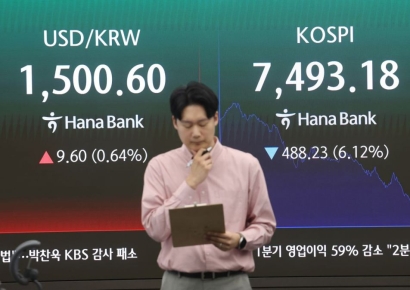 After Topping 8,000 Instead of Hitting 10,000... KOSPI Plunges—When Will It Rebound?
- "Samsung and Hynix Were Once for the Underachievers"... Hyundai Motor Employee's Lament
- [Breaking] Court Rules Against Samsung Electronics Union...1 Billion Won per Day Penalty for Exceeding Strike Scope
- Global Big Tech Joins AI Firms in Full-Scale AI Agent Showdown
- "That? It's Already Stashed" Nightlife Scene Crosses the Line [ChwiYak Nation] ③
Earlier, on the 26th of last month, the FTC filed an antitrust lawsuit against Amazon in the U.S. District Court for the Western District of Washington in Seattle, officially escalating a four-year antitrust battle that began during the Donald Trump administration. The FTC emphasized in a press release at the time, "We have asked the court to consider forcing Amazon to divest assets to prevent ongoing harm to consumers," highlighting that it aims for a powerful sanction at the level of corporate breakup.
© The Asia Business Daily(www.asiae.co.kr). All rights reserved.