'Doom Loop' in Commercial Real Estate Threatening US Banks... "Greater Risk Exposure"
The commercial real estate market in the United States has emerged as the so-called 'Doom Loop' threatening not only the banking sector but the entire economy. When including indirect loans that are not outwardly visible, the exposure of U.S. banks to commercial real estate risks is understood to be much larger than expected.
The Wall Street Journal (WSJ) diagnosed this in an analysis article titled "The Real Estate Doom Loop Threatens U.S. Banks" on the 6th (local time).
![[Image source=EPA Yonhap News]](http://www.asiae.co.kr/news/img_view.htm?img=2023090711190766952_1694053146.jpg)
According to the report, as of the end of last year, U.S. banks' commercial real estate loan amount was estimated at $2.2 trillion (approximately 3,000 trillion KRW). This is double the size from seven and a half years ago since 2015. Including assets related to commercial real estate such as mortgage-backed securities and indirect loans, WSJ analyzed that the actual exposure of banks to commercial real estate reaches $3.6 trillion (approximately 4,800 trillion KRW). This is about 20% of bank deposits.
WSJ stated, "Bank exposure is much larger than generally known," and analyzed, "In a situation where the commercial real estate market is collapsing, loans and investments amounting to trillions of dollars pose a threat not only to banks but also to the broader economy." It is understood that indirect loan exposure related to commercial real estate in the banking sector has more than doubled from 2015 to 2022. This includes bank loans targeting Commercial Mortgage-Backed Securities (CMBS) and Real Estate Investment Trusts (REITs) specializing in real estate loans.
Accordingly, WSJ warns that if banks reduce loans for commercial real estate, it could lead to further declines in real estate prices, creating a vicious cycle that increases loan defaults. WSJ expressed concern that "the Doom Loop scenario has begun to appear in major cities where office vacancies have surged."
Since the pandemic, office vacancy rates have increased mainly in major U.S. cities. According to data provider MSCI Real Assets, commercial real estate sales volume in July decreased by 74% compared to the same period last year. Sales of downtown office buildings reached the lowest level in 20 years. Michael Comparato, head of commercial real estate at Benefit Street Partners, predicted that if transactions resume under these conditions, new lows could be set, which would damage bank soundness.
Moreover, the Federal Reserve's interest rate hikes starting last year have acted as a factor further increasing concerns surrounding commercial real estate. Cases of commercial real estate owners unable to manage debt and choosing to default are also rising. Earlier this year, M&T Bank revealed that about 20% of loans to office landlords carry a higher risk of default.
According to MSCI, real estate-related loans and securities maturing by the end of next year amount to about $900 billion (approximately 1,200 trillion KRW). Tyler Wiggers, a lecturer at Miami University in Ohio and former Fed advisor, warned, "Borrowers who were paying 3.5% interest to banks are suddenly paying 7.5%. If borrowers cannot manage their debt, banks must recognize these as non-performing loans."
Hot Picks Today
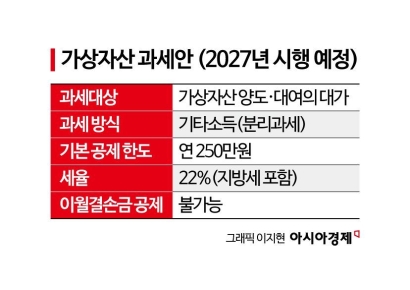 "Stocks Are Not Taxed, but Annual Crypto Gains Over 2.5 Million Won to Be Taxed Next Year... Investors Push Back"
- "Not Jealous of Winning the Lottery"... Entire Village Stunned as 200 Million Won Jackpot of Wild Ginseng Cluster Discovered at Jirisan
- "Even With a 90 Million Won Salary and Bonuses, It Doesn’t Feel Like Much"... A Latecomer Rookie Who Beat 70 to 1 Odds [Scientists Are Disappearing] ③
- "Rather Than Endure a 1.5 Million KRW Stipend, I'd Rather Earn 500 Million in the U.S." Top Talent from SNU and KAIST Are Leaving [Scientists Are Disappearing] ①
- "How Did an Employee Who Loved Samsung End Up Like This?"... Past Video of Samsung Electronics Union Chairman Resurfaces
It is understood that most of these commercial real estate loans are concentrated in regional small- and medium-sized banks. Unlike major large banks that have reduced their commercial real estate risk exposure due to strengthened regulations after the global financial crisis, regional banks have jumped into the commercial real estate loan market, which offers high returns based on low interest rates.
© The Asia Business Daily(www.asiae.co.kr). All rights reserved.







