"Don't Eat Hoe Propaganda" VS "Opposition Party to Blame for Japan's Fisheries Damage?"... Foreign Affairs Committee 'Rumor Dispute'
On the 23rd, at the National Assembly Foreign Affairs Committee plenary meeting
debate over 'Fukushima Contaminated Water Discharge'
On the 23rd, during the full meeting of the National Assembly's Foreign Affairs and Unification Committee, the ruling and opposition parties continued their dispute over the Japanese government's planned discharge of contaminated water from the Fukushima nuclear power plant, which is set to occur the next day. The People Power Party criticized the Democratic Party of Korea for inciting a decline in seafood consumption under the pretext of the contaminated water discharge, calling them a "rumor-mongering party," while the Democratic Party countered that such claims are actually "rumors."
Ha Tae-kyung, a member of the People Power Party, mentioned that he had just returned from a business trip to China and said, "Among Japan's neighboring countries in the Asia-Pacific region, the only party that incites people not to eat sashimi is the Democratic Party of Korea."
"Rumor-mongering party inciting people not to eat sashimi" fierce attack
![[Image source=Yonhap News]](http://www.asiae.co.kr/news/img_view.htm?img=2023082316353149680_1692776131.jpg)
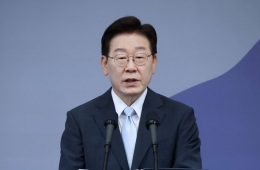
Democratic Party lawmakers strongly protested, calling it "a rumor" and "fake news." In response, Rep. Ha referred to a statement made by Lee Jae-myung, the leader of the Democratic Party, in June. Ha said, "On June 3rd, Lee Jae-myung came to Haeundae, my electoral district, and told people not to eat sashimi. You can search for it," and then read aloud, "'Busan Haeundae is a beautiful sea visited by many people. But who would come if the sea is contaminated? Who would seek out our delicious seafood?' Lee said."
Democratic Party lawmakers then raised their voices, saying, "When did he say not to eat sashimi?" Ha responded, "It's the same thing. Politicians should be careful with their words." He added, "I think it is possible to criticize Japan's discharge issue. But you should not conduct campaigns that harm your own citizens. (Democratic Party lawmakers) should publicly go eat sashimi and post it one by one on Facebook. If you do that, I will admit that the Democratic Party is not a rumor-mongering party."
"Is the damage to Japan's fisheries also due to Democratic Party rumors?"
Woo Sang-ho, a Democratic Party lawmaker, introduced domestic and international opposition to the nuclear wastewater discharge and rebutted the ruling party's claims. Woo said, "The Japanese government expects the contaminated water to be safe, but didn't they allocate a budget anticipating damage to the fisheries industry?" He pointed out, "Is the damage to Japan's fisheries because of the Democratic Party's rumors? Even without rumors or opposition claims, Japanese citizens are worried."
He continued, "Because of that, the Japanese government claims it is safe, but they allocated nearly 1 trillion won in budget to protect their fisheries industry from potential damage to their own citizens. So don't blame the opposition or rumors; the problem lies with the Japanese government's attitude that fails to convince its own people that the discharge is safe," adding, "The Japanese government is allocating the budget because it cannot reassure its own citizens."
Park Hong-geun, a Democratic Party lawmaker, also said, "The public's opinion is not because of the Democratic Party's rumors but because it is genuinely a worrying issue, so the public opinion is confirmed as (majority opposition). At least on such an important matter, shouldn't the president speak? Is this something to be brushed over quietly?" he criticized Foreign Minister Park Jin. The day before, Park Gu-yeon, the first deputy director of the Office for Government Policy Coordination, announced the government's position on the Fukushima nuclear wastewater discharge, but Park argued that ideally, the president, prime minister, or minister should make such announcements.
In response, Minister Park said, "This is a very important issue," and Park retorted, "After the trilateral summit between Korea, the U.S., and Japan, Japanese Prime Minister Kishida returned home, rushed to his fishermen, persuaded them, and bowed his head. What has our government done to be so confident?"
Heated debate over Kim Young-ho's attendance as Minister of Unification
![[Image source=Yonhap News]](http://www.asiae.co.kr/news/img_view.htm?img=2023082317213549736_1692778895.jpg)
From the beginning of the Foreign Affairs and Unification Committee meeting that day, there was a clash over placards opposing the Fukushima contaminated water discharge and the suitability of Kim Young-ho as Minister of Unification.
Democratic Party lawmakers attached placards expressing opposition to the discharge on laptops placed on desks, and ruling party lawmakers protested that the meeting could not proceed. As a result, the meeting started 1 hour and 10 minutes later than scheduled with the placards still attached.
In particular, the Democratic Party demanded Kim's withdrawal immediately after the meeting began, saying they could not recognize him as minister. Lee Yong-seon, the opposition party's floor leader, said, "Despite strong opposition, President Yoon Seok-yeol forcibly appointed Minister Kim, and we express deep regret. Democratic Party lawmakers have decided not to engage with Minister Kim in today's meeting. We urge him to leave this meeting room."
Hot Picks Today
 "Stocks Are Not Taxed, but Annual Crypto Gains Over 2.5 Million Won to Be Taxed Next Year... Investors Push Back"
- "Groups of 5 or More Now Restricted"... Unrelenting Running Craze Leaves Citizens and Police Exhausted
- Despite Warnings of "Do Not Enter, You May Not Make It Out Alive"... Foreign Tourist Stranded After Unauthorized Climb on Jeju Sanbangsan
- AI Bubble or Real Growth? All Eyes on NVIDIA's Q1 Earnings
- "Even With a 90 Million Won Salary and Bonuses, It Doesn’t Feel Like Much"... A Latecomer Rookie Who Beat 70 to 1 Odds [Scientists Are Disappearing] ③
However, Kim Seok-ki, the ruling party's floor leader from the People Power Party, countered, "It was a legitimate appointment process. During the previous Moon Jae-in administration, 32 ministers were appointed without confirmation reports, but (People Power Party) never asked ministers to leave," and Rep. Tae Young-ho said, "It is very unfortunate that from the start of the meeting, there are unreasonable demands for the Minister of Unification, who is in charge of inter-Korean relations, to leave. We should stop making meaningless arguments and controversies and proceed with the meeting."
© The Asia Business Daily(www.asiae.co.kr). All rights reserved.