Record Number of Participants in Constitutional History... Yoon Jae-ok Proposes Special Act for Moonlight High-Speed Rail Connecting Daegu and Gwangju
261 Co-Sponsors Sign Joint Proposal
Yoon Jae-ok Persuades Both Ruling and Opposition Lawmakers Regardless of Region or Party
"Full Effort Until Final Passage Within the 21st Term"
A special bill for the construction of the Dalbit High-Speed Railway connecting Daegu and Gwangju was proposed on the 22nd.
Yoon Jae-ok, floor leader of the People Power Party, announced that he had officially proposed the special bill for the construction of the Dalbit High-Speed Railway on the same day.
A total of 261 lawmakers from both ruling and opposition parties jointly signed the bill proposal, marking the highest participation in the history of the National Assembly. This includes 109 from the People Power Party, 148 from the Democratic Party of Korea, 1 from the Justice Party, and 3 independents.

Yoon Jae-ok, floor leader of the People Power Party, is attending the floor strategy meeting held at the National Assembly on the 22nd. Photo by Kim Hyun-min kimhyun81@
View original imageIt is known that Floor Leader Yoon persuaded lawmakers from both sides and various regions without distinction to support the special bill proposal.
The goal for the completion of the Dalbit High-Speed Railway is 2030, and with the majority of lawmakers from both sides participating in the proposal, it is expected to pass smoothly within this year.
The Dalbit High-Speed Railway is a high-speed rail line connecting east and west with a total length of 198.8 km, centered on Seodaegu Station and Gwangju Songjeong Station. Once the railway is established, the travel time between Yeongnam and Honam regions will be reduced to about one hour. The name is derived from the old name of Daegu, Dalgu-beol, and the first syllable of Gwangju’s pure Korean name, Bitgoeul. It is planned to pass through six metropolitan local governments?Daegu, Gyeongbuk (Goryeong), Gyeongnam (Hapcheon Haeinsa, Geochang, Hamyang), Jeonbuk (Jangsu, Namwon, Sunchang), Jeonnam (Damyang), Gwangju?and 10 local governments in total.
According to Daegu City, the production inducement effect from the high-speed railway is expected to reach 7.2985 trillion KRW, employment inducement effect 38,676 jobs, and value-added inducement effect 2.2834 trillion KRW.
Hot Picks Today
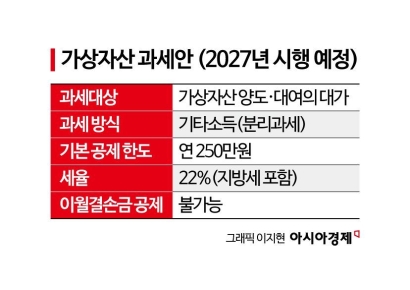 "Stocks Are Not Taxed, but Annual Crypto Gains Over 2.5 Million Won to Be Taxed Next Year... Investors Push Back"
- "Not Jealous of Winning the Lottery"... Entire Village Stunned as 200 Million Won Jackpot of Wild Ginseng Cluster Discovered at Jirisan
- "Even With a 90 Million Won Salary and Bonuses, It Doesn’t Feel Like Much"... A Latecomer Rookie Who Beat 70 to 1 Odds [Scientists Are Disappearing] ③
- "Rather Than Endure a 1.5 Million KRW Stipend, I'd Rather Earn 500 Million in the U.S." Top Talent from SNU and KAIST Are Leaving [Scientists Are Disappearing] ①
- "How Did an Employee Who Loved Samsung End Up Like This?"... Past Video of Samsung Electronics Union Chairman Resurfaces
Floor Leader Yoon said, "Since this is a long-standing project for Yeongnam and Honam regions, we will make every effort until the very end to ensure that the bill passes within the term of the 21st National Assembly."
© The Asia Business Daily(www.asiae.co.kr). All rights reserved.







