"Non-binding Camp David Agreement... Chinese Media Question Its Sustainability"
Professor Moon Il-hyun of China Zhengfa University SBS Radio Interview
A Chinese expert commented on the joint statement from the South Korea-U.S.-Japan summit, saying, "It seems China anticipated that the U.S. intends for the three countries?South Korea, the U.S., and Japan?to jointly respond to issues such as Taiwan and the South China Sea, as well as economic matters like supply chains."
Moon Il-hyun, a professor at China University of Political Science and Law, appeared on SBS Radio's 'Kim Tae-hyun's Political Show' on the 21st and said, "If you look closely at the core of the document adopted at this summit, the key point is mutual consultation and cooperation when urgent situations arise concerning national security interests."

President Yoon Suk-yeol, U.S. President Joe Biden, and Japanese Prime Minister Fumio Kishida are taking a commemorative photo in front of the presidential residence 'Aspen' after concluding the trilateral summit held at Camp David, the U.S. presidential retreat near Washington DC, on the 18th (local time). Photo by Yonhap News Agency
View original imageAlthough the Chinese government has not yet issued an official stance, Chinese state-run media reacted strongly to the South Korea-U.S.-Japan joint statement. Professor Moon said, "Based on reports from Chinese media, the reactions can be broadly categorized into two main points: first, that South Korea, the U.S., and Japan are formalizing a new Cold War and conducting a containment strategy against China; and second, that it is a violent interference in China's internal affairs."
He added, "The countries mentioned in the document are five in total: North Korea, China, Russia, Ukraine, and Taiwan. North Korea, China, and Russia are identified as targets for containment and checks, whereas Taiwan and Ukraine are classified as subjects for cooperation and support."
He further explained, "This is the Chinese side's claim that the document formalizes a new Cold War that divides sides and fosters confrontation between camps. Economically, the ultimate goal of all measures?such as establishing a supply chain trilateral alliance among South Korea, the U.S., and Japan, or protecting core technologies?is interpreted as ultimately targeting China."
However, Professor Moon noted that Chinese media are questioning the sustainability of this agreement. Since the joint statement does not include provisions with binding force under international law, it may not be implemented if leadership changes.
He analyzed, "It seems they are considering the possibility of Trump being re-elected in the U.S. presidential election. Another point is that if South Korea's administration changes, the current pro-Japan policy stance is likely to shift, and South Korea-Japan relations will inevitably change, making it difficult for the Camp David agreement to continue," he said.
Regarding the recent full reopening of group tourism from China to South Korea, he said, "The Asian Games will be held in Hangzhou at the end of next month, and when the Hangzhou Asian Games take place, they need to have many spectators entering the country to attend. For that, many Chinese tourists must travel abroad, which will lead to increased flights and various follow-up effects."
He continued, "Also, domestic consumption in China is currently very sluggish. Therefore, to stimulate domestic demand, they need to ignite something, and it seems they are focusing on tourism and overseas travel."
Hot Picks Today
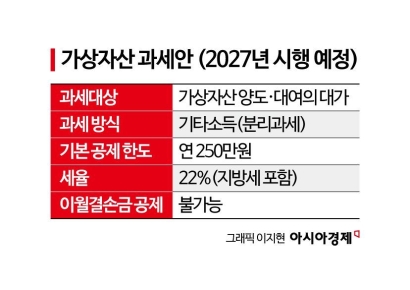 "Stocks Are Not Taxed, but Annual Crypto Gains Over 2.5 Million Won to Be Taxed Next Year... Investors Push Back"
- "Not Jealous of Winning the Lottery"... Entire Village Stunned as 200 Million Won Jackpot of Wild Ginseng Cluster Discovered at Jirisan
- "Even With a 90 Million Won Salary and Bonuses, It Doesn’t Feel Like Much"... A Latecomer Rookie Who Beat 70 to 1 Odds [Scientists Are Disappearing] ③
- "Rather Than Endure a 1.5 Million KRW Stipend, I'd Rather Earn 500 Million in the U.S." Top Talent from SNU and KAIST Are Leaving [Scientists Are Disappearing] ①
- "How Did an Employee Who Loved Samsung End Up Like This?"... Past Video of Samsung Electronics Union Chairman Resurfaces
On concerns that the South Korea-China restrictions (Hanhanryeong) might be reinstated due to this South Korea-U.S.-Japan summit, he said, "Since this was decided before the current issue, we need to wait and see. The simplification was temporarily set until the end of December, and when that temporary period ends, they will likely review it again."
© The Asia Business Daily(www.asiae.co.kr). All rights reserved.







