Foreigners Betting 1.7 Trillion Won on Decline... Short Selling War Shifts to POSCO
Ecopro to POSCO Holdings: Short Selling Frontline Shift
1 Trillion KRW Short Selling Met with 5 Trillion KRW Net Buying
Retail Investors Demand "Illegal Short Selling Investigation in Secondary Batteries"... Authorities Strengthen Monitoring
A second battle is underway between individual investors and foreign hedge fund short-selling forces. The first battle was a victory for the retail investors. It is estimated that the short-selling forces suffered significant losses in the Ecopro group stocks. The current front line is the POSCO group stocks. The short-selling balance of POSCO Holdings (POSCO Holdings) has exceeded 1 trillion won. Retail investors are countering with net purchases exceeding 5 trillion won. Meanwhile, financial authorities have declared that they will strengthen crackdowns and penalties on illegal short selling to restore market order.


Sharp Increase in Short-Selling Balance of POSCO Group Stocks
According to the Korea Exchange, as of the latest available date, the 11th, the short-selling balance of POSCO Holdings was 1.023 trillion won, ranking first in the KOSPI market. The second-ranked POSCO Future M had a balance of 701 billion won. The combined short-selling balance of POSCO group stocks related to secondary batteries exceeds 1.7 trillion won. As of July 11, the short-selling balance of POSCO Holdings was only 188.2 billion won. It surged 5.5 times in one month. The short-selling balance of POSCO Future M also steadily increased, maintaining an average of around 700 billion won since early August, up from 183.9 billion won at the beginning of the year.
There is an interpretation that the target stocks for foreign short sellers have shifted from the Ecopro group stocks to the POSCO group stocks. The short-selling balance of Ecopro as of August 11 was 907 billion won, down from 1.3482 trillion won a month earlier. Ecopro BM’s short-selling balance also dropped from 1.3736 trillion won on July 11 to 694 billion won currently.
The outbreak of the second short-selling battle is attributed to returns. Since the first battle ended in a victory for retail investors, it is estimated that the short-selling forces suffered heavy losses. Ecopro, which started at 103,000 won at the beginning of the year, surged sharply to the 500,000 won range in early April. Foreign hedge funds and others, judging the stock price overheated, focused on short selling. However, supported by individual buying power, Ecopro’s stock price soared well above 1 million won. On July 26, it even reached an intraday high of 1,539,000 won. It is interpreted that the short-selling forces struggled by engaging in short covering. Short covering refers to investors who borrowed stocks expecting the price to fall (short selling) buying back stocks to reduce losses when the price rises contrary to their expectations.
In the second battle, retail investors are also fired up. On stock communities and elsewhere, there is a clear atmosphere of unity. Individual investors’ net purchases are concentrated on POSCO Holdings. In July, POSCO Holdings was the top stock in net purchases by individual investors, with net purchases amounting to 4.5231 trillion won. Considering that LG Chem, the second-ranked stock in net purchases during the same period, was only bought for 503.7 billion won, it is no exaggeration to say that they went all-in on POSCO Holdings. From July to August 11, net purchases of POSCO Holdings totaled 5.1107 trillion won.
Although foreign securities firms downgraded their investment opinions on POSCO Holdings to dampen investor sentiment, it seems ineffective. Morgan Stanley lowered POSCO Holdings’ investment rating from 'Equal Weight' to 'Underweight,' citing excessive optimism surpassing fundamentals as the reason. Retail investors, claiming that foreign securities firms represent short-selling forces, continue their net buying trend regardless.

Individual Investors Demand Investigation into Illegal Short Selling
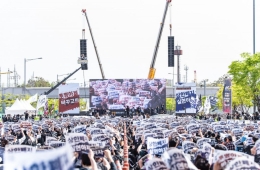
As short-selling balances increased in stocks heavily bought by individuals, dissatisfaction grew. The Korea Stock Investors Association held a rally on July 26 to call for an investigation into illegal short selling, pointing out short selling in secondary battery stocks. On July 26, Ecopro, Ecopro BM, L&F, and Kumyang all rose over 20% but closed down due to large volume sell-offs. The stock prices continued to fall sharply until the next day, July 27. Jung Jeongjung, head of the Korea Stock Investors Association, criticized, "The massive plunge caused by the flood of short selling cannot be explained unless it was a premeditated operation. Such an incident occurring in large-cap stocks with a market capitalization of tens of trillions of won can only be seen as illegal price manipulation by short-selling forces."
The Korea Stock Investors Association focused on the fact that short selling occurred in Ecopro BM on July 26-27 despite a short-selling ban. At that time, the Korea Exchange designated Ecopro BM as a short-selling overheated stock, banning short selling, but short selling worth 220 billion won still occurred. Jung said, "It was short selling by securities firms using the market maker system, which is exempt from the short-selling ban rule, and this is incomprehensible. Securities firms acting as market makers should only intervene when liquidity is insufficient, i.e., when trading volume is low, but in a situation overflowing with liquidity, securities firms dumped as many as 546,000 shares over two days, which is a clear act of price manipulation."
In fact, many illegal short selling cases were committed by foreign securities firms. It was confirmed that more than 20 foreign securities firms were sanctioned for illegal short selling in the first half of this year. The Securities and Futures Commission (SFC) imposed fines and penalties totaling 9.8 billion won on 26 entities for violations of short-selling regulations under the Capital Markets Act (Article 170) from January to June this year. Penalties were imposed on 23 entities amounting to 8.7 billion won, and fines on 3 entities totaling 1.1 billion won. UBS AG was fined 2.18 billion won, and ESK Asset Management was fined 3.87 billion won. AUM Invest, Quint Asset Management, PFM, Darwin Asset Management, OCBC, StoneX, Julius Baer, Evolve, and Korea Alternative Investment Asset Management also received fines.
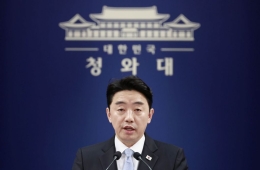
Financial authorities plan to continue a strict stance on illegal short selling. Kim So-young, Vice Chairman of the Financial Services Commission, said, "We are imposing fines for illegal short selling for the first time and publicly disclosing sanctioned parties, punishing more strictly than in the past."
As the power struggle between short-selling forces and retail investors intensifies, the full resumption of short selling in the domestic capital market has become uncertain. Vice Chairman Kim also said, "In the mid-to-long term, I think the direction will be toward a full resumption of short selling, but it is difficult to specify the exact timing, and we need to keep monitoring market conditions."
The domestic capital market had a full ban on short selling after the COVID-19 downturn but partially resumed it on May 3 last year. Currently, short selling is partially allowed only for large-cap stocks such as KOSPI 200 and KOSDAQ 150 in the domestic stock market.
Related Articles
 POSCO Approaching End of Chairman's Term... Will Outside Directors Be Replaced Like KT?
Mitigation of Concentration in Secondary Battery Stocks, the Epicenter of Increased Stock Market Volatility - Battery Recycling: Large Corporations' 'Financial Power' or Small Giants' 'Technological Strength'?
- Individual POSCO vs Foreign EcoPro... Same Secondary Battery Stocks, Different Buying Reasons
Meanwhile, the securities industry advises paying attention to short squeeze stocks. A short squeeze occurs when short sellers engage in short covering, causing stock prices to rise. Stocks that surge supported by concentrated individual buying may see prices rise further due to short squeezes despite increased short selling, making them an investment alternative. Kang Min-seok, a senior researcher at Kyobo Securities, said, "By examining stocks with high short-selling balances and declining foreign net purchases in advance, it is possible to anticipate the occurrence of short squeezes." According to Kyobo Securities, stocks with potential for short squeezes include POSCO Future M, POSCO International, SK Biopharm, Ecopro BM, and EO Technics.
© The Asia Business Daily(www.asiae.co.kr). All rights reserved.