[Asia Report] Singapore's New Era Political Experiment: Will an Indian President Be Elected?
City-State Eyes $90,000 Per Capita GDP with Smart Political and Economic System
Minority Economic Power Lags Behind Amid Chinese Dominance, Fueling Tensions
Indian Economic Expert Emerges as Leading Presidential Candidate
His Wife Is Japanese... Can He Overcome Ethnic Barriers?
The momentum of Singapore, the city-state in Southeast Asia, is remarkable. Despite the recent adversities of the COVID-19 pandemic that bombarded the global economy and the US-China conflict, Singapore's economic indicators have been hitting record highs every year. Measured by the familiar per capita Gross Domestic Product (GDP), resource-poor Singapore has surpassed the oil-producing Arab countries to become the number one in Asia. In 2022, Singapore's nominal per capita GDP surpassed an astonishing $80,000, and forecasts suggest it will challenge $90,000 this year.

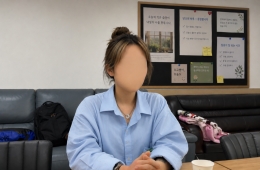
Tarman Shanmugaratnam, of Indian descent, is known as Singapore's "economic czar." This is a photo of him delivering a speech at a World Food Organization event. Photo by World Food Organization website
View original imageIn the 2000s, the gap with South Korea was only about $10,000, but from next year, the difference will be an embarrassing threefold ($60,000). Some interpreted this as thanks to the "blind investments" by multinational corporations fleeing Hong Kong and wealthy Chinese investors. However, the prevailing explanation now is that "Singapore's political and economic system is the smartest not only in Asia but worldwide." From the oil and various raw material commodity markets to global cutting-edge companies like Grab and TikTok, Singapore serves as their home ground, actively participating on the world stage. The sovereign wealth funds such as Temasek and the Government of Singapore Investment Corporation (GIC), managing assets worth 1,300 trillion won, generate astronomical capital returns annually. Naturally, housing prices and rents have skyrocketed, and inflation has risen accordingly, but since residents' incomes have also increased significantly, there seems to be little dissatisfaction.
△End of Female President's Term=Currently, Singapore's leadership system consists of President Halimah Yacob (68), Prime Minister Lee Hsien Loong (71), and Deputy Prime Minister Lawrence Wong (51). The real power lies with Prime Minister Lee Hsien Loong, son of the founding father Lee Kuan Yew, who has already promised to retire from politics soon due to his advanced age, drawing attention to Deputy Prime Minister Wong, the next-generation leader of the People's Action Party (PAP). Of course, Prime Minister Lee's influence will continue behind the scenes for quite some time.
Before that, there is one more task to resolve: the replacement of the president, who holds a six-year term and is one pillar of power. President Halimah Yacob, inaugurated in 2017, will end her term on September 13. Although Singapore has a parliamentary system where the prime minister holds real power, the importance of the president cannot be ignored. Moreover, with Prime Minister Lee's retirement and the rise of a prime minister in his 50s imminent, the symbolism and weight of the next president, who must reconcile ethnic, class, and generational conflicts, have increased. However, looking at the twists and turns of the last Singapore presidential election, the 'political challenges' Singapore faces are not trivial.
Halimah, the first female president, is a politician representing the Malay community. She quietly ascended as the nation's representative face in 2017 because she was elected unopposed without an election. Surprisingly, Singapore has elected its president by direct vote, but since the People's Action Party (PAP) has held overwhelming power since the country's founding in 1965, the presidency, which holds only symbolic meaning, could be conceded to popular will. Furthermore, a constitutional clause requiring the president to be a neutral figure without party affiliation influenced the maintenance of the direct presidential election system.
△Rapid Growth of the Opposition=Since the 2011 presidential election, clear signs of change have been detected. Tony Tan, who was elected president then, narrowly won by only about 7,000 votes (0.32%) over the second-place candidate despite overwhelming support from the ruling party. The runner-up, Tan Cheng Bock, though from the same party, followed a different path from the 'Lee Kuan Yew-Lee Hsien Loong father and son' and had a high potential to crack the existing system. After Lee Kuan Yew's passing, the 2015 general election saw the opposition increase its vote share to nearly 40%, pressuring the ruling party. At that time, residents' dissatisfaction was less about power succession and more about excessive elitism and a polarized economic structure.
Singapore is an ambitious society that aims to increase the 'wealth of the nation' by leveraging its overwhelmingly open economy. To achieve this, it believes in nurturing the nation's top elites as civil servants and entrusting them with managing national wealth. Consequently, civil servants' salaries rank first worldwide, with ministers and deputy ministers in their 40s earning around 1 billion won, and prime minister-level officials exceeding 2 billion won. When calculating civil servant salaries, the compensation system matches that of top executives in related top-tier industries. Elite civil servants over 50 often move to companies invested in by sovereign wealth funds and serve as executives earning prime minister-level salaries or higher.
Conversely, the hardships of ordinary Singaporean citizens have increased. Job security has been shaken due to competition with the rapidly growing number of foreign workers, and fatigue has accumulated from the perception that those who do not own assets cannot benefit from national growth. Especially as real estate prices have exploded, expectations for the opposition party, which emphasizes the rights of ordinary workers, have begun to sprout. Feeling a crisis, the PAP amended the constitution in 2017 under the pretext of national unity, openly declaring that the next presidential election would "elect a Malay," effectively neutralizing the direct presidential election system.
△Prepared Indian Presidential Candidate=The polarized economy is closely linked to deep-rooted ethnic conflicts in Southeast Asia. Singapore consists of about 75% Chinese ethnic Chinese, 14% Malay, and about 9% Indian. Since the Chinese hold power, the economic strength of other minorities has naturally lagged far behind the Chinese. The reason for electing a Malay president in the last election was, in fact, concerns that their dissatisfaction could harm national unity. However, after criticism for appointing a president without an election, the system reverted to a free election without ethnic considerations. Naturally, the Indian community, waiting their turn, voiced dissatisfaction.
The PAP also had a prepared plan. Conveniently, a very suitable candidate was waiting within the ruling party. Former Deputy Prime Minister Tharman Shanmugaratnam (66), who served as a minister in the economic sector during the 2010s, is the main figure. Since 2001, he has been active as a popular politician and was once regarded as a potential successor to Lee Kuan Yew. However, due to ethnic limitations, he never reached the center of power. His wife is Japanese.
As times and the atmosphere changed, he naturally emerged as a strong presidential candidate. Even the British prime minister recently became of Indian descent. Although four others, including Ng Kok Song, former chief investment officer of the sovereign wealth fund GIC, and entrepreneur George Goh, have declared their candidacy, it is widely believed they will find it difficult to compete with him. Tharman has put forward "Respect for All" as his presidential campaign slogan and aspires to be "a president for a new era." Can Singaporean society, predominantly Chinese, overwhelmingly elect a politician of Indian descent with a Japanese wife? The result of this political experiment will be revealed on the 13th of next month.
Hot Picks Today
 "Most Americans Didn't Want This"... Americans Lose 60 Trillion Won to Soaring Fuel Costs
- As Samsung Falters, Chinese DRAM Surges: CXMT Returns to Profit in Just One Year
- Ebola Outbreak With No Vaccine or Treatment Sparks Fears: "One American Infected"
- Samsung Union Member Sparks Controversy With Telegram Post: "Let's Push KOSPI Down to 5,000"
- "Why Make Things Like This?" Foreign Media Highlights Bizarre Phenomenon Spreading in Korea
Jung Ho-jae, Researcher at Korea University ASEAN Center
© The Asia Business Daily(www.asiae.co.kr). All rights reserved.