A 400 Billion Won Financial Scandal 13 Years Ago... What Happened to Gyeongnam Bank's 56.2 Billion Won Embezzlement?

A embezzlement incident involving 56 billion KRW occurred at BNK Gyeongnam Bank, caused by an employee. This is the second-largest case since last year's 70 billion KRW embezzlement incident at Woori Bank. For Gyeongnam Bank, this has brought its inadequate internal control system back into the spotlight for the first time in 13 years since the 400 billion KRW financial accident in 2010. Despite repeated financial incidents, the recurrence of embezzlement cases involving hundreds of billions of won has intensified criticism of Gyeongnam Bank's internal control system.
15 Years in Charge of PF, Embezzled a Total of About 56 Billion KRW... Delayed Audit After Prosecutors Requested Financial Information Inquiry
According to the Financial Supervisory Service (FSS) on the 2nd, Lee (age 50), head of the Real Estate Project Financing (PF) Department at Gyeongnam Bank, is suspected of embezzling and misappropriating a total of 56.2 billion KRW from August 2016 to May 2022 while handling real estate PF tasks for about 15 years from December 2007 to April 2023.
This case came to light when Gyeongnam Bank received a request from the prosecution in April to inquire about Lee's financial transaction information. Gyeongnam Bank reported this to the FSS, and through a self-audit ordered by the FSS, they recognized embezzlement of about 7.79 billion KRW in PF loan repayment funds and reported it on July 20.
Subsequently, the FSS conducted an emergency on-site inspection on July 21 and confirmed an additional 48.4 billion KRW in embezzlement and misappropriation by Lee. The FSS reported that Lee used typical embezzlement methods such as arbitrarily transferring loan funds to accounts under family members' names and forging loan documents while handling the same tasks for about 15 years.
Gyeongnam Bank has excluded Lee from his duties and filed a complaint, while also taking steps to recover the embezzled funds. A representative of Gyeongnam Bank stated, "Taking this incident as an opportunity, we held on-site meetings to prevent financial accidents and strengthened ethics education for all employees. We established an internal control analysis team to conduct objective investigations and detailed analyses, and we plan to implement intensive additional measures, including a comprehensive system overhaul."
Almost Identical to Major Financial Accidents One Year and 13 Years Ago
The embezzlement incident at Gyeongnam Bank shares many similarities with last year's Woori Bank embezzlement case and the financial accident at the same bank 13 years ago, including the fact that the embezzlement occurred over several years without detection, involvement of family members, long-term service in one department, and the scale reaching hundreds of billions of won.
Currently, Jeon (age 44), a Woori Bank employee indicted on charges of embezzling about 70 billion KRW, is accused of diverting approximately 61.4 billion KRW of company funds from October 2012 to June 2018 while working in the Corporate Improvement Department at the head office, using the money for stock index option trading and other purposes. Many analyses suggested that Jeon's long-term service of over 10 years in the Corporate Improvement Department was a factor in the embezzlement.
The incident at Gyeongnam Bank 13 years ago was similar. Employees (managers and assistant managers) in the Structured Finance Department (now disbanded) personally invested clients' trust funds in unlisted company shares and, after incurring losses, forged payment guarantees in the name of the bank president and raised funds from secondary financial institutions and companies to cover up the losses, eventually getting caught. The amount involved was 413.6 billion KRW, marking the largest financial accident in history at the time.
The causes of such large-scale financial accidents included having only two employees responsible for trust operations, resulting in weak mutual monitoring and checks, and the fact that the employees who caused the accidents held the same responsibilities for a long time with full authority.
Lee's case is also similar to previous major financial accidents. A veteran banker who joined in 1990, Lee was assigned to the Investment Finance Department in 2007 and moved to the Investment Finance Planning Department earlier this year. Internally, he was regarded as an expert in the real estate PF field and was considered competent in terms of performance. Lee also increased the scale of embezzlement by working long-term in one department for 15 years, using family members' accounts and forging loan documents in the process.
Persistent Weak Internal Controls: “Simultaneous Improvement of Organizational Culture and Internal Control Systems Needed”
Industry insiders point out that this incident revealed Gyeongnam Bank's poor internal control and audit systems. A BNK Financial Group official said, "In the investment banking (IB) sector, especially in PF, where expertise and human networks are crucial, it might have been difficult to find suitable replacements," but added, "Nevertheless, working continuously in one department for 15 years is very unusual."
However, 'expertise' cannot be considered a mitigating factor for lax internal controls. Article 33 of the 'Standard Internal Control Guidelines for Banks' prepared by the Korea Federation of Banks stipulates that for high-risk tasks, multiple personnel or departments must participate in single transactions with high risk of incidents, and even when separation of duties is difficult due to manpower shortages or urgency, separate supplementary control measures must be operated.
An official from a commercial bank said, "In commercial banks, authority related to real estate PF projects is distributed among planning, loan approval, and lending departments, making mutual monitoring and checks easier," and added, "In the problematic bank, authority was concentrated in the PF project manager, which may have exacerbated the issue."
Experts advise fundamental improvements in banks' internal control systems. After last year's embezzlement incident, Woori Financial Group created an internal control innovation plan requiring all employees to experience internal control duties before promotion to branch manager.
Related Articles
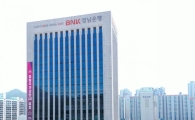 Gyeongnam Bank Sues '56 Billion Embezzlement Employee' "Will Prevent Customer Damage"
Professor Cho Myung-hyun of Korea University Business School emphasized, "Audits do not cover all samples, so there may be blind spots," and stressed the fundamental need for organizational culture improvement. He said, "Passing through the internal control department once strengthens education, and after education, employees will know what to do. If a colleague embezzles, others will notice something unusual. Such cultural improvements are necessary."
© The Asia Business Daily(www.asiae.co.kr). All rights reserved.







