KR Financial Supervisory Service Considers Sanctions on Gyeongnam Bank President Following 56.2 Billion Embezzlement Investigation Results
Senior Official at Financial Supervisory Service: "If CEO Management Was Inadequate, Sanctions Should Be Pursued"

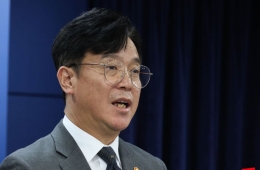
The Financial Supervisory Service (FSS), which has launched an on-site inspection regarding the BNK Gyeongnam Bank embezzlement case involving 56.2 billion KRW, plans to hold those responsible accountable, including considering sanctions against the bank’s president. On the 2nd, the FSS revealed that an employee in Gyeongnam Bank’s investment finance department embezzled a large-scale PF (Project Finance) loan and emphasized, "We will take strict measures against related executives and employees responsible for the failure of internal controls."
FSS: "We emphasized internal controls so much, yet another incident occurred"
Regarding this, a senior FSS official stated, "After last year’s Woori Bank embezzlement incident, financial authorities have been stressing internal controls so much, but since such an incident has occurred, we will push for sanctions to hold the CEO (Chief Executive Officer) as responsible as possible."
In 2020, the FSS imposed a heavy disciplinary action (a warning) on Sohn Tae-seung, former chairman of Woori Financial Group, holding him accountable for internal control failures related to the derivative-linked fund (DLF) scandal. However, the Supreme Court ruled in favor of former Chairman Sohn at the end of last year, nullifying the CEO’s disciplinary action. The reason was that current law only requires the establishment of internal control standards, not their compliance, making it difficult to punish CEOs.
The senior official added, "Looking at Chairman Sohn’s case, it might be difficult to sanction the CEO in the Gyeongnam Bank incident as well, but since the second trial of Chairman Ham Young-joo of Hana Financial Group regarding the DLF mis-selling lawsuit is ongoing, we need to wait and see (the possibility of CEO sanctions)." He also said, "The Gyeongnam Bank employee embezzled funds while working in the same role for 15 years, and specific circumstances showing that proper job rotation was not implemented will come to light. We will examine how effectively the internal control system was operated. If the CEO failed to manage this level of control, sanctions should be pursued."
The FSS is currently conducting disciplinary hearings regarding last year’s 70 billion KRW embezzlement case at Woori Bank. The employees who committed the embezzlement, the department head, and executives are subject to these hearings. Institutional and CEO sanctions are also being considered. Meanwhile, prosecutors demanded 30 years imprisonment each for the former Woori Bank employee brothers involved in the embezzlement during the second trial appeal sentencing hearing held in April this year. The prosecution also requested a total confiscation of 51.3 billion KRW from them.
If internal control improvement measures pass, CEO responsibility can be held immediately
Financial authorities announced internal control improvement measures for banks last June. The core of these measures is for financial companies to create a "responsibility structure chart" that pre-defines the internal control responsibility areas for each executive. It also includes the provision that "if widespread organizational and long-term repeated problems occur within the company, the CEO will be held responsible for systemic failures." If the amended Corporate Governance Act containing these provisions passes in the National Assembly, it will provide grounds to hold CEOs accountable for major financial accidents.
However, since the bill has not yet passed, authorities believe it will not apply to the current 56.2 billion KRW embezzlement case at Gyeongnam Bank. A Financial Services Commission official said, "Currently, disciplinary actions are based on whether internal control standards to prevent employee embezzlement exist or not, but since this case occurred before the bill’s passage, it is unlikely that the changed standards will apply." He added, "After the bill passes, disciplinary actions will be based on whether the internal control system actually worked well and whether executives diligently checked if employees complied with the standards to prevent accidents."
Hot Picks Today
 "Stocks Are Not Taxed, but Annual Crypto Gains Over 2.5 Million Won to Be Taxed Next Year... Investors Push Back"
- "Don't Throw Away Coffee Grounds" Transformed into 'High-Grade Fuel' in Just 90 Seconds [Reading Science]
- Signed Without Viewing for 1.6 Billion Won... Jamsil and Seongbuk Jeonse Prices Jump 200 Million Won in a Month [Real Estate AtoZ]
- "Groups of 5 or More Now Restricted"... Unrelenting Running Craze Leaves Citizens and Police Exhausted
- "Even With a 90 Million Won Salary and Bonuses, It Doesn’t Feel Like Much"... A Latecomer Rookie Who Beat 70 to 1 Odds [Scientists Are Disappearing] ③
Meanwhile, upon this incident, the FSS ordered all banks to conduct an urgent inspection of PF loan fund management practices. A financial authority official said, "We issued an urgent inspection order because similar cases of PF loan embezzlement by employees may exist in other banks as well." The FSS plans to immediately switch to on-site inspections if problems are reported in the management of real estate PF funds during the banks’ urgent inspections.
© The Asia Business Daily(www.asiae.co.kr). All rights reserved.