The Anti-Corruption and Civil Rights Commission Uncovers 14 Cases of Improper Use of National Park Ecological Exploration Center Rooms
It has been revealed that internal employees have been improperly using the reserve rooms of ecological exploration centers' dormitories in five national parks nationwide.
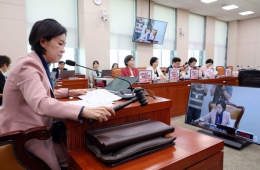
![Jeong Seung-yoon, Vice Chairman and Secretary General of the Anti-Corruption and Civil Rights Commission, is announcing the results of the preliminary room operation survey of the National Park Ecological Exploration Center at 10 a.m. on the 2nd at the Government Seoul Office Building. <br>[Image source=Anti-Corruption and Civil Rights Commission]](http://www.asiae.co.kr/news/img_view.htm?img=2023080211112627627_1690942286.jpg)
Jeong Seung-yoon, Vice Chairman and Secretary General of the Anti-Corruption and Civil Rights Commission, is announcing the results of the preliminary room operation survey of the National Park Ecological Exploration Center at 10 a.m. on the 2nd at the Government Seoul Office Building.
[Image source=Anti-Corruption and Civil Rights Commission]
The Anti-Corruption and Civil Rights Commission (ACRC) announced on the 2nd that, as a result of investigating the operation status of reserve rooms at ecological exploration centers, it detected 14 cases of improper use by employees of the Korea National Park Service and their acquaintances from January 2013 to last May. The rooms they used for free were the most expensive and largest detached units (8-person rooms), which are not available for online reservation by the general public. The ACRC's position is that the private use of reserve rooms, which are public property, by internal employees constitutes corrupt behavior under the Anti-Corruption and Civil Rights Commission Act, including violations of the Conflict of Interest Prevention Act.
According to the ACRC, the Korea National Park Service operates ecological exploration centers in eight locations nationwide, including Jirisan, Seoraksan, and Hallyeosudo, and only rents dormitory rooms for a fee through online advance reservations when participating in ecological experience programs. Reserve rooms cannot be reserved online and are used only when there is a problem with general rooms. All eight ecological exploration centers each have one reserve room.
In this investigation, one ecological exploration center, upon a request from Office Chief A, allowed free accommodation for 1 to 2 nights twice last May in a reserve Hanok detached unit. Another ecological exploration center also allowed free accommodation twice in the first half of the year upon requests from retired employees and others.
The ACRC judged the biggest problem to be the lack of a management system for lodging records of reserve rooms, resulting in the absence of lodging records themselves. Accordingly, the ACRC estimated that the actual number of improper uses would be much higher. The investigation had to rely on employees' memories and statements.
Hot Picks Today
 "Now Our Salaries Are 10 Million Won a Month" Record High... Semiconductor Boom Drives Performance Bonuses at Major Electronic Component Firms
- Living the Homebody Dream? "I Was Shocked by My Spending" How to Cut Costs to 5,000 Won for Essentials [The Principles of Benefits]
- Is It Really Like an Illness? "I Can't Wait to Go Again"—Over 1 Million Visited in Q1, Now 'Busanbyeong' Takes Hold [K-Holic]
- "Heading for 2 Million Won": The Company the Securities Industry Says Not to Doubt [Weekend Money]
- Experts Already Watching Closely..."Target Price Set at 970,000 Won" Only Upward Momentum Remains [Weekend Money]
The ACRC demanded a thorough audit from the Ministry of Environment, the higher authority, and requested institutional improvements. Jeong Seung-yoon, Vice Chairman and Secretary General of the ACRC, said, "The practice of Korea National Park Service employees unfairly using national park recreational facilities operated with taxpayers' money must be eradicated."
© The Asia Business Daily(www.asiae.co.kr). All rights reserved.