Dreaming of Nordic Politics in 'Borgen'... Yang Hyang-ja Promises 'Abolition of Parliamentary Privileges' with New Party Formation
Ruling Party Fails to Gain Public Trust vs Opposition Fosters Conflict
Limits of Two-Party Politics... New Party Formation Inevitable
Need to Strengthen Political Competence and Relinquish Privileges
'The current prime minister's wife was caught shopping with a government credit card, leading the ruling party to lose the election, and the main opposition party later resorted to smear campaigns, only to alienate the public. As politics between the ruling and opposition parties became extreme and voters turned away, the leader of the Moderate Party, Birgitte, took the lead in forming a coalition government and became Denmark's first female prime minister.'
This is part of the content from the Danish drama "Borgen," recommended by Representative Yang Hyang-ja, who recently founded the party "Hope of Korea." The drama, which was popular enough to be watched by more than half (53%) of the Danish population, depicts scenes where the prime minister resigns over the misuse of taxes amounting to around 10 million won, and the prime minister's office spokesperson is fired over a single slip of the tongue. These situations may be hard to understand in the relatively untroubled political climate of Korea, but Representative Yang emphasized that it is precisely this political culture that has made Denmark a "political powerhouse" with a political trust rating of 87.6%, ranked first in global national competitiveness, and first in the Corruption Perceptions Index.
The new party "Hope of Korea," led by Representative Yang, has extensively adopted this Nordic political culture. Preparing for its founding convention on August 28, Representative Yang said in an interview with Asia Economy at the National Assembly building on the 19th, "The prime minister rides a bicycle, and the staff work as partners. Although she is a (female) prime minister, she represents citizens as an ordinary wife and mother. Watching Danish politics inspires me anew as I embark on this party founding." He added, "Having observed the extreme polarization of Korea's two-party politics, I have been preparing to found a party for several years. Politics relying on privilege and extreme supporters must die for the country to live."

Yang, who joined Samsung Electronics as a high school graduate and rose to the position of executive director, entered politics in 2016 through talent recruitment by then Democratic Party leader Moon Jae-in and was elected in the 21st general election in 2020 as a member of the Democratic Party. Among the 300 members of the 21st National Assembly, Yang was regarded as the only "semiconductor expert." However, after a sexual misconduct scandal involving his staff in 2021, he left the party and later applied for reinstatement but publicly opposed the party's push for the "complete removal of prosecution's investigative authority" (검수완박) bill, leading to conflicts and remaining as an independent lawmaker.
Last year, he chaired the National Assembly's Special Committee on Strengthening Semiconductor Industry Competitiveness, proposed by the People Power Party, giving him a precise understanding of the strengths and weaknesses of both major parties. Yang expressed confidence, saying, "I will raise the flag for politics that moves away from the distrust caused by two-party politics to politics that inspires trust, transparency, and hope." Regarding criticism that past third-party new parties have failed, he said, "It is regrettable to judge success or failure based only on the past. That framework must also be crossed."
Below is a Q&A with Representative Yang.

-Why did you choose to found a new party instead of seeking nomination from the People Power Party?
=Many advised me that it would be advantageous to get nominated by the People Power Party for the general election. If it were just for personal gain, I might have considered it, but I judged that we need to create a 'proper political party' for future generations. Some say it's a Don Quixote-like, reckless challenge, but even attempting to create a small crack in Korea's political history is meaningful. Domestic politics has reached its limit. It has become impossible for existing parties to innovate and bring change. At this moment, with the help of many people, I am founding a party. It is a once-in-a-lifetime blessing.
-What kind of party is Hope of Korea?
=Through the founding convention on August 28, the 'Hope of Korea' party will officially launch. We pursue good politics, scientific politics, and practical politics. Especially by implementing 'blockchain technology,' we will manage all procedures transparently. From member management and fundraising to policy management and candidate selection, we will not rely on 'human goodwill' but create a transparent political system based on Web 3.0 blockchain technology. Practices like distributing cash envelopes to secure delegate votes will be completely eliminated.

Yang Hyang-ja, Chairperson of the Preparatory Committee for the Launch of Hope of Korea Party, is applauding at the Hope of Korea Party Founding Convention held on the 26th at the Korea Federation of SMEs in Yeouido, Seoul. Photo by Kim Hyun-min kimhyun81@
View original image![[Image source=Yonhap News]](http://www.asiae.co.kr/news/img_view.htm?img=2023062715463777887_1687848397.jpg)
-Experts who have criticized domestic politics are participating in the founding convention. That draws attention.
=Professor Choi Jin-seok, emeritus professor of philosophy at Sogang University, and Professor Choi Yeon-hyeok from Linnaeus University in Sweden are providing much advice on the political philosophy and values that form the foundation of the party. They often say that privilege must be relinquished and politics must be learned. In Northern Europe, political training starts from youth within each party. Hope of Korea will create a 'political school' based on the Nordic model combined with Korea's policy spokesperson system. Instead of inviting famous people to just talk about themselves and leave, the school will offer a total of 40 sessions (10 beginner, 5 intermediate, 5 advanced) covering political philosophy to spokesperson capacity building. I am using the employee stock ownership I received while working at Samsung Electronics to establish this political school. Through this, we will nurture young and junior politicians. A scientific politics advisory group of about 100 members provides policy advice on 'science and technology' that will lead Korea's future.
-Can Hope of Korea break the current two-party structure in next year's general election?
=There is a widespread skeptical view that third-party new parties have failed so far. However, I am grateful because we can learn from their mistakes. Past third-party new parties were trapped in personalities and regions. As a result, even if they were founded, they were repeatedly absorbed by established parties later. This is like a harmful act that damages future generations. Relying only on famous figures and regions means the party lacks philosophy. It is regrettable to judge success or failure only within the old framework. As someone who worked in semiconductors looking 15 years into the future rather than the past, my perspective is different. Imagination is necessary. Breaking two-party politics is the same. Semiconductors are Korea's number one industry, but among 300 lawmakers, there is only one semiconductor expert. This is a structure lacking diversity. More experts from various fields must represent the people. That is why I say existing politics must die.

-What is the biggest problem with the two parties (People Power Party and Democratic Party)?
=The government and ruling party are the main actors in state administration, so public trust must come first. However, in issues like Fukushima nuclear wastewater, Yangpyeong highway, and killer exam questions, none have the capacity to properly explain and persuade the public. The problem is a government and ruling party that the people do not trust. Even if the macro direction of state affairs is well set, the way it is handled is rough. The presidential office's response to flood damage also causes public self-disgust. Saying 'Even if the president visits, it won't help' sounds amateurish. Even a politician's small gesture, or even attire, is political.
Then is the Democratic Party the alternative? It only agitates the unstable, rough, and untrusted government and ruling party situation more. It is a continuous vicious cycle that makes people more anxious. Moreover, it is corrupt. Society is currently divided. Politics should innovate this, but it is impossible due to group limitations. Hope of Korea aims to cross over this politics.
Hot Picks Today
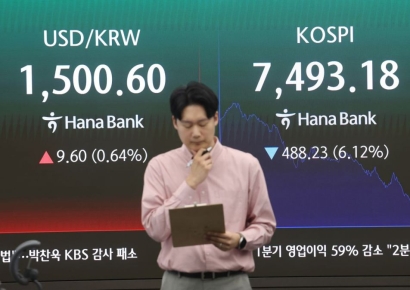 After Topping 8,000 Instead of Hitting 10,000... KOSPI Plunges—When Will It Rebound?
- "Samsung and Hynix Were Once for the Underachievers"... Hyundai Motor Employee's Lament
- [Breaking] Court Rules Against Samsung Electronics Union...1 Billion Won per Day Penalty for Exceeding Strike Scope
- Stronger Fines for Personal Data Leaks Start Tomorrow... Higher Sales Standards Applied
- "That? It's Already Stashed" Nightlife Scene Crosses the Line [ChwiYak Nation] ③
-What will Hope of Korea give up?
=We will create a party where members of the National Assembly have no privileges. If the party functions properly, what privileges would lawmakers have? When I was in office, overseas travel expenses were given as a fixed amount. Then they said they slept in the cheapest places and only ate hamburgers. After switching to actual expense reimbursement, they applied for the maximum amount. This is human nature. Lawmakers should only do what does not damage the dignity of the country during overseas trips. Lawmakers use KTX trains, ships, and airplanes for free (taxpayer money), and only travel in business or first class. In the 21st National Assembly, about 10% of lawmakers were absent from plenary sessions but still received full salaries. Hope of Korea will voluntarily give up the privileges lawmakers currently enjoy.
© The Asia Business Daily(www.asiae.co.kr). All rights reserved.







