Choo Kyung-ho: "Introducing 35,000 Foreign Skilled Workers... Considering Expansion of Simple Labor"
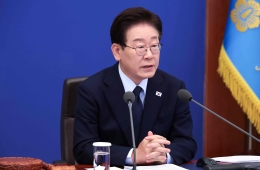
Deputy Prime Minister and Minister of Economy and Finance Choo Kyung-ho announced on the 12th that "to increase the utilization of foreign workers, the quota for skilled workers (E-7-4) will be significantly increased from 5,000 to 35,000 in the second half of the year, and the quota for simple foreign workers (E-9) will also be expanded next year along with the addition of permitted industries."
Deputy Prime Minister Choo made these remarks at the Emergency Economic Ministers' Meeting and Export Investment Measures Meeting held at the Government Seoul Office, presenting tailored solutions to address job vacancies in four industries: shipping, construction, fisheries, and resource circulation.
Choo stated, "In the shipping industry, we will improve working conditions and strengthen incentives for long-term service to prevent the outflow of excellent seafarers overseas," adding, "We will raise the non-taxable income amount for seafarers on foreign-going vessels and distant-water fishing vessels, which is currently 3 million won per month." He also added, "We will support the actual income increase of seafarers by establishing a Seafarer Development Fund for welfare support and promote the reduction of boarding periods and expansion of paid leave in line with global standards."
He continued, "In the construction industry, we will focus on improving poor on-site working conditions by establishing standards for convenience facilities such as rest areas and changing rooms, initially applying them to public institutions and then expanding to the private sector. We will also support customized education and job matching according to construction skill levels." For the fisheries industry, he plans to mandate insurance enrollment for fishing vessel crew members and improve working environments by modernizing aging fish markets.
![[Image source=Yonhap News]](http://www.asiae.co.kr/news/img_view.htm?img=2023071208325094447_1689118370.jpg)
Deputy Prime Minister Choo said, "In resource circulation industries such as waste disposal, we will support the smooth supply of new workers, including local youth, by establishing automated and integrated regional hub clusters," adding, "support for small and medium-sized enterprises with high utilization of child-rearing systems such as parental leave and maternity leave will also be expanded."
Regarding the last agenda item, the regional revitalization investment fund, he explained, "We aim to overcome the limitations of the current small-scale investment method dependent on fiscal resources and introduce a new investment method combining fiscal funds, private capital, and financial techniques to promote sustainable projects led by local communities." This structure involves private experts deciding on projects desired by the region based on profitability and sustainability, with the fund providing partial financing.
Hot Picks Today
 "Samsung and Hynix Were Once for the Underachievers"... Hyundai Motor Employee's Lament
- After Topping 8,000 Instead of Hitting 10,000... KOSPI Plunges—When Will It Rebound?
- "They Said It's Impossible to Get—Already Selling for Triple the Price: Crowds Worldwide Line Up for $600 Luxury Watch"
- Real Estate PF Fees Reduced from 32 to 11 Types... Penalty and Maturity Extension Fees Abolished
- "That? It's Already Stashed" Nightlife Scene Crosses the Line [ChwiYak Nation] ③
Deputy Prime Minister Choo said, "Project implementers will promote large-scale convergence projects by receiving project financing (PF) loans from financial institutions along with fund capital," and added, "The government will play a catalytic role in attracting private capital through subordinated investments, special loan guarantees, and regulatory improvements." He emphasized, "Since the private project financing method is used, projects transferred to local governments under the national subsidy system are also included, and they are excluded from preliminary feasibility studies, enabling more timely project implementation."
© The Asia Business Daily(www.asiae.co.kr). All rights reserved.