Birth Notification System Passes National Assembly Threshold 'Blind Spot'... Protective Birth System to Accelerate in July National Assembly?
Birth Notification System Passed on the 30th of Last Month
Protected Childbirth System, Differences Between Ruling and Opposition Parties in Committee
Opposition: "Fundamental Measures Should Be Discussed First"
Amid revelations that 34 infants died in a government-wide investigation into 'unregistered births,' attention is focused on whether legislation related to the recently introduced Birth Notification System and the accompanying Protective Birth System can gain momentum in the July extraordinary session of the National Assembly.
Last month, an audit of the Ministry of Health and Welfare by the Board of Audit and Inspection revealed that 2,123 newborns had not been registered after birth, with some of them having died. In response, an amendment to the Family Relations Registration Act, which introduces the 'Birth Notification System'?automatically notifying local governments of births at medical institutions through the Health Insurance Review and Assessment Service?was passed by the National Assembly plenary session on the 30th of last month. However, the Protective Birth System, aimed at preventing pregnant women from giving birth outside medical institutions due to fear of such birth notifications, remains pending in the National Assembly.
According to the National Assembly on the 11th, the ruling and opposition parties clashed over the introduction of the Protective Birth System at the first bill review subcommittee of the Health and Welfare Committee on June 27. The ruling party urged the passage of legislation to prevent incidents such as abandonment of unregistered infants, while the opposition maintained that comprehensive measures should be considered before implementing the Protective Birth System.
"Focus on Protective Birth" vs "Need for Crisis Pregnant Women Measures"
![[Image source=Yonhap News]](http://www.asiae.co.kr/news/img_view.htm?img=2018011213350246215_1515731702.jpg)
On that day, lawmakers from both sides engaged in a tug-of-war over the 'Special Act on Protective Birth' proposed by Kim Mi-ae of the People Power Party and the 'Special Act on Protection and Support for Crisis Pregnant Women and Children' submitted by Jo Oh-seop of the Democratic Party.
The Protective Birth Special Act aims to protect women facing difficulties due to pregnancy and childbirth and to guarantee a safe childbirth and nurturing environment for their fetuses and children by introducing the Protective Birth System. If a woman wishes to have a protective birth, the process proceeds through counseling at authorized consultation agencies such as local government heads, including counseling on original family nurturing and protective birth, withdrawal of protective birth, protection of children after protective birth, and the right of children born through protective birth to request access to their birth certificates.
The Special Act on Protection for Crisis Pregnant Women and Children includes broader measures for crisis pregnant women and differs from the Protective Birth Special Act in that it partially includes provisions on 'anonymous birth.' Jo's bill regulates anonymous birth and support for anonymously delivered children in Articles 8 to 29, while the earlier sections address surveys on the status of crisis pregnant women and crisis pregnant women support centers.
The government proposed a compromise between the two bills at the subcommittee. It closely resembles Kim's bill, which focuses on protective birth, with additional detailed criteria such as prioritizing application over the Civil Code and the Special Adoption Act. Lee Ki-il, First Vice Minister of Health and Welfare, explained, "At this point, it seems better to focus on the concept of protective birth and include it in the bill."
Opposition: "Protective Birth as Last Resort" … Ruling Party: "Even a Second-Best Option is Needed"

However, the opposition points out that fundamental measures for childbirth and nurturing need to be discussed, but the government is presenting only the Protective Birth System as a solution. Seo Young-seok, a pharmacist and Democratic Party lawmaker, said, "This does not mean that the Protective Birth System should never be introduced, but at this stage, various issues need to be supplemented, and expert opinions should be gathered from multiple perspectives regarding the infant's right to life and the right to be nurtured. Even in Germany, which practices Vertrauensgeburt (trust birth), the system was debated for over 15 years after its introduction in 1999, going through a social consensus process."
Kang Eun-mi of the Justice Party also expressed the opinion that universal childbirth support should come first. Kang said, "If someone finds it difficult to have a child because of lack of money, the regulation that says 'you must abandon your child and not protect it to receive support' essentially encourages abandonment. At the very least, all crisis pregnant women should be universally supported, so we need to consider whether such a law that forces this kind of consideration is appropriate."
Some in the opposition also argue for further public hearings and opinion gathering before discussing the bill. Shin Hyun-young, a doctor and Democratic Party lawmaker, emphasized, "Since the Protective Birth Act is a statutory law, before discussing the articles, the standing committee should at least hold public hearings to gather various opinions and supplement contentious points before reaching a conclusion."
The People Power Party recently expressed the position that passing the bill is essential to resolve infant abandonment cases. Kim Mi-ae, who prepared the Protective Birth Special Act, explained the effects after the introduction of Vertrauensgeburt in Germany, emphasizing, "The National Assembly is not a place to create a master key. If not the best, then a second-best option is needed. It is the National Assembly's role to gradually reduce the current crisis situation." Kim cited examples from Germany where, since the introduction of Vertrauensgeburt in 2014, anonymous custody cases such as baby boxes have decreased by about 30 cases annually, and the proportion of women who decided on direct nurturing or general adoption after counseling was 40%, higher than the 22% who chose Vertrauensgeburt.
Kim also rebutted concerns that Protective Birth encourages child abandonment and relinquishment of parental rights. According to the government's revised bill, if a protective birth is desired, counseling and information provision encouraging original family nurturing are first provided through local consultation agencies, and support measures are specified if direct nurturing is chosen.
Democratic Party Begins Opinion Gathering... Quick Passage Uncertain
![[Image source=Yonhap News]](http://www.asiae.co.kr/news/img_view.htm?img=2023062716285077985_1687850930.jpg)
Although both parties agreed at the last subcommittee to "review and discuss promptly," no date has yet been set for the next subcommittee meeting. Considering that the National Assembly typically does not convene well in July and August, discussions may not take place this month.
The People Power Party insists on holding the subcommittee soon through party whip consultations to process the bill. Kim Mi-ae stated at a National Assembly press conference on the 4th, "We need to establish a concrete framework and review it, but the date must be set. The National Assembly usually does not convene in July and August. This is a matter of life, so this is not the time to debate. The schedule should be set through agreement between the ruling and opposition party whips."
The Democratic Party held an expert meeting the day before to determine the party members' positions in preparation for subcommittee discussions. A Democratic Party member of the Health and Welfare Committee explained, "This is a meeting to discuss the best direction for Protective Birth through internal party opinion gathering and consultations with field experts before the bill subcommittee." He added, "We will decide whether it is better to review the bill quickly or if more expert opinions and field communication are needed through this meeting."
Hot Picks Today
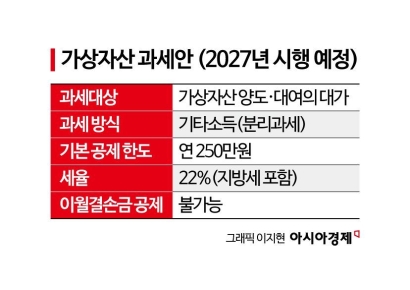 "Stocks Are Not Taxed, but Annual Crypto Gains Over 2.5 Million Won to Be Taxed Next Year... Investors Push Back"
- "Not Jealous of Winning the Lottery"... Entire Village Stunned as 200 Million Won Jackpot of Wild Ginseng Cluster Discovered at Jirisan
- "Even With a 90 Million Won Salary and Bonuses, It Doesn’t Feel Like Much"... A Latecomer Rookie Who Beat 70 to 1 Odds [Scientists Are Disappearing] ③
- "Rather Than Endure a 1.5 Million KRW Stipend, I'd Rather Earn 500 Million in the U.S." Top Talent from SNU and KAIST Are Leaving [Scientists Are Disappearing] ①
- "How Did an Employee Who Loved Samsung End Up Like This?"... Past Video of Samsung Electronics Union Chairman Resurfaces
Meanwhile, even if the Protective Birth System is passed this month, a gap is expected with the Birth Notification System, which is scheduled to be implemented in June next year. The Ministry of Health and Welfare proposed in the revised bill that the enforcement date be set at 'one year and six months after promulgation' due to the need to build an IT system and secure budget. If the bill passes this month as planned, the enforcement date will be January 2025, starting seven months after the Birth Notification System is implemented.
© The Asia Business Daily(www.asiae.co.kr). All rights reserved.







