Approval Ratings at a Crossroads: Yoon's 'First Message' on Contaminated Water Discharge Draws Attention
President Yoon Departs Today for NATO and Poland Visit
South Korea-Japan Summit... De Facto 'Contaminated Water' Talks
Changes in Second Half Government Operations Following Yoon's Remarks
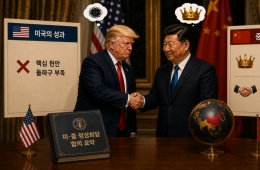
President Yoon Suk-yeol will deliver his first message regarding Japan's discharge of contaminated water from the Fukushima nuclear power plant. President Yoon, who will visit Lithuania and Poland for 4 nights and 6 days starting from the 10th, is scheduled to hold a summit with Japanese Prime Minister Fumio Kishida during the North Atlantic Treaty Organization (NATO) meeting, where he will express his stance on the 'discharge of contaminated water.' Since the focus of government administration in the second half of the year is on domestic affairs, the level of President Yoon's remarks is expected to significantly influence not only his approval ratings but also the ruling and opposition parties' strategies for the general election.
On the same day, President Yoon will depart for Lithuania to attend the NATO summit. After completing the NATO summit schedule, President Yoon will officially visit Poland from the 12th to the 14th before returning home.
![[Image source=Yonhap News]](http://www.asiae.co.kr/news/img_view.htm?img=2023061608432765726_1686872607.jpg)
While the main goal of this trip is to secure economic benefits such as supply chain and new market development through visits to NATO and Poland, the entire nation's attention is focused on the Korea-Japan summit. It is expected that Prime Minister Kishida will seek understanding regarding the plan to discharge contaminated water from Fukushima nuclear power plant this summer during the summit.
At this meeting, President Yoon is likely to deliver a specific message about the discharge of contaminated water. The presidential office's position is that he will convey the government's basic stance of 'prioritizing the health and safety of the people,' but it is highly probable that Prime Minister Kishida will bring up related issues all at once, such as the treatment and marine discharge of contaminated water from Fukushima Daiichi Nuclear Power Plant and the import of Fukushima seafood. Considering Japan's intention to reduce opposition by obtaining the consent of the closest neighboring country, South Korea, President Yoon must communicate clear and specific positions on each matter. A senior official from the presidential office explained, "The government will convey its stance on each issue based on prioritizing the safety of the people," adding, "The government's plan to monitor whether the implementation and inspection plans presented by the IAEA and the Japanese government are properly carried out will proceed as scheduled."
Earlier, the presidential office stated that it "respects the announcements of the IAEA, a representative UN-affiliated international organization in the field of nuclear safety," but also declared that the ban on imports of Fukushima seafood will continue indefinitely until the public feels assured. Recognizing that the IAEA's safety verification of the Fukushima nuclear power plant contaminated water discharge and the import of Fukushima seafood are separate issues, monthly investigations have already been conducted at eight points in Japan's adjacent open seas, and the number of radiation monitoring points in the waters has been significantly increased from 92 to 200.
However, there is also a possibility that Japan will exert strong pressure to resume seafood imports. This is why attention is focused on President Yoon's remarks at the summit. In fact, President Yoon's approval rating has steadily risen, maintaining the high 30% to low 40% range in various polls. However, when examining the negative factors in President Yoon's job performance evaluation, the 'contaminated water issue' has the greatest impact. According to a Korea Gallup survey conducted on the 7th, the 'Fukushima contaminated water discharge issue' (17%) accounted for the largest share of reasons for negative evaluations of President Yoon's job performance. As a result, depending on the level of President Yoon's remarks, the scope of activities of the government and ruling party may also change. While President Yoon has been raising his approval rating through consecutive 'economic diplomacy' efforts and messages to dismantle 'interest cartels' to consolidate his support base in the first half of the year, the message on contaminated water discharge could become a variable in future government administration.
If President Yoon delivers a message of trust in the IAEA's announcements, the Democratic Party's offensive is expected to intensify further. On the 9th, during a meeting with Rafael Grossi, IAEA Director General, the Democratic Party strongly criticized the IAEA's comprehensive report on the 'safety assessment of Japan's Fukushima nuclear power plant contaminated water discharge,' claiming it was a Japan-biased verification. Moreover, the 'National Assembly Members' Group to Prevent Fukushima Nuclear Contaminated Water Marine Dumping,' composed of opposition lawmakers, has planned a 2-night, 3-day visit to Tokyo, Japan, starting from the 10th, and intends to hold a rally in front of Prime Minister Kishida's residence.
The presidential office interprets such opposition party movements as acts that go against trust diplomacy. A presidential office official said, "It is an act that harms national interests for a representative opposition party of one government to officially deny and criticize the scientific investigation results conducted by global experts," adding, "They should also consider their responsibility to pursue trust diplomacy as a member of the international community."
Hot Picks Today
 "Samsung and Hynix Were Once for the Underachievers"... Hyundai Motor Employee's Lament
- Samsung Enterprise Labor Union: "We Respect Court’s Injunction Decision... General Strike to Proceed on the 21st as Planned"
- "Was This Delicious Treat Enjoyed Only by Koreans?"... The K-Dessert Captivating Japan
- [Exclusive] With Budget Safeguard Gone, Digital Learning Center May Be Reduced or Disappear in Financially Weaker Local Governments
- "That? It's Already Stashed" Nightlife Scene Crosses the Line [ChwiYak Nation] ③
Meanwhile, the margin of error for the public opinion poll used in the above article is ±3.1 percentage points at a 95% confidence level. For more details, please refer to the website of the Central Election Poll Deliberation Commission.
© The Asia Business Daily(www.asiae.co.kr). All rights reserved.