Women's Housework Time Decreased, but Productivity Increased?..."Impact of Related Wage Increases"
Statistics Korea Releases Previous Day National Time Use Account Data
Since 1999, Women's Housework Time Has Decreased
Increase in Housework Wages Also Raises Production Statistics

On the 27th, Statistics Korea released data from the 'National Time Transfer Account,' which converts the value of housework into monetary terms. Following this, reports on the burden of housework on Korean women continued. This is because the production of housework increased despite women's active participation in society. However, upon closer examination of the statistics, it was found that a so-called 'statistical illusion' was at play.
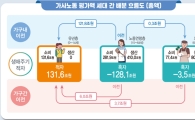
According to the National Time Transfer Account data, as of 2019, women's lifetime housework surplus amounted to 91.618 trillion KRW. The National Time Transfer Account is an indicator that converts the value of housework, which is not calculated in the national accounts (GDP), into monetary terms. If the housework (production) one performs exceeds the housework (consumption) received from others, it is recorded as a surplus; the opposite is recorded as a deficit.
Even if women's housework hours decrease, does housework production increase?

The surplus of women's housework has been on the rise since 1999. At that time, the surplus was 43.455 trillion KRW, which grew to 53.282 trillion KRW in 2004. The same trend continued in 2009 (67.396 trillion KRW) and 2014 (80.909 trillion KRW). This means that the scale of housework women need to provide to others throughout their lifetime is gradually increasing.
Looking only at these statistics, it appears that women's burden of housework has increased compared to the past, but in reality, it is closer to a statistical illusion. Statistics Korea calculates housework production as 'labor hours x wages of related occupations.' Even if the amount of housework performed increases, production increases, but if wages in occupations related to housework rise, production also increases. For example, if the wages of cleaning workers increase, the production indicator in the statistics will grow even if housework hours remain unchanged.
Women's housework hours have decreased by 45 minutes compared to ten years ago. In 1999, women's average daily housework time was 270 minutes, but it gradually decreased to 225 minutes as of 2019. This is believed to be influenced by women's active social participation, increased awareness of gender equality, rising marriage age, and the spread of a trend toward not having children. During the same period, men's housework time increased from 36 minutes to 64 minutes, roughly doubling. Although women still spend more time on housework, the absolute time gap and the gap with men have narrowed compared to the past.
Housework service occupation wages reflected, leading to increased production statistics

Nevertheless, the increase in women's housework production is the result of the wage increase effect. A Statistics Korea official explained, "The reason the (women's housework production) amount increases is not because of time but because of the increase in price." In 1999, the minimum wage was about 1,525 KRW, so the value of housework was calculated to be small, but now it reaches 9,620 KRW, so housework production inevitably increases. Moreover, as demand for housework services such as cleaning, childcare, and caregiving has grown, related costs (wages) have also increased.
However, the time spent engaging in housework is a noteworthy aspect. The age at which housework turns into a deficit was 47 for men and 84 for women. This means that women had to perform more housework than the housework benefits they received from others until the age of 84. With aging, participation of the elderly in housework, such as caring for grandchildren, has increased compared to before, and it is interpreted that women have mostly borne this burden rather than men.
Related Articles
 Childhood Household Benefits 131 Trillion Won, Elderly Household Labor 490 Trillion Won
- 8 out of 10 Gwangju Citizens Support the Introduction of the Household Allowance System
- What Is the Secret Behind Seongdong-gu Tying for First Place in Total Fertility Rate Among Seoul Districts?
- Seoul City Promotes Customized 'Seoul-Style Housework Service' for Pregnant Women, Dual-Income Families, and Multi-Child Households
As of 2019, the production value of housework by the elderly was 80.9 trillion KRW, significantly increasing from 49.204 trillion KRW five years earlier. During this period, the proportion of housework production rose from 13.6% to 16.5%. The scale of housework performed by the elderly to care for household members not living together was estimated at about 3.01 trillion KRW.
© The Asia Business Daily(www.asiae.co.kr). All rights reserved.