Why Is the Identity of the Biological Mother in the 'Suwon Refrigerator Infant Corpse Case' Not Disclosed?
Special Act on Disclosure of Personal Information Basis... Excluding Infant Homicide
Concerns Over Secondary Harm to Remaining Family Members
Regarding the case in Suwon, Gyeonggi Province, where the bodies of two infants were found in a refrigerator inside an apartment, it appears that the personal information of the biological mother, who was arrested on charges of infanticide, will not be disclosed.
On the 24th, according to the police, the face, name, and other personal information of suspect A, who was arrested on charges of infanticide, cannot be disclosed based on the Act on the Aggravated Punishment, etc. of Specific Crimes (the Special Act on Aggravated Punishment).

The Special Act on Aggravated Punishment serves as the legal basis for disclosing personal information and stipulates that the face, name, age, etc. can be disclosed when there is sufficient evidence to believe that the suspect committed a specific violent crime involving cruel means and causing serious harm. There must be a public interest such as the public's right to know, prevention of recidivism, and crime prevention, and the suspect must not be a juvenile, among other requirements.
Judging solely by the crime committed by A, it seems possible to disclose personal information; however, the charge of infanticide applied to A (Article 251 of the Criminal Act) is excluded from the crimes specified in the Special Act on Aggravated Punishment. The Special Act targets aggravated forms of ordinary murder, i.e., crimes punishable more severely. For example, killing a direct ascendant falls under this category.
On the other hand, infanticide applies to those who kill a baby during or immediately after childbirth due to reasons such as being unable to raise the child or other mitigating motives, so there are factors that reduce punishment based on the motive or act, and thus it does not fall under the Special Act.
According to Yonhap News, a Metropolitan Police Agency official stated, "When apprehending infant murderers, most cases involve a weakened psychological state immediately after childbirth?in other words, committing the act while not in a sound state of mind." He added, "Therefore, infanticide charges can be applied to biological mothers who gave birth. If the biological father committed the same crime, general murder charges would apply."
Nevertheless, some argue for expanding the scope of personal information disclosure to include cases like this infanticide incident, citing the expansion triggered by the 'Busan Dolleochagi Incident.' Comments calling for disclosure of personal information are frequently seen on related articles.
Hot Picks Today
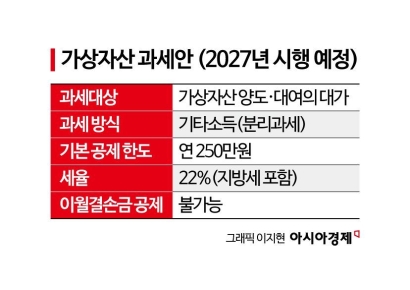 "Stocks Are Not Taxed, but Annual Crypto Gains Over 2.5 Million Won to Be Taxed Next Year... Investors Push Back"
- "Not Jealous of Winning the Lottery"... Entire Village Stunned as 200 Million Won Jackpot of Wild Ginseng Cluster Discovered at Jirisan
- "Even With a 90 Million Won Salary and Bonuses, It Doesn’t Feel Like Much"... A Latecomer Rookie Who Beat 70 to 1 Odds [Scientists Are Disappearing] ③
- "Rather Than Endure a 1.5 Million KRW Stipend, I'd Rather Earn 500 Million in the U.S." Top Talent from SNU and KAIST Are Leaving [Scientists Are Disappearing] ①
- "How Did an Employee Who Loved Samsung End Up Like This?"... Past Video of Samsung Electronics Union Chairman Resurfaces
However, considering that other family members remain, there is concern about secondary harm if A’s personal information is disclosed. A has three young children aged 12, 10, and 8 with her husband.
© The Asia Business Daily(www.asiae.co.kr). All rights reserved.







