"Hyundai Motor Labor and Management Unite: Mature Negotiation Culture Needed for Top-Tier Leap"
Union "Hyundai Motor Negotiations to Regulate Entire Labor Relations"
Wage Increase, 30% of Net Profit as Performance Bonus, and Retirement Age Extension Demanded
Management "Hyundai Motor Noted Even by Competitors"
Hyundai Motor Company's labor and management held a meet-and-greet on the 13th to kick off this year's collective bargaining. As the largest single workplace in the country, Hyundai's negotiations serve as a barometer for labor-management relations across the entire domestic industrial sector. Despite a challenging business environment, the company has achieved record performance, raising expectations among employees, leading to forecasts of tough negotiations.
Lee Dong-seok, Hyundai Motor's Vice President and the management's chief negotiator, emphasized the need for a mature negotiation culture during the meet-and-greet. Vice President Lee said, "Hyundai's negotiations carry a heavy burden due to high external interest, but they are occasions for employee improvement and development," adding, "We must proceed with a future-oriented approach for company growth and employee advancement."
He continued, "To leap from the top 3 to the top tier, we need to establish a labor-management negotiation culture," and said, "The media and competitors are watching Hyundai and Kia as companies to note and are evaluating them positively; it would be good if labor-management relations receive similar recognition."

Hyundai Motor Company labor and management held a preliminary meeting for the wage and collective agreement negotiations on the 13th at the main building's companion room of the Ulsan plant, with about 70 negotiation representatives in attendance.
Yoon Jang-hyuk, the chief negotiator for the union and chairman of the Metal Workers' Union of the Korean Confederation of Trade Unions, said, "With labor-government and labor-management conflicts at a critical stage, Hyundai's negotiations define the overall labor-management relationship," adding, "The social responsibility and role of a large company like Hyundai have a significant impact on the outcomes."
Until last year, the company's labor and management had concluded negotiations without disputes for four consecutive years. This was considered a special measure in light of the COVID-19 pandemic but was also seen as progress compared to times of intense past conflicts. This year, the situation is different. Following last year, the company continues to post record-high operating profits.
Nevertheless, it is not easy to distribute business performance according to each employee's contribution. The majority of union members are technical workers, who are largely paid based on seniority. When some employees received several million won as bonuses last year and early this year, the union protested.

Additionally, the current Hyundai Motor union leadership's term ends this year, which could become a variable during negotiations, as union members' evaluations are directly linked to negotiation outcomes. Ahn Hyun-ho, head of the Hyundai Motor union branch, said, "I believe issues like retirement age extension and dismissed workers must be resolved," adding, "Although the start of collective bargaining was delayed, we will not be fixated on timing."
The union's prepared demands are also formidable. Besides a wage increase (184,900 won, per Metal Workers' Union guidelines), they demanded 30% of net profits as performance bonuses. They also proposed conducting various new businesses domestically under the pretext of employment stability, extending the retirement age to 64, and abolishing the skilled re-employment system. Vice President Lee said, "Although Hyundai's collective agreement is among the best in the country, this year's demands are too many and burdensome," adding, "Since the market situation in the second half is uncertain, we need to carefully consider how to respond to the future."
Hot Picks Today
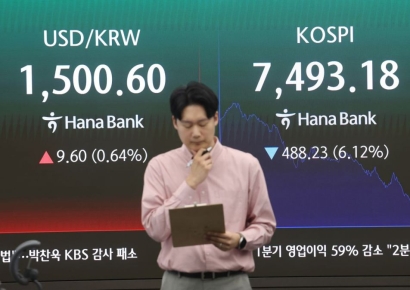 After Topping 8,000 Instead of Hitting 10,000... KOSPI Plunges—When Will It Rebound?
- "Samsung and Hynix Were Once for the Underachievers"... Hyundai Motor Employee's Lament
- [Breaking] Court Rules Against Samsung Electronics Union...1 Billion Won per Day Penalty for Exceeding Strike Scope
- Six Economic Organizations Urge Withdrawal of Samsung Electronics Strike Plan...Warn of National Loss of Opportunity
- "That? It's Already Stashed" Nightlife Scene Crosses the Line [ChwiYak Nation] ③
Similar demands are expected from the affiliate Kia. Major agenda items such as wage demands, retirement age extension, establishment of domestic factories, and introduction of a basic salary system have been outlined. Additionally, they plan to request the corporate integration of Donghee Auto, which handles outsourced production, and the introduction of a four-day workweek.
© The Asia Business Daily(www.asiae.co.kr). All rights reserved.







