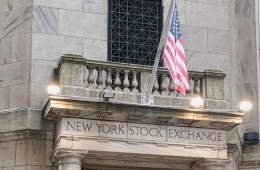
'Lehman Shock'-Level Warning... Global Office Vacancy Rates Are Alarming
Top 10 Global Cities Including San Francisco
Office Vacancy Rates Near All-Time High
"Financial Instability Feared If Real Estate Loan Impact Occurs"
The office vacancy rates in 10 major global cities, including San Francisco in the United States, have risen to record highs. There are concerns that if the situation worsens, it could affect real estate loans and cause ripple effects in the financial markets.
On the 11th (local time), Nihon Keizai (Nikkei) newspaper reported, citing U.S. real estate service firm CBRE, that as of the end of March this year, the global office vacancy rate reached 12.9%, approaching the 13.1% level seen during the global financial crisis (Lehman Shock) period of 2009-2010.
It also noted concerns that if such vacancy rates negatively impact real estate lending conditions, it could lead to financial instability.
In particular, based on vacancy rates at the end of March, 10 out of 17 major global cities?including San Francisco, Chicago, Los Angeles, Washington, downtown New York, Shanghai, Hong Kong (as of the end of last year), Sydney (as of the end of last year), and London?have exceeded their previous peak vacancy rates recorded during the Lehman Shock and other periods.
![[Photo by Yonhap News]](http://www.asiae.co.kr/news/img_view.htm?img=2023061215133460593_1686550414.jpeg)
The rise in vacancy rates in major cities appears to be influenced by the spread of remote work during the COVID-19 pandemic.
Additionally, since last fall, economic slowdown and other factors have led to layoffs and restructuring primarily among U.S. IT companies, which is analyzed to have impacted office demand, especially in San Francisco and surrounding areas.
Nikkei also pointed out that in Chinese cities, the reduction of office space by domestic companies and European companies relocating their bases to Singapore were contributing factors.
The increase in office vacancy rates is also affecting the local commercial economy. For example, a hotel located in downtown San Francisco has recently stopped interest payments and is reportedly facing a management crisis.
According to a report by global real estate consulting firm Cushman & Wakefield in April, the office vacancy rate in San Francisco, a core city of Silicon Valley, is approaching 25%. Before COVID-19, in 2019, the vacancy rate was less than 5%.
Morgan Stanley also recently analyzed that $1.5 trillion (approximately 2,000 trillion KRW) in commercial real estate loans will mature by 2025, expressing concerns about which financial institutions will be able to refinance or extend these loans. They forecast that the sharp rise in interest rates amid a collapse in the real estate values of collateral assets such as office buildings, hotels, and retail spaces will cause significant damage.
In response, governments worldwide are also wary of the risk that the office market downturn could spread to the financial sector. At a hearing held by the U.S. House of Representatives last month, Michael Barr, Vice Chair of the Federal Reserve (Fed), stated, "There is vulnerability in urban offices, and we are closely monitoring commercial real estate."
In May, the European Central Bank (ECB) expressed caution in its Financial Stability Report, pointing out that "funds that expanded under conditions of ample liquidity are heavily concentrated in real estate."
The rising costs of financing due to interest rate hikes and increasing vacancy rates could also affect the profitability and prices of commercial real estate. According to Green Street, the transaction prices of commercial real estate in the U.S. fell by 15.3% year-on-year in April this year. Nikkei reported, "This is the largest decline since September 2009. Price declines have also begun in Europe."
Hot Picks Today
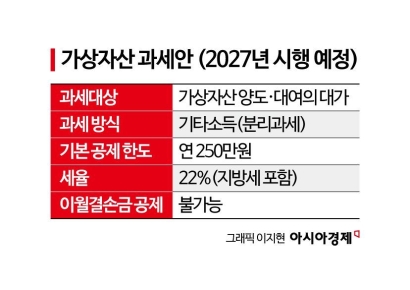 "Stocks Are Not Taxed, but Annual Crypto Gains Over 2.5 Million Won to Be Taxed Next Year... Investors Push Back"
- "Not Jealous of Winning the Lottery"... Entire Village Stunned as 200 Million Won Jackpot of Wild Ginseng Cluster Discovered at Jirisan
- "Rather Than Endure a 1.5 Million KRW Stipend, I'd Rather Earn 500 Million in the U.S." Top Talent from SNU and KAIST Are Leaving [Scientists Are Disappearing] ①
- "How Did an Employee Who Loved Samsung End Up Like This?"... Past Video of Samsung Electronics Union Chairman Resurfaces
- "Even With a 90 Million Won Salary and Bonuses, It Doesn’t Feel Like Much"... A Latecomer Rookie Who Beat 70 to 1 Odds [Scientists Are Disappearing] ③
Currently, the total amount of loans made by U.S. commercial banks for offices and commercial facilities has increased to nearly $3 trillion, with about 70% of this held by mid-sized and small banks. As financial easing was implemented to stimulate the economy and deposits accumulated, mid-sized banks, searching for lending opportunities, focused on commercial real estate.
© The Asia Business Daily(www.asiae.co.kr). All rights reserved.