[News Terms] Competitive Proposals Following Issues: 'Rekker Act'
The term 'Wrecker Law' refers to bills that are competitively proposed following socially notable incidents or accidents.
It describes the phenomenon where bill proposals concentrate on issues that attract significant public attention, similar to how a wrecker (wrecker·tow truck) quickly rushes to the scene to tow away vehicles after a traffic accident. The term is derived from the phrase 'cyber wrecker.' It originated as a mocking term for issue YouTubers who rapidly create stitched-together videos to increase views whenever an issue arises in the online space, much like a wrecker at a traffic accident scene.

On the 3rd, a subcommittee of the Land, Infrastructure and Transport Committee was held at the National Assembly in Yeouido, Seoul. On this day, the subcommittee reviewed a bill related to the Special Act on Jeonse Fraud. Photo by Hyunmin Kim kimhyun81@
View original imageIn the case of the recently most publicized 'Jeonse fraud' countermeasures, as many as 78 related bills have been submitted to the National Assembly from last year to the present. According to the National Assembly's legislative information system, 9 of these bills were discarded due to alternative reflection. Alternative reflection means that the content of the submitted bill was partially incorporated into an already proposed bill and thus discarded, but some in the National Assembly regard this as simply rehashing previously proposed bills. Additionally, 26 bills were intensively proposed after February 28, when the first death incident of a Jeonse fraud victim in Michuhol-gu, Incheon occurred.
Following the Itaewon disaster in October last year, at least 35 bills for follow-up measures have been proposed recently, with 7 bills introduced within one week after the accident. Unless related laws were already being prepared, this is clearly a case of 'Wrecker Law.'
While the legislative branch, the National Assembly, can be seen as responding swiftly to social issues, the competitive rush to propose bills leads to duplication and dilution of content with existing laws. This results in the side effect of reduced review time per bill.
Hot Picks Today
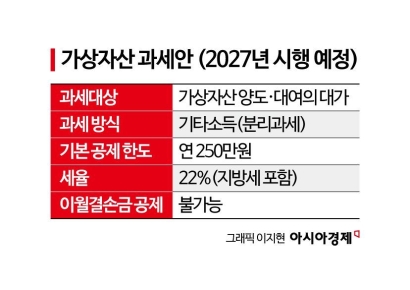 "Stocks Are Not Taxed, but Annual Crypto Gains Over 2.5 Million Won to Be Taxed Next Year... Investors Push Back"
- "Not Jealous of Winning the Lottery"... Entire Village Stunned as 200 Million Won Jackpot of Wild Ginseng Cluster Discovered at Jirisan
- "Rather Than Endure a 1.5 Million KRW Stipend, I'd Rather Earn 500 Million in the U.S." Top Talent from SNU and KAIST Are Leaving [Scientists Are Disappearing] ①
- "How Did an Employee Who Loved Samsung End Up Like This?"... Past Video of Samsung Electronics Union Chairman Resurfaces
- "Even With a 90 Million Won Salary and Bonuses, It Doesn’t Feel Like Much"... A Latecomer Rookie Who Beat 70 to 1 Odds [Scientists Are Disappearing] ③
According to the National Assembly Futures Institute, the average review time per bill submitted to the standing committee's bill review subcommittee decreased from 22.7 minutes during the 17th National Assembly to 13.1 minutes during the 20th National Assembly. Because of this, legislative researchers supporting bill reviews are criticized for wasting more time preparing review reports on rehashed bills rather than examining the essential content of the bills.
© The Asia Business Daily(www.asiae.co.kr). All rights reserved.







