'Alcohol-Free but Fatty Liver?'... NASH, Is a Treatment Finally Coming?
2029 Market Worth 36 Trillion Won
Continuous Challenges in Drug Development
Positive Signs from Madrigal, Viking, Akero, etc.
Domestic Development by Hanmi, Dong-A, Yuhan, LG, Ildong, etc.
The development of treatments for non-alcoholic steatohepatitis (NASH), which has faced difficulties for some time, is finally showing results. As the number of patients continues to increase without any available treatments, market expectations are growing, and various domestic pharmaceutical companies are also stepping up to the challenge.

NASH is a condition that exhibits symptoms similar to alcoholic fatty liver disease even in people who do not drink alcohol or drink only a little. It is considered a causative disease for cirrhosis and liver cancer. With the number of patients steadily increasing, data analysis and consulting firm GlobalData has projected that the NASH treatment market size will grow to $27.2 billion (approximately 36 trillion KRW) by 2029.
However, due to the lack of adequate treatments, efforts to overcome this have continued, and recently, clinical results from overseas have been emerging one after another, raising the possibility of developing NASH treatments. Viking Therapeutics announced the results of the Phase 2b clinical trial of the NASH treatment 'VK2809' on the 16th (local time). Using magnetic resonance imaging proton density fat fraction (MRI-PDFF) as the primary efficacy endpoint to measure fatty liver, a significant reduction in fatty liver was confirmed compared to the placebo group. Fat content was reduced by at least 30% in 85% of patients, and in cases where VK2809 10 mg was taken every other day, the average reduction effect reached up to 51.7%.
This is considered a remarkable achievement following the success of Madrigal Pharmaceuticals' 'Resmetirom' in its Phase 3 clinical trial last year. Resmetirom was the first to meet both of the FDA's primary efficacy endpoints in a clinical trial involving 955 NASH patients: 'improvement of liver fibrosis without worsening of NASH' and 'resolution of NASH without worsening of liver fibrosis.' Fibrosis improvement was 24-26%, better than the 14% in the placebo group, and NASH resolution was 26-30%, significantly higher than the 10% resolution in the placebo group.
Madrigal plans to seek FDA approval for Resmetirom in the first half of this year. The market expects that if Resmetirom is successfully launched, it will grow into a global blockbuster with sales reaching $1 billion (approximately 1.3625 trillion KRW) by around 2028. In addition, Akero Therapeutics also confirmed the fibrosis improvement effect of 'Efruxifermin' in a Phase 2b clinical trial last September, signaling a series of positive developments in NASH treatment development.
However, on the other hand, the FDA advisory committee recently expressed the opinion that the benefits of 'OCA,' developed by Intercept Pharmaceuticals and submitted for accelerated approval, do not outweigh the risks, recommending that approval decisions be withheld until the completion of Phase 3 trials. Thus, the development of NASH treatments remains challenging. In fact, NASH is known as the graveyard of big pharma, as even large pharmaceutical companies investing massive research and development costs have failed to develop effective treatments. Gilead Sciences faced setbacks when its Phase 3 trial of 'Selonsertib' in 2019 failed to meet statistical significance, and Novo Nordisk's 'Ozempic,' which has been spotlighted for diabetes and dementia treatment, recently failed to improve liver fibrosis markers.
![Exterior view of Hanmi Pharmaceutical Research Center [Photo by Hanmi Pharmaceutical]](http://www.asiae.co.kr/news/img_view.htm?img=2022110810162198633_1667870182.jpg)
Exterior view of Hanmi Pharmaceutical Research Center [Photo by Hanmi Pharmaceutical]
View original imageNevertheless, as the market still has significant unmet needs, it is known that 57 companies worldwide are developing 71 pipelines targeting NASH. Domestically, Hanmi Pharmaceutical, Dong-A ST, Yuhan Corporation, LG Chem, and Ildong Pharmaceutical are developing NASH treatments.
Hanmi Pharmaceutical is conducting a global Phase 2 clinical trial of 'Raps Triple Agonist (Eposigpegtrutide),' a triple-action therapeutic that increases energy metabolism in the body through glucagon, aids glucagon-like peptide (GLP)-1 for insulin secretion and appetite suppression, and stimulates glucose-dependent insulinotropic polypeptide (GIP) receptors for insulin secretion promotion and anti-inflammatory effects. The trial is progressing smoothly, having recently received a recommendation to continue from the Independent Data Monitoring Committee (IDMC). In addition to NASH, Hanmi plans to develop treatments for various indications such as primary biliary cholangitis (PBC) and idiopathic pulmonary fibrosis (IPF).
Hot Picks Today
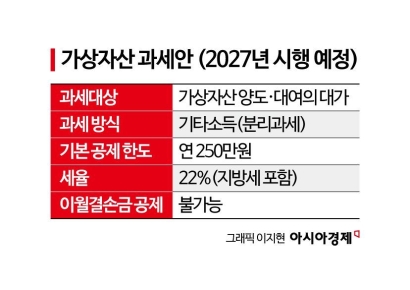 "Stocks Are Not Taxed, but Annual Crypto Gains Over 2.5 Million Won to Be Taxed Next Year... Investors Push Back"
- "Not Jealous of Winning the Lottery"... Entire Village Stunned as 200 Million Won Jackpot of Wild Ginseng Cluster Discovered at Jirisan
- "Rather Than Endure a 1.5 Million KRW Stipend, I'd Rather Earn 500 Million in the U.S." Top Talent from SNU and KAIST Are Leaving [Scientists Are Disappearing] ①
- "How Did an Employee Who Loved Samsung End Up Like This?"... Past Video of Samsung Electronics Union Chairman Resurfaces
- "Even With a 90 Million Won Salary and Bonuses, It Doesn’t Feel Like Much"... A Latecomer Rookie Who Beat 70 to 1 Odds [Scientists Are Disappearing] ③
Dong-A ST recently received FDA approval for the Phase 2 clinical trial in the U.S. of 'DA-1241,' a NASH and type 2 diabetes treatment licensed to its U.S. subsidiary NeuroBo Pharmaceuticals. The plan is to start the trial by the third quarter of this year and complete it by the second half of next year. Additionally, 'DA-1726,' a NASH and obesity treatment, is expected to enter Phase 1 clinical trials in the second half of this year. Yuhan Corporation ('YH25724'), LG Chem ('LG303174'), and Ildong Pharmaceutical ('ID119031166M') are currently conducting Phase 1 clinical trials, respectively.
© The Asia Business Daily(www.asiae.co.kr). All rights reserved.







