[On Stage] 'No Genital Taboos'... The Real Story of Teenage Girls' Bodies in 'Dance Nation'
Interview with Director Lee O-jin of the Play 'Dance Nation'
A Story of a Teenage Dance Team Performed by Actors in Their 30s to 60s
"A Teenage Female Narrative Exploring My Desires and the Desires of My Body"
Secondary sexual characteristics, which reveal the physical traits of males and females, emerge around the age of 11. The play Dance Nation, which tells the story of teenage girls grappling with their desires and the desires of their own bodies during this period, asks the audience directly and without hesitation: Are you accepting your body as it is?

Directed by Lee Ojin, Dance Nation depicts the story of seven girls and one boy dancing at a small-town dance academy in the United States, aiming to win a national competition. Lee says, “The primary goal of the production was to portray their existence in a ‘non-judgmental state’?not as pretty, ugly, dirty, or excellent.”
The original author, Claire Barron, instructs in the script’s opening that the teenage female characters be cast with actors of various ages. The director also believed that if not working with actual teenage actors, the best choice was to perform with actors spanning a wide age range. Actors from their 30s to 60s playing teenage characters reflected on their own adolescence and encountered moments on stage where their past and present selves overlapped. This experience became a process of sensing the teenage body. Lee added, “Within that, we were able to deeply explore what it means to be a teenage girl whose emotions explode with a mixture of sexual desire, curiosity, and fear.”
The challenge of conveying the essence of teenagers to the audience without literally reproducing adolescence is realized through diverse bodies and physicalities, delivering the most vivid image of teenagers. The mode of expression is raw but direct. Lee explains, “The play mentions words referring to female genitalia 72 times, and these appear in the dialogue as similes rather than metaphors during the characters’ discovery of their power. I believe that even those not born with female genitalia have their own version of that power. ‘The power of OO’ refers to an inner strength that exists within me but which I have not fully faced.” This power, carrying a double meaning in the taboo words themselves, becomes the driving force of the play alongside intense dance and music.
![Play 'Dance Nation' directed by Lee O-jin [Photo provided by Doosan Art Center]](http://www.asiae.co.kr/news/img_view.htm?img=2023050915131524917_1683612796.jpg)
The narrative of teenage protagonists dedicating themselves to a competition has become a clich?. Films like Work It, where awkward protagonists grow by surrendering to music, or Whiplash, featuring a protagonist striving to be the best drummer under a ruthless mentor, depict teenage wandering, reflection, and predictable awakening stories. Dance Nation boldly overturns these tropes.
Lee wanted the audience to feel the distinct characteristics and relationships of each character?from the friendship and tension between Amina, the lead, and Juju, the perennial second place, to the subtle dynamics among the dance team members surrounding Juju, who finally becomes the lead in the competition piece Gandhi’s Spirit. As intended, the teenage female characters freely pour out their full emotions in conversations about experiences they have yet to have?masturbation, first sexual encounters, romance, marriage. Their complex and intense teenage psychology, filled with something yet undefined, is fully reflected in every line of dialogue.
![[On Stage] 'No Genital Taboos'... The Real Story of Teenage Girls' Bodies in 'Dance Nation'](http://www.asiae.co.kr/news/img_view.htm?img=2023050915115324914_1683612713.jpg)
The production features two actors with disabilities: Kang Boram, who plays Juju’s mother, and Baek Wooram, the only male member of the dance team, Luke. Lee says, “After repeated rehearsals, I almost forgot they were actors with disabilities because they perfectly fit their characters. When they deliver monologues at a pace and rhythm that non-disabled actors cannot match, the language comes across more clearly and the meaning is perceived differently. This transforms the overall flow and tempo of the play into something very concrete and three-dimensional.” He confessed, “I was able to deeply appreciate the beauty of that moment.”
Hot Picks Today
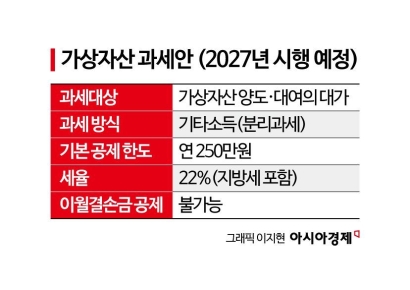 "Stocks Are Not Taxed, but Annual Crypto Gains Over 2.5 Million Won to Be Taxed Next Year... Investors Push Back"
- "Not Jealous of Winning the Lottery"... Entire Village Stunned as 200 Million Won Jackpot of Wild Ginseng Cluster Discovered at Jirisan
- "Jeong Yu-kyung Is a Neighbor"...Itaewon Standalone House with Record 23.2 Billion Won Appraisal Up for Auction [Real Estate AtoZ]
- "How Did an Employee Who Loved Samsung End Up Like This?"... Past Video of Samsung Electronics Union Chairman Resurfaces
- "Even With a 90 Million Won Salary and Bonuses, It Doesn’t Feel Like Much"... A Latecomer Rookie Who Beat 70 to 1 Odds [Scientists Are Disappearing] ③
Although the play highlights the sexual stories of teenagers, which may be somewhat uncomfortable, Lee classifies Dance Nation as a comedy?specifically, a black comedy. He insists that such stories are urgently needed. “People tend to see the theme as heavy, and I am indeed telling a serious story, but Dance Nation is a comedy about the joy of dancing teenagers. The protagonists are truly funny and irresistibly cute teenagers. Through them, I hope the audience discovers and embraces the fact that we can dance to our own rhythm, not someone else’s tempo, and that we have the power to fly.”
© The Asia Business Daily(www.asiae.co.kr). All rights reserved.