Jung Hak-ja: "If Subsidy and Local Bond Reforms Are Implemented, China's Economy Will Grow by 5.9%"
A prominent Chinese scholar forecasted that if a series of policies such as providing subsidies and restructuring local government debt are implemented, China's economic growth rate could reach 5.9% by 2030.
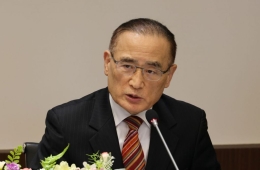
According to Caixin, a Chinese economic media outlet, on the 7th, Li Daokui, a professor in the Department of Economics at Tsinghua University and a member of the People's Bank of China’s Monetary Policy Committee, stated at an economist forum held in China the previous day, "To reach the level of a middle-income country by 2035, an annual growth rate of over 4.6% must be maintained, but at the current trend, it will fall below that," adding, "Stable economic growth is the key task."

He believed that if the government promotes four development policies and achieves them, the economic growth rate from 2021 to 2030 could reach 5.9%. Professor Li identified the four key tasks as providing subsidies to stimulate consumption, restructuring local government debt, fostering the carbon market, and implementing a flexible retirement system.
He emphasized, "In the short term, the consumer market is still cooling," and explained, "According to a survey in Shanghai, 1 yuan of subsidy promotes 4 yuan of consumption. Injecting 1 billion yuan would stimulate 4 billion yuan in consumption and could generate nearly 1.2 billion yuan in tax revenue." Professor Li added, "This should be implemented nationwide and in the short term."
He also addressed the debt issues of local governments nationwide. Professor Li said, "Currently, local government debt interest costs cannot be covered by local finances and state-owned enterprises' revenues alone, nor can the principal be repaid," and proposed, "A local government debt restructuring project similar to the debt restructuring of state-owned commercial banks should be promoted." Furthermore, he stressed, "A significant portion of local government bond issuance should be transferred to the central government and issued as national bonds to reduce financing costs, allowing local governments to focus on economic development and social stability."
Additionally, he advocated actively expanding the carbon market by imposing carbon taxes on fossil fuel-related industries such as crude oil and coal, and gradually increasing these taxes. Professor Li elaborated, "If the carbon market is activated, green investments will generate profits, attracting many companies and investors." He also emphasized the need to introduce a flexible retirement system reflecting demographic changes. He explained, "This year alone, 30 million workers will reach the retirement age of 60," and "Within five years, 150 million people will retire." He added, "If reformed with a flexible retirement system, considering population quality, education levels, and public health standards despite population decline, human resources will increase until 2050."
Hot Picks Today
 "Now Our Salaries Are 10 Million Won a Month" Record High... Semiconductor Boom Drives Performance Bonuses at Major Electronic Component Firms
- Living the Homebody Dream? "I Was Shocked by My Spending" How to Cut Costs to 5,000 Won for Essentials [The Principles of Benefits]
- Is It Really Like an Illness? "I Can't Wait to Go Again"—Over 1 Million Visited in Q1, Now 'Busanbyeong' Takes Hold [K-Holic]
- "Asset Management Firm Deposits Soar by 99.6 Trillion Won in April amid Stock Market Boom, Marking All-Time High"
- Experts Already Watching Closely..."Target Price Set at 970,000 Won" Only Upward Momentum Remains [Weekend Money]
Professor Li stated, "If such reforms are implemented, China's potential economic growth rate over the next 10 years until 2030 will reach 5.9%, and the potential growth rate for the following decade until 2040 will be 4.9%."
© The Asia Business Daily(www.asiae.co.kr). All rights reserved.