[Yeouido Art Museum]②Glimpsing the Battery Industry from the Spirit of Baekja Ceramics
Leeum Museum of Art's 'Gunjajihyang' Exhibition Praised... The Morality of 'Gunja' Felt in Baekja
Advanced Pottery Techniques Beyond Cheongja... Baekja Popularity Revived by 'Dalhangari'
The Totality of Technology Connected to the Battery Industry

"A noble man transforms like a leopard, his spots shining more brilliantly."
- I Ching (周易), Hexagram 49 (革掛)
"A noble man remains steadfast even in adversity, but a petty person acts recklessly when in distress."
- Analects (論語), Wei Ling Gong Chapter (衛靈公篇)
The "Gunja Jihyang" exhibition at the Leeum Museum of Art is gaining attention. The exhibition draws interest by connecting the philosophy of the ideal human figure "Gunja," as envisioned by Joseon Dynasty yangban (aristocrats), with the beauty of white porcelain (Baekja).
![[Yeouido Art Museum]②Glimpsing the Battery Industry from the Spirit of Baekja Ceramics](http://www.asiae.co.kr/news/img_view.htm?img=2023042220225497702_1682162574.jpg)
Dosangbong, Kim Whanki, and Lee Ungno's 'Love for Baekja'
Interest in Baekja is relatively recent. Although there were Baekja collectors during the Japanese colonial period, they were few in number. After liberation, collectors began to pay attention, and popular interest has lasted less than a decade. Compared to Goryeo celadon, which had been collected since Japan's Muromachi period, this is quite late.
After liberation, those who first recognized the beauty of Baekja were Kansong Jeon Hyeongpil, Docheon Dosangbong, Suhwa Kim Whanki, and Goam Lee Ungno, among others. Dosangbong and Kim Whanki are famous for expressing their love for Baekja in their works.
The characteristics of Joseon Baekja, known as "simplicity, the beauty of white color, and the natural beauty of imperfections," were evaluations made during the Japanese colonial period. These aesthetic perspectives were defined by Yanagi Muneyoshi, an art critic at the time, who reappraised the value of Joseon Baekja.
The perspective on Baekja gradually changed through artists like Kim Whanki. Kim Whanki compared Baekja to Le Corbusier's architecture, saying it "has a narrow rim and seems to float lightly." He saw modernism in Baekja.
![[Yeouido Art Museum]②Glimpsing the Battery Industry from the Spirit of Baekja Ceramics](http://www.asiae.co.kr/news/img_view.htm?img=2023042223380797726_1682174287.jpg)
Reinterpreting Baekja's Value... Popular Among the MZ Generation
Baekja became popularly loved after 2000. The familiar "Moon Jar (Baekja Daeho)" played a significant role. Interest in the Moon Jar grew due to a series of events: the opening of the Korean Gallery at the British Museum in 2000, the 2005 "Baekja Moon Jar Exhibition" at the National Palace Museum of Korea in Seoul, and the Cultural Heritage Administration's official naming of the "Moon Jar" in 2011.
Especially, the fact that BTS member RM owns a Moon Jar attracted the younger generation's attention. Recently, a Joseon Moon Jar was sold for 6 billion KRW at a Christie's New York auction, setting a record high price, reflecting this interest.
The production method of the Moon Jar is also unique. Due to its large volume, the upper and lower parts are made separately and joined before firing. Sometimes, a distinct line appears in the middle of the Moon Jar, which is a unique trace of its manufacturing process.
![[Yeouido Art Museum]②Glimpsing the Battery Industry from the Spirit of Baekja Ceramics](http://www.asiae.co.kr/news/img_view.htm?img=2023042223360697725_1682174166.jpg)
Among the Moon Jars showcased in "Gunja Jihyang," I particularly like the privately owned pieces. They evoke the actual moon. Although not a smooth pure white, the traces left from the firing process closely resemble the real moon. The balance and volume are flawless.
Pure white is both an empty color and one that contains myriad possibilities. It reveals various appearances depending on light and angle. Sometimes dazzlingly white, sometimes with a bluish tint, and at times, like clouds holding rain, it carries a grayish hue.
Baekja not only has outstanding aesthetic value but is also technically more advanced than celadon. It is first shaped with a cleanly refined clay body containing no iron content. Then it is fired at a higher temperature than celadon, above 1250 degrees Celsius.

On the 17th, visitors are touring the LG Energy Solution exhibition hall at 'InterBattery 2022' held at COEX in Samseong-dong, Gangnam-gu, Seoul. Photo by Hyunmin Kim kimhyun81@
View original imageBattery Industry, the Frontline of Technological Competition... Resembling the Spirit of Cheolhwa Baekja
Removing impurities and raising conditions during the manufacturing process to produce porcelain is somewhat similar to the cutting-edge manufacturing process of the battery (secondary cell) industry. The battery market, evolving through eras, reminds us of the history of innovation in Baekja.
In South Korea, LG Chem (battery division) began developing secondary batteries in 1995. The development of medium-to-large secondary batteries for electric vehicles, which we call "batteries," began in earnest from 2000.
In 2007, they succeeded in mass-producing the world's first ternary (NCM: Nickel, Cobalt, Manganese) battery. The ternary battery quickly became mainstream. Although expensive, it has advantages such as compact size and long driving range. Unlike Korea, China focuses on producing LFP (Lithium Iron Phosphate) batteries due to their relatively low production cost and excellent safety.

Cobalt, one of the ternary raw materials, was a pigment used to express the blue color in Cheonghwa Baekja (blue-and-white porcelain). Since it was an expensive imported material, Cheonghwa Baekja was mainly used by the royal family. It is fascinating to think that European and American electric vehicle brands equipped with ternary batteries differentiate themselves from Chinese mid-to-low-priced electric vehicles that mainly use LFP batteries.
Recently, as Chinese battery companies develop high-energy-density LFP batteries, technological competition is intensifying. With the rising prices of ternary raw materials like nickel and cobalt, electric vehicle companies such as Tesla are expanding the adoption of LFP batteries.
In response, domestic battery companies have introduced NCMA (Nickel, Cobalt, Manganese, Aluminum) batteries that increase nickel content to boost output and apply aluminum to enhance stability. Meanwhile, development of the game-changing "solid-state battery" is also underway.
It is difficult to predict the outcome of the fierce competition for battery dominance amid US-China tensions. However, one thing is clear: the spirit of Baekja's self-transformation is felt in the continuous innovation of domestic battery companies.

Cheolhwa Baekja displayed at Leeum's 'Gunjajihyang' exhibition (Photo by Hwang Yoonjoo)
View original imageIn the mid-Joseon period, Donghwa and Cheolhwa Baekja flourished. Due to difficulties in procuring blue pigment during wars such as the Imjin War and the Manchu invasions, iron pigment was used as a substitute. The Leeum Museum of Art explains the heyday of Donghwa and Cheolhwa Baekja as "Joseon, though in adversity, did not complain or regret like petty people but ultimately prospered like noble men."
Hot Picks Today
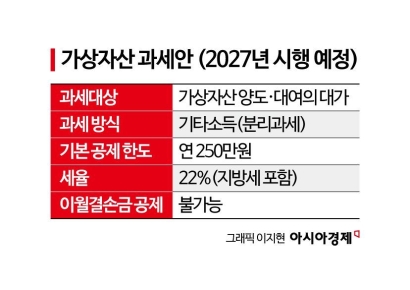 "Stocks Are Not Taxed, but Annual Crypto Gains Over 2.5 Million Won to Be Taxed Next Year... Investors Push Back"
- "Not Jealous of Winning the Lottery"... Entire Village Stunned as 200 Million Won Jackpot of Wild Ginseng Cluster Discovered at Jirisan
- "Rather Than Endure a 1.5 Million KRW Stipend, I'd Rather Earn 500 Million in the U.S." Top Talent from SNU and KAIST Are Leaving [Scientists Are Disappearing] ①
- "How Did an Employee Who Loved Samsung End Up Like This?"... Past Video of Samsung Electronics Union Chairman Resurfaces
- "Even With a 90 Million Won Salary and Bonuses, It Doesn’t Feel Like Much"... A Latecomer Rookie Who Beat 70 to 1 Odds [Scientists Are Disappearing] ③
This is similar to the domestic battery industry, which does not blame the difficult market conditions caused by international situations but continues to innovate. Hopefully, domestic batteries will monopolize the love of the electric vehicle industry like the Moon Jar.
© The Asia Business Daily(www.asiae.co.kr). All rights reserved.







