[News Figures] Japan Bank's New Governor Ueda Kazuo
Evaluation of Former US Treasury Secretary Summers
"Ueda is Japan's Bernanke... Gentle but Decisive"
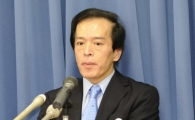
Ueda Kazuo, the newly appointed Governor of the Bank of Japan, took office on the 9th. Born in 1951 and hailing from Shizuoka Prefecture, he is the first economist to become governor since World War II.
He studied at the University of Tokyo's Faculty of Economics and earned a Ph.D. in Economics from the Massachusetts Institute of Technology (MIT) in the United States. It is known that he studied at MIT around the same time as former Federal Reserve Chairman Ben Bernanke.
Both of them received thesis supervision from Professor Stanley Fischer, who served as Vice Chairman of the Federal Reserve under both the Barack Obama and Donald Trump administrations. Professor Fischer is also famous for developing the 'New Keynesian' school of thought, which recognizes individual rationality and respects economic freedom.
In this regard, former U.S. Treasury Secretary Lawrence Summers said in an interview with Bloomberg on February 12 (local time) about Governor Ueda, "He can be considered Japan's Ben Bernanke," and praised him by saying, "He makes gentle academic statements but also has decisiveness."

Governor Ueda, who has long taught as a professor at the University of Tokyo's Faculty of Economics, served as a Policy Board member of the Bank of Japan, the country's central bank, from April 1998 to April 2005, during which he was involved in the introduction of zero interest rate policy and quantitative easing.
Regarding the trend of raising benchmark interest rates in major countries such as the United States, he expressed his intention to continue the easing policy for the time being. At a House of Representatives hearing in February, he stated, "It is necessary to continue monetary easing to firmly support the economy. We will create an environment where companies can raise wages." However, he also emphasized, "Various side effects have accompanied the continuation of monetary easing. We need to specifically consider how to adjust the policy." Additionally, in a contribution to Nikkei in July last year titled 'Bank of Japan Should Avoid Hasty Monetary Tightening,' he stressed caution on raising interest rates, saying, "There is still a long way to go to achieve a sustained 2% inflation rate."
© The Asia Business Daily(www.asiae.co.kr). All rights reserved.