Is Concern Over Supply and Demand Instability of KEPCO Bonds and Corporate Bonds Unfounded?
KEPCO Struggles to Reduce Deficit Due to Failed Q2 Rate Hike
Limitations on Increasing New Issuance... Issuance Cap Expected to Decrease Compared to Last Year
Korea Electric Power Corporation (KEPCO), which is expected to post a large-scale deficit again this year following last year, continues to issue bonds (KEPCO bonds, Hanjeonchae), raising concerns about supply-demand instability in the corporate bond market due to the increased supply of Hanjeonchae. However, bond market experts believe that KEPCO is in a situation where it cannot indiscriminately increase bond issuance, and there is sufficient demand for high-quality bond investments, so the likelihood of a recurrence of confusion similar to the Legoland incident immediately after last year is low. Nonetheless, if other financial market instability factors such as bank concerns in the US and Europe act as triggers, polarization in the bond market could intensify, prompting calls for close monitoring of the overall market.

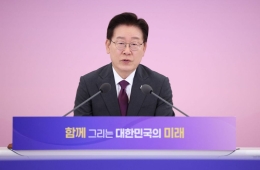
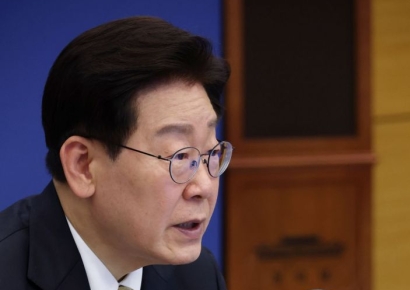
Lee Jae-myung, leader of the Democratic Party of Korea, along with affiliated lawmakers and representatives of small business organizations nationwide, are urging support measures against the gas and electricity bill shocks at the launch ceremony of the National Small Business Committee held on the 15th at the National Assembly Library Auditorium in Yeouido, Seoul. Photo by Hyunmin Kim kimhyun81@
View original imageConcerns Over Supply-Demand Instability in Bond Market... Root Cause is the Failure of Electricity Rate Hike
The core reason for the raised concerns about supply-demand instability in Hanjeonchae is the failure to raise electricity rates in the second quarter. On March 31, the government and the People Power Party decided at a party-government council to postpone the increase of electricity and gas rates for the second quarter. This decision was contrary to expectations that the government would raise electricity rates further. The government had decided in the first quarter to increase electricity rates by 13.1 KRW per kWh to address KEPCO's deficit problem and had hinted at additional rate hikes in the remaining three quarters.
The failure to raise electricity rates has led to forecasts that KEPCO will find it difficult to reduce the scale of its deficit. KEPCO posted a deficit of 32.6 trillion KRW last year. Without further electricity rate hikes, it is expected to incur a deficit exceeding 10 trillion KRW in the first half of this year alone. With a large-scale deficit worsening cash flow, KEPCO will need to increase external borrowing to purchase electricity from power generation companies.
At the beginning of the year, the scale of Hanjeonchae issuance also increased significantly. KEPCO issued bonds worth 8.54 trillion KRW through April 5 this year, about 17% more than the issuance amount for the same period last year. Of this, new bond issuance excluding short-term bond repayments amounted to 6.8 trillion KRW. According to KEPCO, as of the end of March, the cumulative outstanding Hanjeonchae issuance balance was 68.03 trillion KRW, a 72% increase compared to the balance of 39.62 trillion KRW a year ago. There is little room left before reaching the issuance limit.
KEPCO has continued to issue bonds consecutively since April. On April 4, it issued bonds worth 520 billion KRW and plans to issue an additional 500 billion KRW worth of bonds this week. A bond market official said, "Concerns are emerging about a crowding-out effect where liquidity that should flow into corporate bonds is being absorbed by KEPCO as Hanjeonchae issuance increases following the failure of the second-quarter electricity rate hike."
Issuance Limit Expected at 90 Trillion KRW Considering Deficits
According to the amended Korea Electric Power Corporation Act passed by the National Assembly at the end of last year, the issuance limit for Hanjeonchae is up to five times the corporation's 'capital + reserves.' In urgent cases to resolve management crises, the Minister of Trade, Industry and Energy can approve an increase up to six times. Currently, KEPCO's capital is 3 trillion KRW, and reserves are 17 trillion KRW. Considering this, the issuance limit reaches 104.6 trillion KRW.
However, considering KEPCO's deficits this year, the issuance limit is expected to decrease to 90 trillion KRW. Under the limit, it is not easy to significantly increase Hanjeonchae issuance to last year's level. Minjae Lee, a researcher at NH Investment & Securities, said, "Reflecting KEPCO's deficit this year, it will be difficult for new Hanjeonchae issuance to increase significantly to last year's level under the bond issuance limit."

Government Controls Issuance Volume of Public and Bank Bonds... Interest Rates Stable
The government is also expected to control KEPCO's bond issuance to prevent indiscriminate increases. The government plans to reduce KEPCO's bond issuance scale from about 30 trillion KRW last year to about 10 trillion KRW this year through electricity rate hikes and other measures. On April 4, Lee Bok-hyun, Governor of the Financial Supervisory Service, stated at a media event, "We are discussing with Deputy Prime Minister Choo Kyung-ho to keep this year's new Hanjeonchae issuance below 10 trillion KRW, a manageable level."
It is also worth noting that monthly Hanjeonchae issuance has been decreasing due to falling energy prices and the electricity rate hike in the first quarter. Hanjeonchae issuance amounted to 3.21 trillion KRW in January, 2.71 trillion KRW in February, and 2.09 trillion KRW in March this year, showing a monthly decrease of 500 billion to 600 billion KRW. A bond market official evaluated, "While we need to observe the trend further, the effect of the first-quarter electricity rate hike appears to have partially contributed to the reduction in Hanjeonchae issuance."
The interest rate level of Hanjeonchae is also maintaining a downward stabilization trend. Recently, KEPCO has been issuing 2-year and 3-year maturity bonds at levels in the high 3% to around 4%. Compared to the Legoland incident period when Hanjeonchae issuance rates soared above 6%, and the early-year levels in the mid-4% range, this is a relatively stable level.
An investment banking (IB) industry official said, "The government is exercising control over bond market supply-demand by adjusting bank bond issuance volumes to match maturities, so the possibility of supply-demand instability due to a surge in Hanjeonchae issuance is low," adding, "There is stable demand for high-quality bonds rated AA or higher, with investment demand exceeding issuance amounts daily."
Hot Picks Today
 At President Lee's Call to "Give Enough to Shock," Whistleblower Rewards Become a Real Lottery
- If a Samsung Electronics Employee with a 100 Million Won Salary Receives a 600 Million Won Performance Bonus, Taxes Total 247.19 Million Won
- Lived as Family for Over 30 Years... Daughter-in-Law Cast Aside After Husband's Death
- "Who Is Visiting Japan These Days?" The Once-Crowded Tourist Spots Empty Out... What's Happening?
- "4.15 Million Won Prada Jacket Shows White Spots After One Wear"...Korea Consumer Agency Orders Full Refund
© The Asia Business Daily(www.asiae.co.kr). All rights reserved.