Is the Big Bang Theory Overturned? ... 'Giant Galaxies' Existed in the Early Universe Too
Observed in the Universe 500-700 Million Years After the Big Bang
"Cosmological Models May Need Revision"
The universe rapidly expanded due to a massive explosion called the 'Big Bang,' and the existing cosmology, which held that only small galaxies existed in the early universe, may be challenged. The James Webb Space Telescope (JWST) observed the early universe just 600 million years after the Big Bang, revealing that giant galaxies already existed at that time.
An international research team led by Ivo Labb?, a professor at Swinburne University in Australia, reported in a new paper published on the 23rd (local time) in the British international academic journal Nature that "six giant galaxies were discovered in the universe 500 to 700 million years after the Big Bang," estimating that "the stellar mass of the largest galaxy is about 100 billion times that of the Sun." Although 500 to 700 million years may seem like a long time, it is close to a 'moment'?only about 3% of the vast history of the universe.
The research data were based on observations made by the James Webb Telescope in June last year.
The research team explained, "Most galaxies during this period were still small and gradually expanded over time," but added, "a few 'monster galaxies' matured much faster than other galaxies, and the reason for this is still unknown."

A massive galaxy captured by the James Webb Space Telescope from 500 to 700 million years after the Big Bang. / Photo by NASA
View original imageThis observation result was completely unexpected by the astronomical community. Until now, the academic world had assumed that early universe galaxies were very small and that most gradually developed into their current forms over time. Because of this, the research team unofficially named the giant galaxies discovered in this observation 'universe breakers,' implying that they completely overturn existing cosmology.
Co-researcher Joel Leja, a professor at Pennsylvania State University, said, "The giant galaxies were much more developed than we expected," adding, "The universe may have evolved much faster than the models developed by the academic community so far."
He further stated, "To explain this, we may need to change cosmological models or revise the existing theory that clusters, which were just small stars and dust in the early universe, developed into galaxies."
Hot Picks Today
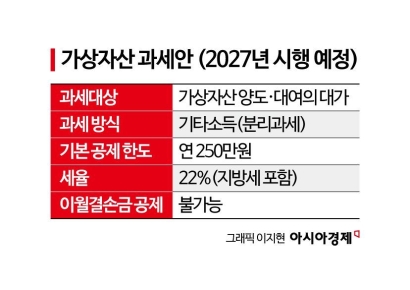 "Stocks Are Not Taxed, but Annual Crypto Gains Over 2.5 Million Won to Be Taxed Next Year... Investors Push Back"
- "Not Jealous of Winning the Lottery"... Entire Village Stunned as 200 Million Won Jackpot of Wild Ginseng Cluster Discovered at Jirisan
- "Rather Than Endure a 1.5 Million KRW Stipend, I'd Rather Earn 500 Million in the U.S." Top Talent from SNU and KAIST Are Leaving [Scientists Are Disappearing] ①
- "How Did an Employee Who Loved Samsung End Up Like This?"... Past Video of Samsung Electronics Union Chairman Resurfaces
- "Even With a 90 Million Won Salary and Bonuses, It Doesn’t Feel Like Much"... A Latecomer Rookie Who Beat 70 to 1 Odds [Scientists Are Disappearing] ③
Meanwhile, the James Webb Telescope, which played a crucial role in this research, is a new astronomical observation facility developed through cooperation among NASA, the European Space Agency (ESA), and the Canadian Space Agency (CSA). It is the largest space telescope ever built by humanity and was launched at the end of 2021. The development period, including project preparation, spanned about 23 years from 1998 to 2021, and the production cost alone reached 10 billion dollars (approximately 13 trillion won).
© The Asia Business Daily(www.asiae.co.kr). All rights reserved.







