Presidential Office Launches Foreign Affairs and Security Policy Advisory Group Today... Strengthening Security Response
Composed of Over 20 Experts in Security and Economy
Actively Seeking Diplomatic Solutions on North Korea Issues and Economic Security
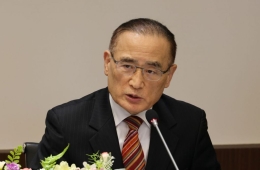
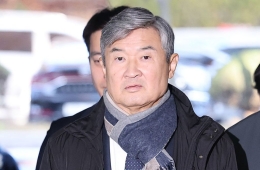
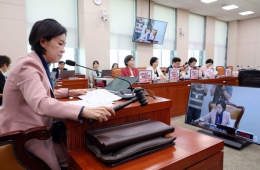
[Asia Economy Reporter Ki-min Lee] On the 20th, the Presidential Office will launch a Foreign Affairs and Security Policy Advisory Group composed of foreign affairs and security experts. This is to actively respond by collecting diplomatic opinions to be reflected in policies through external experts from various fields, directly by President Yoon Seok-yeol, amid the escalating nuclear and missile threats from North Korea and the US-China conflict.
The Foreign Affairs and Security Policy Advisory Group will officially launch on the same day with an appointment ceremony at the Yongsan Presidential Office and is scheduled to hold its first meeting chaired by Kim Sung-han, Director of the National Security Office.
The advisory group is a think tank consisting of about 20 experts in security and economic fields covering North Korea issues, diplomacy with the US, China, and Japan, climate change, artificial intelligence (AI), and other advanced science and technology. It will serve an advisory role on major diplomatic issues with key countries concentrated in the first half of this year.
First, it is expected to listen to various opinions regarding North Korea. Although President Yoon Seok-yeol announced the bold plan for peace on the Korean Peninsula last year, North Korea has refused dialogue and increased the frequency and intensity of provocations such as missile launches. Last year, North Korea fired 68 missiles in 41 launches, the highest ever, including eight intercontinental ballistic missiles (ICBMs).
![[Image source=Yonhap News]](http://www.asiae.co.kr/news/img_view.htm?img=2023013016283597655_1675063715.jpg)
On the 18th of this month, just two days after the high-angle launch of the ICBM Hwasong-15, North Korea launched two short-range ballistic missiles (SRBMs) from Sukchon, South Pyongan Province, into the East Sea. Kim Yo-jong, Vice Director of the Workers' Party of Korea, strongly threatened in a statement released through the Korean Central News Agency immediately after the SRBM launch, saying, "The frequency with which we use the Pacific as our shooting range depends on the nature of the US military's actions."
It is also expected that diplomatic solutions will be sought regarding the necessity of trilateral cooperation among South Korea, the US, and Japan due to the security situation, and the increasing importance of supply chain and economic security caused by global bloc formation. During his visits to the United Arab Emirates (UAE) and Switzerland last month, President Yoon emphasized himself as "South Korea's No. 1 salesperson" and showed an active economic diplomacy stance, continuously urging the government to foster future industries such as AI, semiconductors, and aerospace.
Hot Picks Today
 "Now Our Salaries Are 10 Million Won a Month" Record High... Semiconductor Boom Drives Performance Bonuses at Major Electronic Component Firms
- Experts Already Watching Closely..."Target Price Set at 970,000 Won" Only Upward Momentum Remains [Weekend Money]
- Living the Homebody Dream? "I Was Shocked by My Spending" How to Cut Costs to 5,000 Won for Essentials [The Principles of Benefits]
- "Heading for 2 Million Won": The Company the Securities Industry Says Not to Doubt [Weekend Money]
- "Living in Another World"... The Real World of the Top 0.1%, Privileges Money Alone Can't Buy [Luxury World]
The advisory group's opinions are also expected to influence the timing and destinations of President Yoon's overseas visits this year. Inside and outside diplomatic and political circles, there is talk of President Yoon making a state visit to the United States as early as April to mark the 70th anniversary of the Korea-US alliance this year. Following that, in May, there is a possibility of visiting Japan in the form of an invitation from the host country, Japan, to the Group of Seven (G7) summit held in Hiroshima.
© The Asia Business Daily(www.asiae.co.kr). All rights reserved.