Ultimately, Chinese Batteries Heading to the US... Why the IRA Can't Stop Them
Excluding China from Next-Gen Batteries Amid IRA
China's CATL's US Entry Becomes Visible
Surging Battery Demand and Local Governments' Divergent Interests
[Asia Economy Reporter Jeong Dong-hoon] The world's number one battery company, China's CATL, is finally expected to enter the United States. The U.S. strategy to exclude China from the next-generation battery industry also seems unlikely to prevent Chinese battery companies from entering the U.S. market.
CATL plans to establish a battery factory in Michigan, USA, in partnership with Ford Motor Company. This is the first time a Chinese battery company will build a 'complete battery cell' factory locally in the United States. The joint venture factory between CATL and Ford is scheduled to be built in Michigan. Regarding the partnership with CATL, Ford stated in a press release, "We have been exploring the use of batteries based on CATL technology," and "We have now planned local production in North America."

◆Automakers needing large quantities and diverse types of batteries adopt a bypass strategy= The U.S. government implemented the Inflation Reduction Act (IRA) to secure supply chains for next-generation industries. This law prohibits subsidies for electric vehicles using battery parts and minerals produced by 'concerned countries' such as China. The U.S. government has strictly limited Chinese companies' entry into North America. To circumvent this, Ford is reportedly planning to own 100% of the shares and facilities of the Michigan joint venture factory, while CATL will be responsible only for factory operations. Ford expects to benefit from tax credits and subsidies under the IRA through this approach.
The reason Ford is attempting a joint venture with a Chinese battery company even while using a bypass strategy is due to the rapidly growing demand for batteries. The U.S. electric vehicle market is expanding at an incredible pace. Domestic battery companies and automakers have agreed to build battery factories in North America with an annual production capacity of over 300GWh (enough for 4.5 million electric vehicles) within three years.
However, automakers anticipate needing even larger quantities of batteries. In particular, there is a high possibility of supply shortages for the affordable LFP (Lithium Iron Phosphate) batteries mainly produced by China, compared to the NCM (Nickel-Cobalt-Manganese) and other ternary batteries primarily produced by domestic companies. The joint venture factory between Ford and CATL is expected to produce these LFP batteries.
◆'Battery divergent interests' between federal and state governments, will the IRA's 'exclusion of China' policy weaken?= The Inflation Reduction Act is also signaling subtle changes. A white paper released by the U.S. Treasury Department at the end of last year mentioned that electric vehicle subsidies can be granted if more than 50% of the added value is created in North America or countries with which the U.S. has a free trade agreement. This means electric vehicles using some parts and minerals produced by Chinese companies can be sold in North America without discrimination. The detailed IRA regulations to be announced by the U.S. Treasury Department next month are expected to present looser standards.

The U.S. federal government's strategy to exclude China from the supply chain conflicts with the plans of state governments, which prioritize job creation and economic revitalization. Initially, CATL and Ford planned to build a factory in Virginia. However, Glenn Youngkin, the governor of Virginia and a leading Republican presidential candidate, expressed opposition. Governor Youngkin even called CATL a 'Trojan horse' that would weaken the U.S. automotive industry. But the situation changed after Michigan stepped forward as a 'white knight.' Michigan Governor Gretchen Whitmer criticized Governor Youngkin's stance as a "political decision" and has been working to attract Ford's battery factory, headquartered in Detroit, Michigan.
Hot Picks Today
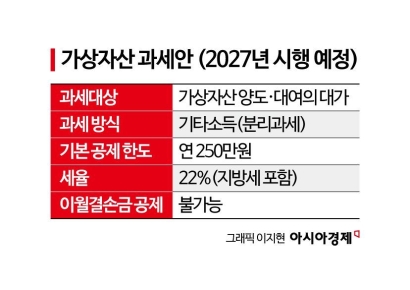 "Stocks Are Not Taxed, but Annual Crypto Gains Over 2.5 Million Won to Be Taxed Next Year... Investors Push Back"
- "Not Jealous of Winning the Lottery"... Entire Village Stunned as 200 Million Won Jackpot of Wild Ginseng Cluster Discovered at Jirisan
- "Even With a 90 Million Won Salary and Bonuses, It Doesn’t Feel Like Much"... A Latecomer Rookie Who Beat 70 to 1 Odds [Scientists Are Disappearing] ③
- "Rather Than Endure a 1.5 Million KRW Stipend, I'd Rather Earn 500 Million in the U.S." Top Talent from SNU and KAIST Are Leaving [Scientists Are Disappearing] ①
- "How Did an Employee Who Loved Samsung End Up Like This?"... Past Video of Samsung Electronics Union Chairman Resurfaces
Korean companies are unable to hide their tension over the change in the U.S. stance. Industry insiders have long assessed that the North American market could become a 'no man's land' for Korean battery companies due to the implementation of the IRA. The entry of CATL into the U.S. signals that Chinese battery companies such as BYD and CALB, which have secured technology and market share in the domestic market, may also enter the U.S. market.
© The Asia Business Daily(www.asiae.co.kr). All rights reserved.







