[Reporter’s Notebook] 37 Trillion MOU, Follow-up Actions More Important Than Promotion
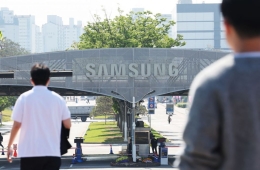
[Asia Economy Sejong=Reporter Lee Jun-hyung] The hot topic in the economic world last weekend was undoubtedly the United Arab Emirates (UAE). On the 15th (local time), coinciding with President Yoon Seok-yeol's state visit to the UAE, the two countries signed 13 memorandums of understanding (MOUs) worth $30 billion (approximately 37 trillion KRW). The fields covered were diverse, including nuclear power, energy, investment, and defense industries. Not only President Yoon but also business leaders such as Samsung Electronics Chairman Lee Jae-yong, SK Group Chairman Chey Tae-won, and Hyundai Motor Group Chairman Chung Eui-sun were fully present at the MOU signing ceremony.
This brings to mind an event just two months ago. It was when Crown Prince Mohammed bin Salman of Saudi Arabia visited Korea on November 17 last year. At that time, Korea and Saudi Arabia signed as many as 23 MOUs in one day, taking advantage of Crown Prince bin Salman's visit.
The planned project costs for each MOU were in the 'trillion' KRW range. Expectations grew that Korea would secure major projects in the world's largest smart city construction project, "NEOM City," with a total project cost of $500 billion (approximately 621 trillion KRW), through strengthened cooperation between the two countries. This was why Korea was abuzz for several days following the Saudi de facto ruler's visit, which lasted only one night and two days.
The problem lies in the effectiveness of the MOUs. An MOU is a document signed before a formal contract to establish a basic consensus between parties intending to contract. Although it can vary depending on specific content, it generally has no legal binding force. From the parties' perspective, it means "whether to proceed or not is optional." This is why only half of the MOUs signed with Saudi Arabia during the previous Park Geun-hye and Moon Jae-in administrations led to formal contracts.
Nevertheless, the government promoted the MOUs as if the investments were confirmed. This was based on the judgment that both Saudi Arabia and the UAE would make "generous investments" in Korea according to the MOUs. The fact that there were tangible results after Crown Prince bin Salman's visit also reinforced this confidence. Kakao Entertainment recently attracted an investment of 1.2 trillion KRW from the Saudi Arabian sovereign wealth fund led by Crown Prince bin Salman. Although this was not a direct result of the Korea-Saudi MOUs, it cannot be denied that the economic cooperation atmosphere formed between the two countries influenced the investment.
What remains is the next step. The signing of MOUs has brought formal contracts closer. However, an MOU does not necessarily mean an "oil money jackpot." For MOUs to lead to actual contracts worth tens of trillions of KRW, follow-up measures by the government, including diplomatic efforts, are necessary. If it remains only an MOU, it is nothing more than "lip service." It is important to remember that the public's expectations raised by President Yoon's tour can turn into disappointment at any time.
Hot Picks Today
!['Still Hesitant? If You're Wondering Whether KOSPI Will Rise, This Is the Number You Must Watch [Weekend Money]'](https://cwcontent.asiae.co.kr/asiaresize/93/2026051415173163355_1778739450.jpg) 'Still Hesitant? If You're Wondering Whether KOSPI Will Rise, This Is the Number You Must Watch [Weekend Money]'
'Still Hesitant? If You're Wondering Whether KOSPI Will Rise, This Is the Number You Must Watch [Weekend Money]'
- About 100 Trillion Won at Stake... "Samsung Strike Is an Unprecedented Opportunity" as Prices Surge 20% [Taiwan Chip Column]
- "Heading for 2 Million Won": The Company the Securities Industry Says Not to Doubt [Weekend Money]
- "Now Our Salaries Are 10 Million Won a Month" Record High... Semiconductor Boom Drives Performance Bonuses at Major Electronic Component Firms
- Is It Really Like an Illness? "I Can't Wait to Go Again"—Over 1 Million Visited in Q1, Now 'Busanbyeong' Takes Hold [K-Holic]
![[Reporter’s Notebook] 37 Trillion MOU, Follow-up Actions More Important Than Promotion](http://www.asiae.co.kr/news/img_view.htm?img=2023011609142184496_1673828554.jpg)
© The Asia Business Daily(www.asiae.co.kr). All rights reserved.