Cancer Patients, Once Increasing, "Decreased During Corona"... The Hidden 'Sad Meaning'
![[Image source=Pixabay]](http://www.asiae.co.kr/news/img_view.htm?img=2022122810542066504_1672192461.jpg)
[Asia Economy Reporter Byeon Seon-jin] The number of cancer patients, which had been increasing annually, decreased in 2020, the year COVID-19 first broke out. This was not because many people improved their eating and lifestyle habits due to COVID-19, but because social distancing restricted movement, leading to fewer hospital visits. This means that the number of ‘hidden cancer patients’ who should have received early screening and appropriate treatment but did not has increased accordingly.
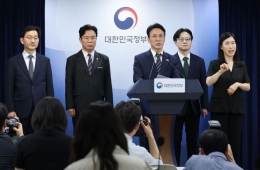
The Ministry of Health and Welfare and the National Cancer Center’s Central Cancer Registry announced on the 28th the “2020 National Cancer Registration Statistics and 2014?2018 Regional Cancer Incidence Statistics in Korea,” which includes this information. Cancer registration statistics collected through the National Cancer Registration Statistics Project are gathered and analyzed according to Article 14 of the Cancer Control Act to calculate and publish cancer incidence rates, survival rates, and prevalence rates from two years prior annually. Regional cancer incidence statistics are published every five years, and this announcement is the second since 2016.
Cancer patients decreased during COVID-19... What does it mean?
The number of newly diagnosed cancer patients in 2020, known as the ‘first year of COVID-19,’ was 247,952, a decrease of 9,218 (3.6%) compared to the previous year (257,170). Stomach cancer saw the largest decrease at 10.3% (3,058 cases), followed by thyroid cancer and colorectal cancer, which decreased by 5.9% (1,827 cases) and 5.3% (1,549 cases), respectively.
The reason for the decrease in cancer patients in 2020, after years of increase, was that hospital visits were hindered due to COVID-19. The total number of cancer cases in 2020 decreased by 18.7% and 14.4% in March and April, respectively, compared to the average for the same months from 2017 to 2019, when ‘social distancing’ was implemented. However, in June, when the policy shifted to ‘distancing in daily life,’ the number increased by 10.7%. Also, the number of patients in outpatient and inpatient clinics in March and April 2020 decreased by 16.4% and 16.5%, respectively, compared to the average for the same months from 2017 to 2019, but the decrease narrowed to 3.0% in June and July, then gradually increased thereafter.
Seo Hong-gwan, director of the National Cancer Center, said, “The significant decrease in cancer incidence and rates during COVID-19 appears to be due to limited medical utilization. It is estimated that about 10,000 cancer patients who should have undergone screening were missed,” adding, “Cancer patients who did not receive early diagnosis may continue to experience metastasis, which could become a social problem.” In response, Park Hyang, director of Public Health Policy at the Ministry of Health and Welfare, said, “Cancer screening rates have stagnated due to COVID-19, but we will actively encourage screening for early diagnosis and treatment of cancer.”
What are the chances of getting cancer and surviving it?
The probability of a Korean living up to the life expectancy (83.5 years) developing cancer was 36.9%. For men (80.5 years), 2 out of 5 (39.0%) develop cancer, and for women (86.5 years), 1 out of 3 (33.9%) develop cancer. The most common cancers in 2020 were thyroid cancer (29,180 cases), followed by lung cancer (28,949), colorectal cancer (27,877), stomach cancer (26,662), breast cancer (24,923), prostate cancer (16,815), and liver cancer (15,152). The rankings of colorectal and stomach cancers swapped compared to the previous year.
The six major cancers targeted by the ‘National Cancer Screening Program’ to detect cancer early and reduce mortality are stomach, colorectal, liver, lung, breast, and cervical cancers. Stomach, colorectal, liver, and cervical cancers have been decreasing over the past decade. Lung cancer showed no significant trend in increase or decrease, while breast cancer has steadily increased over 20 years. Prostate cancer has continuously increased since 1999, whereas thyroid cancer, which had been decreasing since 2012, has shown an increasing trend since 2015, except for the decrease in 2020.
Korea’s cancer incidence rate is relatively low among OECD countries. Adjusted to the world standard population for international comparison, Korea’s cancer incidence rate was 262.2 per 100,000 people, lower than the OECD average of 300.9. This is the second lowest among OECD countries after Turkey (231.5). Countries with high cancer incidence rates included Australia (452.4), New Zealand (422.9), and the United States (362.2).

What is the survival probability after being diagnosed with cancer? The 5-year relative survival rate, which was only 42.9% between 1993 and 1995, rose to 71.5% between 2016 and 2020 due to advances in medical technology. The 5-year relative survival rate refers to the probability that cancer patients survive for five years compared to the expected survival of the general population. This means that 7 out of 10 cancer patients live for more than five years.
In particular, women’s relative survival rate (77.8%) was higher than men’s (65.5%). This is because cancers common in women, such as thyroid cancer (100%) and breast cancer (93%), have very high survival rates. Lung and liver cancers, which are more common in men with high smoking and drinking rates, have seen survival rates increase by 16.6 and 10.4 percentage points over the past decade, but their survival rates remain low at 36.8% and 27.2%, respectively.
The number of cancer survivors diagnosed since 1999 and currently undergoing treatment or cured reached about 2.28 million in 2020, an increase of 130,000 from the previous year (2.15 million). This means that 1 in 23 Koreans is a cancer survivor. Among those aged 65 and older, 1 in 7 is a cancer survivor.
Cancer patients who survived more than five years after diagnosis accounted for 60.1% of all cancer survivors, about 1.37 million, an increase of 100,000 from the previous year (about 1.27 million). Thyroid cancer survivors (489,688) were the largest group, accounting for 21.5% of the total. They were followed by stomach cancer (330,217), colorectal cancer (292,586), breast cancer (279,965), prostate cancer (120,423), and lung cancer (111,208).
Disparities in cancer incidence rates among districts are decreasing
Based on 2014?2018 data, the region with the highest cancer incidence rate was Busan (525.9 per 100,000), and the lowest was Jeju (480.5). This is based on the age-standardized incidence rate per 100,000 population for all cancers (24 types). The disparity in cancer incidence rates among districts was 54.6, a decrease of 26.6 from 81.1 five years earlier (2009?2013). The disparity refers to the difference between the average cancer incidence rates of the top 20% and bottom 20% of districts.
Hot Picks Today
!["Not Everyone Can Afford This: Inside the World of the True Top 0.1% [Luxury World]"](https://cwcontent.asiae.co.kr/asiaresize/93/2026051507261063923_1778797570.png) "Not Everyone Can Afford This: Inside the World of the True Top 0.1% [Luxury World]"
"Not Everyone Can Afford This: Inside the World of the True Top 0.1% [Luxury World]"
- While All Eyes Were on Samsung and Hynix, This Company Surged 50% to New Highs in Four Days [Weekend Money]
- "Now Our Salaries Are 10 Million Won a Month" Record High... Semiconductor Boom Drives Performance Bonuses at Major Electronic Component Firms
- Oh Se-hoon Pledges 'Seoul Nae Jip' Program: Young Homebuyers Only Pay 20% of Housing Price
- Experts Already Watching Closely..."Target Price Set at 970,000 Won" Only Upward Momentum Remains [Weekend Money]
Kim Han-sook, director of Disease Policy at the Ministry of Health and Welfare, said, “If cancer incidence in some regions is significantly higher than average, follow-up studies and cancer epidemiological investigations are needed to analyze the causes.” The Ministry plans to prioritize cancer management projects in regions with high cancer incidence rates and implement specialized projects tailored to local conditions. The Ministry expects that this cancer statistics report will provide scientific evidence for the effectiveness and shortcomings of cancer management policies and guide future policy directions.
© The Asia Business Daily(www.asiae.co.kr). All rights reserved.