4 out of 10 Houses Are Non-Apartments... "Utilize as Key Resources for Urban Housing Supply"

As apartment prices peak and transaction volumes sharply decline, leading to a market slump, interest in non-apartment housing?which accounts for more than 40% of domestic residential types?is growing. The idea is to remodel aging houses to create new supply and to disperse demand that has been excessively concentrated in the apartment market, thereby promoting market stabilization. Especially in downtown Seoul, where housing supply is insufficient, securing large-scale land is difficult, and rapid project progress and supply are also challenging.
According to the Ministry of Land, Infrastructure and Transport’s housing statistics on the 1st, the nationwide cumulative housing starts totaled 294,059 units up to September, a 26.1% decrease compared to last year. During the same period, apartment pre-sale performance was 188,217 units, down 20.1%. Interest rate hikes and rising raw material costs are hindering not only new projects but also ongoing ones. This is the background for continued concerns over the Yoon Seok-yeol administration’s plan to supply 2.7 million housing units.
In this situation, proposals to actively utilize old housing, especially non-apartment houses such as detached houses, multi-family houses, and villas, are attracting attention. KB Financial Group’s Management Research Institute recently published a report titled “Review of Measures to Enhance the Value of Non-Apartment Housing,” stating, "As apartment prices have surged recently, demand is rapidly expanding for apartment alternatives such as detached houses, multi-family houses, and officetels," and added, "Through various changes in non-apartment housing, housing demand that has been concentrated on apartments should be dispersed."
Non-apartment housing is often criticized for relatively poor living environments compared to apartments. Environmental improvements through remodeling support and the use of digital platforms are considered ways to offset these drawbacks. For example, shared bicycles, laundry services, and car-sharing services enhance connectivity within small local areas. This can evolve into community services at a level enjoyed in large apartment complexes. The increase in single-person households and the expanded entry of the MZ generation into the housing market further stimulate related demand.
Compared to apartments professionally constructed and supplied by large construction companies, villas have the disadvantage of significant quality differences between individual houses. This is why there is a call for the establishment of systems and laws that can guarantee minimum quality standards. KB stated, "In Korea, there are no companies that standardize and supply detached houses or villas, so in terms of structure, design, and quality, they lag behind apartments built by professional construction companies," and added, "By introducing housing performance grading systems for general housing construction, a certain level of qualitative improvement can be expected."
Expanding interior information platforms, loans and other financial services, and statistics such as market prices are also key tasks. Son Eun-kyung, senior research fellow of the real estate research team, said, "Through continuous improvement of non-apartment price and statistical systems, when loan demand increases in the future, smooth loan approvals and practical assistance in housing transactions for actual demanders can be provided."
Hot Picks Today
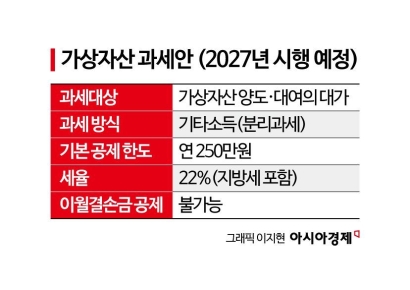 "Stocks Are Not Taxed, but Annual Crypto Gains Over 2.5 Million Won to Be Taxed Next Year... Investors Push Back"
- "Not Jealous of Winning the Lottery"... Entire Village Stunned as 200 Million Won Jackpot of Wild Ginseng Cluster Discovered at Jirisan
- "Even With a 90 Million Won Salary and Bonuses, It Doesn’t Feel Like Much"... A Latecomer Rookie Who Beat 70 to 1 Odds [Scientists Are Disappearing] ③
- "Rather Than Endure a 1.5 Million KRW Stipend, I'd Rather Earn 500 Million in the U.S." Top Talent from SNU and KAIST Are Leaving [Scientists Are Disappearing] ①
- "How Did an Employee Who Loved Samsung End Up Like This?"... Past Video of Samsung Electronics Union Chairman Resurfaces
© The Asia Business Daily(www.asiae.co.kr). All rights reserved.







