Lee Ju-ho "Caution Needed in Easing University Tuition Fee Regulations"
Cautious Approach to Tuition Fee Increase at Education Minister Hearing
"Need for Future Discussion on Tuition Regulation Easing Amid Inflation and Economic Hardship"
As a Designer of Type 2 National Scholarships, "A Heavy Sense of Responsibility"

Lee Ju-ho, the nominee for Minister of Education, appeared at the confirmation hearing held at the National Assembly on the 28th and responded to questions from lawmakers. Photo by Yoon Dong-ju doso7@
View original image[Asia Economy Reporter Han Jinju] Lee Ju-ho, nominee for Deputy Prime Minister for Social Affairs and Minister of Education, stated that "the deregulation of university tuition fees should be approached with greater caution."
At the confirmation hearing held on the 28th by the National Assembly's Education Committee, in response to a question from Seo Byung-soo, a member of the People Power Party, about concerns that easing tuition regulations could increase the burden on students and parents, Lee said, "In principle, there is an opinion that lifting tuition regulations would also be beneficial for university competitiveness," but added, "Given the current inflation levels and economic difficulties, the deregulation of tuition fees should be discussed at a later time."
University tuition fees have been frozen for 13 years. The nominee established the Type II National Scholarship Program (University-linked Support Type) during his tenure as Minister of Education, Science and Technology in 2012, which has indirectly regulated tuition increases. After tuition fees sharply rose in the 2000s, the government amended the Higher Education Act in 2010 to allow universities to increase tuition within 1.5 times the average consumer price inflation rate over the previous three years.
Although the Higher Education Act permits increases, the system was designed so that universities raising tuition would be ineligible for national scholarship funding, effectively nullifying the statutory cap. Universities are now demanding tuition hikes amid financial difficulties caused by a declining student population and frozen tuition fees.
Lee expressed, "I feel a heavy sense of responsibility," and said, "There was opposition at the time to additional regulations by the Ministry of Education, but due to widespread concerns about high tuition fees, the freeze was initiated."
Regarding demands to improve the university competency evaluation system, Lee responded, "I believe indicators should be simplified as much as possible and interference minimized."
Hot Picks Today
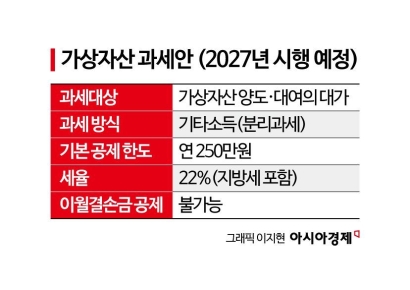 "Stocks Are Not Taxed, but Annual Crypto Gains Over 2.5 Million Won to Be Taxed Next Year... Investors Push Back"
- "Not Jealous of Winning the Lottery"... Entire Village Stunned as 200 Million Won Jackpot of Wild Ginseng Cluster Discovered at Jirisan
- "Even With a 90 Million Won Salary and Bonuses, It Doesn’t Feel Like Much"... A Latecomer Rookie Who Beat 70 to 1 Odds [Scientists Are Disappearing] ③
- "Rather Than Endure a 1.5 Million KRW Stipend, I'd Rather Earn 500 Million in the U.S." Top Talent from SNU and KAIST Are Leaving [Scientists Are Disappearing] ①
- "How Did an Employee Who Loved Samsung End Up Like This?"... Past Video of Samsung Electronics Union Chairman Resurfaces
In the K Policy Platform research report co-authored with eight education experts and released last March, titled 'Government Reform Measures for University Innovation,' Lee proposed "limited autonomy in tuition fees alongside a significant increase in national scholarships to ensure that students' financial burdens do not increase."
© The Asia Business Daily(www.asiae.co.kr). All rights reserved.







