24 Third-Phase Economic Regulation Innovation Tasks... Choo Kyung-ho: "Up to 1.5 Trillion Won + α Corporate Investment Effect"

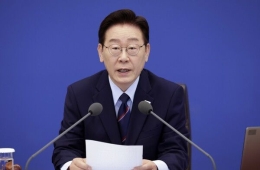
Deputy Prime Minister and Minister of Economy and Finance Choo Kyung-ho is presiding over the Economic Regulatory Innovation Task Force meeting held at the Government Seoul Office in Jongno-gu, Seoul on the 17th. Photo by Hyunmin Kim kimhyun81@
View original image[Asia Economy Sejong=Reporter Kim Hyewon] Companies relocating their headquarters and factories to the Eco Delta City waterfront district in Busan will now be able to install rooftop parking lots on the site. Private investment sewerage projects will also be exempt from strategic environmental impact assessments, similar to public projects, if certain conditions are met.
Additionally, the government has decided to establish guidelines to determine whether semiconductor production facilities are located in explosion hazard areas, aiming to prevent excessive facility investments by companies.
On the 17th, the government held the 3rd Economic Regulatory Innovation Task Force (TF) meeting chaired by Deputy Prime Minister and Minister of Economy and Finance Choo Kyung-ho, announcing 24 tasks including these measures.
In his opening remarks, Deputy Prime Minister Choo stated, "The third plan focuses on resolving on-site difficulties in export-import logistics and safety management sectors, as well as supporting companies' on-site investment projects. Through the 24 tasks finalized this time, investments of up to 1.5 trillion KRW plus alpha (α) will be executed swiftly and smoothly."
The government will lift regulations on three projects currently on hold, supporting investments worth 330 billion KRW. It will promote changes to district unit plans to allow rooftop parking lot installations within the Eco Delta City waterfront district in Busan, as long as there is no environmental harm. This is expected to facilitate 200 billion KRW in investments for new factory construction.
Private sewerage projects will be treated similarly to public projects. Until now, environmental facility public projects were evaluated collectively under higher-level plans, but private investments had to undergo both strategic environmental impact assessments and environmental impact assessments, causing administrative inefficiencies. This regulatory relaxation is expected to generate immediate investment effects of 100 billion KRW.
Companies emitting harmful air pollutants that prepare environmental conservation plans will be allowed to expand factories on new sites under conditions equivalent to existing factory expansions, inducing investments of 30 billion KRW.

Deputy Prime Minister and Minister of Economy and Finance Choo Kyung-ho is presiding over the Economic Regulatory Innovation TF meeting held at the Government Seoul Office in Jongno-gu, Seoul on the 17th. Photo by Hyunmin Kim kimhyun81@
View original imageIn the safety management sector, the government will establish guidelines to determine whether semiconductor production facility installation sites qualify as explosion hazard areas. By applying rational standards, facilities will be installed only where absolutely necessary for safety, preventing excessive investment execution.
Under current regulations, additional equipment to prevent explosions or mitigate explosion damage must be installed in locations with explosion risks due to semiconductor equipment, but there are no clear criteria on-site to assess such risks.
When installing emergency exits in semiconductor factories, the government will relax current installation standards in unavoidable cases due to building structures.
Industrial safety engineers and industrial safety technicians with practical experience in construction safety will be granted safety and health coordinator qualifications. Considering skill improvements, the inspection cycle for safety valves will be relaxed from the current 1 to 4 years, with research currently underway.
The government will also establish criteria for companies to lease industrial facility land to partner companies. Currently, project operators can lease up to 10% of industrial facility land within industrial complexes to partner companies, but the scope of "partner companies" is not clearly defined in regulations. Deputy Prime Minister Choo explained, "We will resolve investment uncertainties for related companies and support investment effects of up to 1.2 trillion KRW." Additionally, automobile manufacturers with recall correction rates exceeding 90% will be exempt from progress reporting obligations.
In the export-import logistics sector, commercial freight vehicles will be allowed to be replaced with large vehicles of 10 tons or more. Currently, when replacing commercial freight vehicles with large vehicles, replacements are unrestricted only up to 5 tons; going forward, the maximum load will be increased to 10 tons, and up to 16 tons will be permitted if certain conditions are met.
Under current regulations, ship supply loading agents are only allowed to load small-value ship supplies under 3,000 USD, but this limit will be raised. For used car exporters, the export fulfillment reporting deadline will be extended from 9 months to 12 months in unavoidable cases. Insects such as locusts used for feed will be recognized as "livestock." In this case, insect farming farms will be considered livestock farms under the law, qualifying for benefits such as a 50% reduction in acquisition tax and exemption from agricultural special tax.
Hot Picks Today
 "Stocks Are Not Taxed, but Annual Crypto Gains Over 2.5 Million Won to Be Taxed Next Year... Investors Push Back"
- "Don't Throw Away Coffee Grounds" Transformed into 'High-Grade Fuel' in Just 90 Seconds [Reading Science]
- Despite Warnings of "Do Not Enter, You May Not Make It Out Alive"... Foreign Tourist Stranded After Unauthorized Climb on Jeju Sanbangsan
- Signed Without Viewing for 1.6 Billion Won... Jamsil and Seongbuk Jeonse Prices Jump 200 Million Won in a Month [Real Estate AtoZ]
- "Even With a 90 Million Won Salary and Bonuses, It Doesn’t Feel Like Much"... A Latecomer Rookie Who Beat 70 to 1 Odds [Scientists Are Disappearing] ③
Kim Taeyoon, private sector co-leader of the Economic Regulatory Innovation TF, emphasized, "Regulations are a regressive hidden tax that triggers price increases and causes hardship for ordinary citizens and small business owners, so groundbreaking measures are needed to respond to inflation. Even short-term measures to reduce the burden on ordinary citizens and small to medium-sized business owners should be actively considered."
© The Asia Business Daily(www.asiae.co.kr). All rights reserved.