Signs of Prolonged Vacancy in Supreme Court Justices... Full Bench Rulings 'All Stop'
Hundreds of Cases Likely to Pile Up Under Vacant Chief Justice... About 300 Cases Pending
Supreme Court Plenary Session with All Justices Stalled... 'Ruling' Within Two Months Uncertain
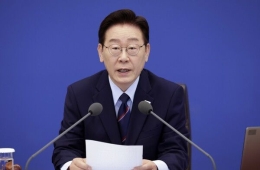
![Nominee for Supreme Court Justice Oh Seok-jun is responding to questions from lawmakers at the confirmation hearing held at the National Assembly on August 29. <br>[Photo by Yonhap News]](http://www.asiae.co.kr/news/img_view.htm?img=2022082915190413161_1661753944.jpg)
Nominee for Supreme Court Justice Oh Seok-jun is responding to questions from lawmakers at the confirmation hearing held at the National Assembly on August 29.
[Photo by Yonhap News]
[Asia Economy Reporter Heo Kyung-jun] The vacancy of Supreme Court justices has continued for the 10th day since the retirement of former Supreme Court Justice Kim Jae-hyung, showing signs of prolongation. Although two weeks have passed since nominee Oh Seok-jun completed his confirmation hearing, the National Assembly has yet to even submit the appointment consent bill to the plenary session.
The structure for appointing Supreme Court justices is such that after the National Assembly’s Special Committee on Personnel Hearings completes the confirmation hearing and adopts a report, the National Assembly consents to the appointment (with a quorum of more than half of the total members present and a majority vote in favor), and then the President appoints the justice.
On the 14th, it was reported that the Supreme Court is seeking ways to resolve the vacancy of justices, but there is no effective method, and the confusing situation continues. Nominee Oh commutes to the Supreme Court daily but, as a nominee, is unable to participate in judicial duties.
The biggest problem caused by the prolonged vacancy of justices is the disruption of trials. As of the end of last month, all hearings on approximately 300 cases for which former Justice Kim was the presiding justice have been suspended. A new justice must be appointed for the Chief Justice to organize the judicial panels and assign cases, redistributing or adjusting those previously handled by former Justice Kim. With the successor appointment stalled, the court is effectively at a standstill.
The Small Panel(小部) meetings are usually held twice a month, with each justice handling about 100 cases per meeting. Considering the number of cases transferred to the Supreme Court each month, if the vacancy continues long-term, hundreds of cases in the appellate court are expected to be delayed.
A bigger problem than the Small Panel meetings is the Grand Bench rulings. The Small Panel, composed of four justices, can deliver rulings with the agreement of the remaining three justices excluding the vacant seat, so only cases assigned to former Justice Kim are backlogged. However, if the justices do not reach consensus in the Small Panel, the Grand Bench, which includes the Chief Justice and all justices, cannot issue a ruling.
Since cases referred to the Grand Bench are usually those requiring changes to precedent or deemed necessary by the Chief Justice or justices to be handled en banc, the Grand Bench rulings, which are inherently important cases, currently number about ten as of this date.
The Grand Bench requires an odd number of justices to avoid tie votes (deadlocks). If the vacant justice seat is not filled, the Grand Bench will have an even number of justices, allowing hearings to proceed but preventing rulings.
Only the Chief Justice and justices may attend the Grand Bench sessions, and no substitutes are allowed. Because of this, the Grand Bench ruling scheduled for the 22nd has been postponed to next month. If the vacancy continues, it is uncertain whether the Grand Bench ruling will even take place next month.
Inside the judiciary, there are growing complaints that the National Assembly is using the appointment of Supreme Court justices as a tool for political conflict, infringing on the public’s right to prompt trials.
Hot Picks Today
 "Stocks Are Not Taxed, but Annual Crypto Gains Over 2.5 Million Won to Be Taxed Next Year... Investors Push Back"
- "Don't Throw Away Coffee Grounds" Transformed into 'High-Grade Fuel' in Just 90 Seconds [Reading Science]
- Signed Without Viewing for 1.6 Billion Won... Jamsil and Seongbuk Jeonse Prices Jump 200 Million Won in a Month [Real Estate AtoZ]
- [Breaking] Lee Targets Samsung Electronics Union: "Collective Bargaining Should Not Be Abused... There Is an Appropriate Limit"
- "Even With a 90 Million Won Salary and Bonuses, It Doesn’t Feel Like Much"... A Latecomer Rookie Who Beat 70 to 1 Odds [Scientists Are Disappearing] ③
One presiding judge lamented, "There is nothing we can do," adding, "It seems the National Assembly has no intention of consenting to the appointment of justices within a month. Politically sensitive cases are intertwined with the prosecution and courts, so they appear to be holding back on appointing justices."
© The Asia Business Daily(www.asiae.co.kr). All rights reserved.