Suwon City Strengthens Environmental Exchange and Cooperation with Mongolia

[Asia Economy (Suwon) = Reporter Lee Young-gyu] Suwon City in Gyeonggi Province is strengthening exchange and cooperation with Mongolia in the environmental sector.
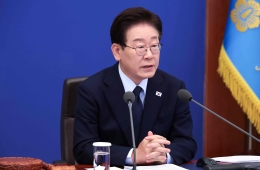
On the 7th, Suwon City announced that on the 6th, Mayor Lee Jae-jun of Suwon met with Kang Tumur Tuvdendorj, Deputy Minister of Mongolia's Ministry of Environment, at Suwon City Hall to discuss ways to exchange and cooperate in the environmental field between Suwon and Mongolia.
At the meeting, Deputy Minister Tuvdendorj said, "Over the past 10 years, the 'Suwon Citizens' Forest' project has significantly improved desertification in Mongolia," adding, "Mongolia has been promoting the 'One Billion Trees Planting' project since 2021 to prevent desertification of the national land, and it would be a great help if Suwon City cooperates in exchanging forestry experts."
In response, Mayor Lee Jae-jun said, "I am glad that the Suwon Citizens' Forest project is progressing well and is helpful to Mongolia," and added, "Let Suwon City and Mongolia actively exchange and cooperate in the environmental sector."
To prevent desert expansion and reduce yellow dust in Mongolia, Suwon City signed an agreement with the Mongolian government and the Green Asia organization in 2011 and began creating a forest in the Erden Sum area of Tuv Aimak. The forest was named the 'Suwon Citizens' Forest.'
The Suwon Citizens' Forest project involves planting 10,000 trees annually on 10 hectares (100,000㎡) of land from 2011 to 2020, totaling 100 hectares and 100,000 trees over 10 years.
The Suwon Citizens' Forest project is evaluated as providing a solution to desertification prevention and fine dust reduction. It achieved soil restoration through systematic tree planting and prevented desertification through vegetation cover.
From the 25th to the 29th of last month, Suwon City, together with the Suwon Citizens Volunteer Group, visited the 'Mongolian Suwon Citizens' Forest' to investigate the growth status of the trees and the 'vegetation coverage rate' to assess the forest condition.
Hot Picks Today
 "Samsung and Hynix Were Once for the Underachievers"... Hyundai Motor Employee's Lament
- After Topping 8,000 Instead of Hitting 10,000... KOSPI Plunges—When Will It Rebound?
- "They Said It's Impossible to Get—Already Selling for Triple the Price: Crowds Worldwide Line Up for $600 Luxury Watch"
- Song Unseok: "6.3 Local Elections to Check Lee Administration's Unilateral Rule... Only a Strong Public Warning Can Stop Reckless Governance"
- "That? It's Already Stashed" Nightlife Scene Crosses the Line [ChwiYak Nation] ③
Of the 104,770 trees (6 species) planted over the past 10 years, 54,379 trees currently survive.
© The Asia Business Daily(www.asiae.co.kr). All rights reserved.