Lee Jae-myung's Controversy Over 'Low-Income Support for People Power Party' Remarks... Rising Criticism Within the Party
"Supporting Parties That Cause Harm, Regrettable but Reality"
Lee Jae-myung Repeatedly Asserts 'Low-Income Remarks'
Park Yong-jin Criticizes "Poor Hate," Yoon Young-chan Calls It "Insulting Language"

Candidate Lee Jae-myung, who is running for the party leader election, is appealing for support at the preliminary election for the selection of the Democratic Party of Korea's party leader and supreme council members held at the National Assembly Members' Office Building on the 28th. Photo by Yoon Dong-ju doso7@
View original image[Asia Economy Reporter Kang Juhee] There is growing criticism within the party over the remarks made by Lee Jae-myung, the Democratic Party leader candidate, that "there are many People Power Party supporters among the low-education and low-income groups." Lee cited related statistics to insist that his claim is based on facts, but critics argue that using a single statistical result to portray low-income groups reveals a sense of superiority and reinforces prejudice.
On the 29th of last month, during a live broadcast on the YouTube channel 'Lee Jae-myung,' Lee stated, "As far as I know, high-education, high-income, so-called wealthy people tend to support us (the Democratic Party) more, and among the low-education and low-income groups, there are more People Power Party supporters. It's a regrettable reality, but it's due to the media environment."
When criticism arose within the party regarding this statement, Lee introduced a poll result from the last presidential election showing that 6 out of 10 voters with a monthly income below 2 million won voted for President Yoon Suk-yeol. He added, "Regrettably, this is the actual reality. The People Power Party government cuts support for ordinary citizens, such as local currency and job budgets, instead of tax cuts for ultra-rich conglomerates," and reiterated, "This unfortunate reality, where some support a party that harms them, is largely the responsibility of some media outlets that distort and manipulate information."
The statistics Lee mentioned come from a presidential panel survey conducted immediately after the election by the East Asia Institute (EAI) and Korea Research. According to this survey, 61.3% of the 'under 2 million won per month' group chose President Yoon, while 35.9% voted for Lee. Among those earning between 2 million and under 3 million won per month, 57.2% chose President Yoon, which was higher than the 38.3% who voted for Lee. Conversely, in the higher income bracket of '6 million to under 7 million won per month,' 61.7% voted for Lee, and only 32.6% chose President Yoon. Based solely on this survey, Lee's claim is not incorrect.
However, defining 'low-income groups = People Power Party supporters' based solely on this survey is criticized as an overgeneralization. Other factors such as respondents' age and gender were not considered, and income alone cannot accurately determine wealth without considering net assets. Even if the survey is accurate, Lee's remarks can be interpreted as belittling, implying that "low-education and low-income groups cannot see reality clearly," which has drawn criticism.
Park Yong-jin, who is competing with Lee in the party leadership race, wrote on Facebook, "Regardless of the policy differences between Park Yong-jin and Lee Jae-myung, the reality perception shown by Lee is truly regrettable. This perception is completely unrelated to actual facts," and criticized, "The notion that low-income groups are low-educated and therefore cannot make proper judgments due to distorted information and information asymmetry is a sense of superiority and hatred toward the poor. It is shameful."
Hot Picks Today
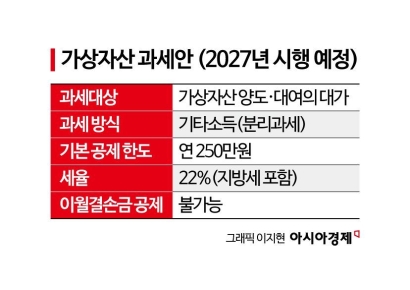 "Stocks Are Not Taxed, but Annual Crypto Gains Over 2.5 Million Won to Be Taxed Next Year... Investors Push Back"
- "Not Jealous of Winning the Lottery"... Entire Village Stunned as 200 Million Won Jackpot of Wild Ginseng Cluster Discovered at Jirisan
- "Rather Than Endure a 1.5 Million KRW Stipend, I'd Rather Earn 500 Million in the U.S." Top Talent from SNU and KAIST Are Leaving [Scientists Are Disappearing] ①
- "How Did an Employee Who Loved Samsung End Up Like This?"... Past Video of Samsung Electronics Union Chairman Resurfaces
- "Even With a 90 Million Won Salary and Bonuses, It Doesn’t Feel Like Much"... A Latecomer Rookie Who Beat 70 to 1 Odds [Scientists Are Disappearing] ③
Yoon Young-chan, a candidate for the Supreme Council, in an interview with YTN Radio's 'News King Park Ji-hoon,' said, "If you say that the poor and low-income groups are 'collectively influenced by the media environment,' it can easily become insulting language and prejudice against those people," adding, "If you calculate the elderly poverty group and add age group analysis, it might be a natural phenomenon, but it requires further study to see what indicators would emerge if the elderly age group were excluded. I believe that this statistic cannot be generalized."
© The Asia Business Daily(www.asiae.co.kr). All rights reserved.







