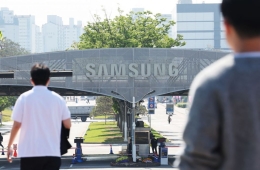
As Economic Uncertainty Grows... SK Hynix Puts Cheongju Plant Expansion on Hold
Completion Scheduled for 2025 May Be Delayed

[Asia Economy Reporter Moon Chaeseok] SK Hynix has confirmed that it has put on hold its plan to expand its semiconductor factory in Cheongju, Chungcheongbuk-do, amid growing economic uncertainties. This comes as SK Group Chairman Chey Tae-won mentioned the possibility of changes to existing investment plans due to economic uncertainties caused by high exchange rates and high inflation.
According to industry sources on the 19th, SK Hynix held a board meeting on the 29th of last month to approve the expansion plan for the Cheongju factory but ultimately decided to postpone the final decision.
SK Hynix had planned to invest about 4.3 trillion won in a new semiconductor factory (M17) on a site of approximately 433,000 square meters within the Cheongju Technopolis Industrial Complex. The plan was to secure cleanrooms (production facilities free of dust and bacteria) in preparation for increased demand for memory semiconductors. The scenario was to start construction early next year and complete it by 2025, but the recent postponement decision greatly increases the likelihood of delays. SK Hynix responded to inquiries about the factory expansion schedule by saying, "Nothing has been finalized."
The news of the expansion postponement came at a time when attention was focused on whether SK Hynix and Samsung Electronics would announce production and investment adjustment plans in their second-half management strategies. There are voices suggesting that revisions to management strategies are inevitable due to falling prices of memory semiconductors such as DRAM and NAND flash. Many analyses indicate that the postponement of factory expansion is closely related to this. The global DRAM market has been declining since the second half of last year, compounded by adverse factors such as the prolonged Russia-Ukraine war, inflation, and a slowdown in the Chinese economy leading to reduced IT demand. The rise in import prices due to the weak Korean won cannot be ignored either.
Other global semiconductor companies are also adjusting their investment plans considering the adverse demand outlook. Taiwan's foundry company TSMC has lowered its capital expenditure (CAPEX) plan from $40 billion to $44 billion down to $40 billion. This decision was reportedly made considering increased equipment lead times (the time from order to actual delivery) and inventory conditions. Following Samsung Electronics and SK Hynix, Micron, the world's third-largest memory semiconductor company based in the U.S., stated in its earnings announcement at the end of last month that "measures are being taken to adjust supply over the coming quarters" and that "new factory and equipment investments will be reduced to prevent oversupply."
Hot Picks Today
 "Now Our Salaries Are 10 Million Won a Month" Record High... Semiconductor Boom Drives Performance Bonuses at Major Electronic Component Firms
- 'Still Hesitant? If You're Wondering Whether KOSPI Will Rise, This Is the Number You Must Watch [Weekend Money]'
- "Heading for 2 Million Won": The Company the Securities Industry Says Not to Doubt [Weekend Money]
- About 100 Trillion Won at Stake... "Samsung Strike Is an Unprecedented Opportunity" as Prices Surge 20% [Taiwan Chip Column]
- Is It Really Like an Illness? "I Can't Wait to Go Again"—Over 1 Million Visited in Q1, Now 'Busanbyeong' Takes Hold [K-Holic]
Major domestic companies are also reviewing their investment plans. A representative case is LG Energy Solution's decision to fully reconsider its plan to invest 1.7 trillion won in a standalone battery factory in the U.S. LG Energy Solution stated in a disclosure on the 29th of last month regarding the review of investment plans that "a re-disclosure will be made within one month or at the time the matter is finalized."
© The Asia Business Daily(www.asiae.co.kr). All rights reserved.