Military Personnel, Pilot Implementation of 24-Hour Mobile Phone Usage

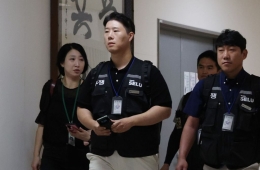
On the 8th, when the military leave that had been restricted to prevent the spread of the novel coronavirus infection (COVID-19) was resumed normally, soldiers waiting for a train to leave for their leave were at Seoul Station. Photo by Moon Honam munonam@
View original image[Asia Economy Yang Nak-gyu, Military Specialist Reporter] Military personnel will soon be allowed to use mobile phones 24 hours a day.
On the 17th, the Ministry of National Defense announced that to expand soldiers' mobile phone usage time, included in the national agenda, a pilot operation will be conducted from the 20th to December 31st targeting 2 to 3 units per military branch.
Currently, soldiers are allowed to use mobile phones on weekdays after work from 6 PM to 9 PM and on holidays from 8:30 AM to 9 PM. Although this is a revolutionary change compared to the past, there are criticisms that the uniform regulation of usage time does not fully realize the purpose of allowing phone use.
Active-duty soldiers will be managed under three types: 'Minimum type' allowing use after morning roll call until 8:30 AM and from 5:30 PM to 9 PM, 'Intermediate type' allowing use from after morning roll call until 9 PM, and 'Autonomous type' allowing possession 24 hours a day.
Recruits will be divided into two types: 'Minimum type' allowing 30 minutes on weekdays during the first week of enlistment and 1 hour on weekends and holidays, and 'Expanded type' allowing 30 minutes on weekdays and 1 hour on weekends and holidays throughout the enlistment period.
The Ministry of National Defense already conducted a first pilot operation from November last year to February this year with about 5,000 temporary soldiers of the Army's 15th Division, divided into three groups: minimum, intermediate, and autonomous types. At that time, 72% of participating soldiers preferred the autonomous type, while among about 1,300 officers managing these soldiers, 45% preferred the intermediate type, which was the highest ratio.
Hot Picks Today
 "Samsung and Hynix Were Once for the Underachievers"... Hyundai Motor Employee's Lament
- Samsung Enterprise Labor Union: "We Respect Court’s Injunction Decision... General Strike to Proceed on the 21st as Planned"
- "Was This Delicious Treat Enjoyed Only by Koreans?"... The K-Dessert Captivating Japan
- Special Counsel on Insurrection Urges Swift Decision on 'Recusal Requests' by Yoon Seok-yeol and Others, Citing 'Clear Intent to Delay'
- "That? It's Already Stashed" Nightlife Scene Crosses the Line [ChwiYak Nation] ③
The Ministry of National Defense stated, "Based on the results of this pilot operation, we plan to identify the scope of expansion and necessary improvements and then proceed with expanding the possession time."
© The Asia Business Daily(www.asiae.co.kr). All rights reserved.