[Yoon Administration Economy] Corporate Tax Top Rate Reduced from 25% to 22%... Tax Brackets Also Adjusted
New Government Economic Policy Direction
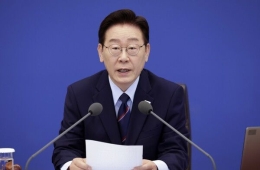
![President Yoon Suk-yeol is speaking at the New Government Economic Policy Direction Announcement Meeting held at the Corporate Growth Center in Pangyo 2nd Techno Valley, Seongnam-si, Gyeonggi-do on the morning of the 16th. 2022.6.16 [Image source=Yonhap News]](http://www.asiae.co.kr/news/img_view.htm?img=2022061611591415722_1655348354.jpg)
President Yoon Suk-yeol is speaking at the New Government Economic Policy Direction Announcement Meeting held at the Corporate Growth Center in Pangyo 2nd Techno Valley, Seongnam-si, Gyeonggi-do on the morning of the 16th. 2022.6.16 [Image source=Yonhap News]
View original image[Asia Economy Sejong=Reporter Son Seon-hee] The government will lower the current highest corporate tax rate from 25% to 22%. Previously, when the Moon Jae-in administration took office, the highest corporate tax rate was raised to 25% starting in 2018, but this will be reverted. In addition, the current four-tiered taxable income brackets will be simplified.
On the 16th, the government announced this corporate tax reform plan through the "New Government Economic Policy Direction (Gyeongbang)." The Ministry of Economy and Finance stated, "We will rationally readjust tax and penalty regulations to maximize the freedom and creativity of the private sector, companies, and markets," explaining the purpose.
The main reason for lowering the highest corporate tax rate is to enhance incentives for corporate investment and job creation amid unfavorable domestic and international economic conditions. The "25%" top rate was relatively high compared to advanced foreign countries, considering international tax competition as well. In fact, when adding the local corporate income tax (2.5%), the nominal highest corporate tax rate in Korea is 27.5%. According to data analyzed by the National Assembly Budget Office, this exceeds the OECD average nominal rate (23.0%) by 4.5 percentage points.
Yoon In-dae, Director of the Economic Policy Bureau at the Ministry of Economy and Finance, explained, "The tax adjustment direction in this economic policy aims to normalize areas that have been excessively high, causing side effects or not aligning with global standards. For corporate tax, it is about aligning with the OECD average."
The government will also pursue simplification of the taxable income brackets. The current corporate tax brackets (for general corporations) are ▲ up to 2 billion KRW (10%) ▲ over 2 billion KRW up to 20 billion KRW (20%) ▲ over 20 billion KRW up to 300 billion KRW (22%) ▲ over 300 billion KRW (25%)?a four-tier system. Previously, a two-tier rate structure was maintained, but since 2012 it shifted to three tiers, and since 2018 to four tiers. This is not only the most complex compared to all OECD member countries, but Korea is the only country applying a four-tier progressive tax rate. Most of the 35 OECD countries adopt a single-rate system, with the Netherlands applying two tiers and Luxembourg three tiers.
Ko Gwang-hyo, Director General of Tax Policy at the Ministry of Economy and Finance, said, "Progressive tax rates should be applied only to individuals who ultimately receive the income earned by corporations, which aligns with tax principles. Applying progressive rates at the corporate level reduces companies' investment capacity, risking falling behind advanced countries' corporations in competition. The basic intent is to simplify the unreasonable four-tier progressive tax structure to enhance corporate international competitiveness."
However, the government did not disclose specific details on how the taxable income brackets will be simplified in this Gyeongbang. After further discussions, the concrete plan will be finalized and announced with the tax law amendment bill scheduled for next month.
Some critics argue that lowering the highest corporate tax rate applied to large corporations is a "tax cut for the rich." In response, Director Ko explained, "The corporate tax rate reduction will also adjust the lower brackets (applied rates). Since the details are not yet finalized, they were not included in the Gyeongbang announcement, but once the taxable income bracket reform is confirmed, small and medium-sized enterprises will also benefit." Previously, the "25%" top rate was applied to the newly established bracket of "over 300 billion KRW," and this statement implies a tax rate reduction for companies with "up to 20 billion KRW" as well, not simply removing the top bracket.
Furthermore, the government will improve the tax system on domestic and overseas retained earnings dividends to alleviate the issue of double taxation on corporations. The current non-inclusion ratio, which excludes dividends received by domestic corporations from domestic subsidiaries from the taxable base, will be simplified regardless of whether the company is a general or holding company, or listed or unlisted. Also, dividends received by domestic corporations from overseas subsidiaries will be excluded from the corporate tax base.
Hot Picks Today
 "Stocks Are Not Taxed, but Annual Crypto Gains Over 2.5 Million Won to Be Taxed Next Year... Investors Push Back"
- "Don't Throw Away Coffee Grounds" Transformed into 'High-Grade Fuel' in Just 90 Seconds [Reading Science]
- Signed Without Viewing for 1.6 Billion Won... Jamsil and Seongbuk Jeonse Prices Jump 200 Million Won in a Month [Real Estate AtoZ]
- [Breaking] President Lee: "Sharing operating profit before taxes are deducted?... I don't understand"
- "Even With a 90 Million Won Salary and Bonuses, It Doesn’t Feel Like Much"... A Latecomer Rookie Who Beat 70 to 1 Odds [Scientists Are Disappearing] ③
To boost economic vitality through smooth business succession, the government will rationally reform the business succession inheritance deduction and the special gift tax system for prior business succession. For business succession heirs who meet certain conditions, inheritance tax payment will be deferred until the time of transfer, inheritance, or gift. The sales threshold for companies eligible for payment deferral will be significantly expanded from the current 400 billion KRW to 1 trillion KRW, and the post-management period will be shortened from 7 years to 5 years. Additionally, the special gift tax exemption limit for prior business succession will be expanded to the level of the business succession inheritance deduction to encourage "living business succession."
© The Asia Business Daily(www.asiae.co.kr). All rights reserved.