FOMC Members "Concerned About Inflation Rise... Support Additional Base Rate Hike"
All Monetary Policy Committee Members Agree on the Need for Additional Rate Hikes
Increased Uncertainty Due to Inflationary Pressures and Accelerated Monetary Tightening in Major Countries

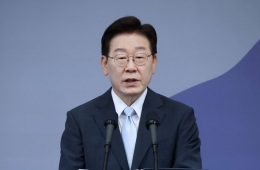
Bank of Korea Governor Lee Chang-yong is striking the gavel at the Monetary Policy Committee meeting held on the 26th at the Bank of Korea in Jung-gu, Seoul. Photo by Joint Press Corps
View original imageThe Monetary Policy Committee of the Bank of Korea unanimously raised the base interest rate to 1.75% last month, and all committee members agreed on the necessity of further rate hikes. They explained that since domestic inflation is likely to continue in the medium to long term, timely responses through interest rate increases are required.
According to the minutes of the Monetary Policy Committee meeting released on the Bank of Korea's website on the afternoon of the 14th, at the monetary policy direction meeting held on the 26th of last month, all five committee members except Governor Lee Chang-yong mentioned the need for additional rate hikes. Last month, the committee had six attendees as the successor to committee member Lim Ji-won had not been appointed, and Governor Lee, who is the chair of the committee, does not express individual opinions separately.
One member stated, "The consumer price inflation rate is expected to significantly exceed the forecast level from February due to the prolonged Ukraine crisis causing a sharp rise in raw material prices and supply chain disruptions, approaching the mid-4% range annually. The core inflation rate, excluding energy and food prices, is also likely to exceed 3% annually."
Another member emphasized, "The most notable aspect of the recent economic situation is the persistence of inflationary pressures and increased uncertainty due to accelerated monetary tightening by major countries. Given that the upward pressure on raw material and food prices, supply delays, and cost pressures appear larger and more prolonged than previously expected, we must be cautious about secondary ripple effects through corporate cost pass-through, rising inflation expectations, and wage increase demands."
Another member also explained, "Consumer prices are showing a high increase close to 5%, and inflation expectations continue to rise, which is concerning. The domestic inflation trend is becoming more prominent as a medium- to long-term inflation phenomenon rather than a temporary fluctuation."
Another member said, "The possibility of agflation is a worrying phenomenon from various perspectives. Even if the Ukraine war ends peacefully and quickly, international food prices are expected to remain high for a considerable period due to the characteristics of agricultural products."
Hot Picks Today
 "Stocks Are Not Taxed, but Annual Crypto Gains Over 2.5 Million Won to Be Taxed Next Year... Investors Push Back"
- "Don't Throw Away Coffee Grounds" Transformed into 'High-Grade Fuel' in Just 90 Seconds [Reading Science]
- Signed Without Viewing for 1.6 Billion Won... Jamsil and Seongbuk Jeonse Prices Jump 200 Million Won in a Month [Real Estate AtoZ]
- Despite Warnings of "Do Not Enter, You May Not Make It Out Alive"... Foreign Tourist Stranded After Unauthorized Climb on Jeju Sanbangsan
- "Even With a 90 Million Won Salary and Bonuses, It Doesn’t Feel Like Much"... A Latecomer Rookie Who Beat 70 to 1 Odds [Scientists Are Disappearing] ③
Concerns were also raised that although rapid base rate hikes could increase the burden on the private sector, price stability should take precedence. One member said, "While there are concerns about side effects such as a slowdown in domestic economic recovery, increased repayment burdens on private debt, and deterioration in vulnerable sectors due to consecutive base rate hikes, these are still considered manageable. Going forward, monetary policy needs to be operated in a direction that quickly reduces the easing stance."
© The Asia Business Daily(www.asiae.co.kr). All rights reserved.