"Labor Productivity Loss Decreases as Organizational Fairness Increases"
Analysis by Professor Kang Mo-yeol's Team, Department of Occupational and Environmental Medicine, Seoul St. Mary's Hospital

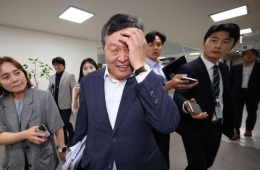
Professor Kang Mo-yeol, Department of Occupational and Environmental Medicine, Seoul St. Mary's Hospital.
View original image[Asia Economy Reporter Lee Gwan-ju] A domestic research team has found that the more an organization is perceived as fair, the less labor productivity loss occurs.
Professor Kang Mo-yeol of the Department of Occupational and Environmental Medicine at Seoul St. Mary's Hospital, Catholic University, and a research team led by Dr. Han-ul Park, PhD in Public Health from Catholic University Graduate School, announced on the 9th that their analysis of the correlation between organizational fairness in the workplace and health-related labor productivity showed these results.
The research team conducted an online survey from January to February 2020 targeting 4,197 economically active adults, analyzing 3,890 wage workers among them.
Organizational fairness refers to the degree to which members perceive all systems and decision-making processes within an organization as fair. The subcategories of organizational fairness include distributive fairness, procedural fairness, and interactional fairness. Procedural fairness refers to the extent to which organizational members perceive that the rewards they receive are determined through fair procedures, while interactional fairness refers to the degree of fairness perceived by members in interpersonal treatment shown by decision-makers during the decision-making process or in the implementation of policies or procedures.
This study measured procedural fairness and interactional fairness. Using the Korean Organizational Fairness Questionnaire, seven items for procedural fairness and six items for interactional fairness were surveyed on a 5-point scale. Health-related labor productivity loss was measured through six items on absenteeism (loss of working hours due to absence, early leave, tardiness, etc.) and presenteeism (productivity loss due to reduced work performance despite attendance) on a 10-point scale to produce the results.
Analysis showed that when procedural fairness and interactional fairness scores in the workplace increased to 22 points or higher, health-related labor productivity loss sharply decreased. After controlling for age, gender, education level, and household income level, the group with high procedural fairness in the workplace had about 6 percentage points less health-related labor productivity loss compared to the low procedural fairness group, and the group with high interactional fairness had about 5 percentage points less health-related labor productivity loss compared to the low group.
Professor Kang Mo-yeol explained, “These research results suggest that fair compensation procedures and decision-making processes within an organization positively affect members' health, ultimately improving productivity,” adding, “Practically, this can be applied in labor fields by restructuring organizational management and sick leave policies.”
He continued, “Although organizational culture may vary depending on each company's circumstances, an unfair organizational culture ultimately worsens members' health and can lead to poor productivity outcomes,” and added, “If you want to create an organization where members work healthily and effectively, building a fair organizational culture is a rational choice.”
Hot Picks Today
!["Rather Than Endure a 1.5 Million KRW Stipend, I'd Rather Earn 500 Million in the U.S." Top Talent from SNU and KAIST Are Leaving [Scientists Are Disappearing] ①](https://cwcontent.asiae.co.kr/asiaresize/93/2026051914165468840_1779167814.png) "Rather Than Endure a 1.5 Million KRW Stipend, I'd Rather Earn 500 Million in the U.S." Top Talent from SNU and KAIST Are Leaving [Scientists Are Disappearing] ①
"Rather Than Endure a 1.5 Million KRW Stipend, I'd Rather Earn 500 Million in the U.S." Top Talent from SNU and KAIST Are Leaving [Scientists Are Disappearing] ①
- Given Grants, Then Says "No Launch" ... Innovative Korean Technology Ultimately Forced Overseas
- [Breaking] Chairman Park Sookeun: "Possibility of Agreement Instead of Samsung Electronics Labor-Management Mediation Proposal"
- "If That's the Case, Why Not Just Buy Stocks?" ETFs in Name Only, Now 'Semiconductor-Heavy' and a Playground for Short-Term Traders
- "No Cure Available, Spread Accelerates... Already 105 Dead, American Infected"
The research results were published in the May issue of the international journal Journal of Occupational and Environmental Medicine.
© The Asia Business Daily(www.asiae.co.kr). All rights reserved.
![Cheaper Than Candy, Yet Impossible to Find... Fears of a 'Pediatric Medical Crisis' as Pharmaceutical Companies Halt Production [Why&Next]](https://cwcontent.asiae.co.kr/asiaresize/307/2026051910065268365_1779152813.jpg)