[Initial Report] Executive's Purchase of Company Shares at '60,000 Won Electronics' Seen as 'Showing Off'
![[Image source=Yonhap News]](http://www.asiae.co.kr/news/img_view.htm?img=2022052111245475116_1653099893.jpg)
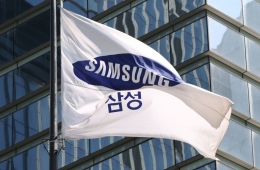
[Asia Economy Reporter Lee Seon-ae] Samsung Electronics remains a "60,000-won stock" in June as well. The stock price is trapped in the 60,000-won range tunnel with little sign of rising. Nevertheless, there has been no news of Samsung Electronics executives purchasing company shares this month.
At the end of April, Samsung Electronics sent an internal email encouraging some executives to buy company shares. The email even included information about loan products for those who needed financing to purchase shares. Individual investors breathed a sigh of relief, recognizing the management’s serious concern over the sluggish stock price. As the "national blue-chip stock" held by more than one in ten Koreans, the number of small shareholders has reached 6 million. There was an expectation that Samsung Electronics executives would work together with these "6 million ants" to escape the "60,000-won stock" status. When stock prices are sluggish, share purchases by key insiders act as a positive factor to support or boost the stock price. Although it was not a vision announcement for future growth, the event of share repurchases showed a will for responsible management to help raise the stock price.
However, the effect on boosting the stock price was absent. The impact of the global external adverse factors that have weakened the market is certainly present. But the reason individual investors are frustrated is that the share repurchases fell far short of expectations.
According to the Financial Supervisory Service, 44 executives purchased company shares over two months (April-May). Out of a total of 938 executives, including 5 registered and 933 unregistered executives, only 4.7% bought shares. This is a meager figure. Narrowing the scope to just May, only 22 executives purchased shares: 19 vice presidents and 3 general managers. The executive who bought the most Samsung Electronics shares in May was Vice President Oh Jong-hoon. He purchased 5,140 shares at 68,100 won per share, totaling 350.03 million won. Vice Presidents Choi Jeong-jun and Kim Yeon-seong also invested over 300 million won each by buying 5,000 and 4,500 shares respectively. Although the average annual salary of Samsung Electronics executives is 790 million won, the fact that they invested such large sums shows responsible management, but since it was limited to a few, individual investors feel it was merely for show.
The dominant analysis was that the stock price drag was not due to fundamentals or industry conditions but largely because of the global tightening policies that dampened big tech investment sentiment. However, an unusual atmosphere is now being sensed. There are increasing securities analysts pointing out growth concerns. It is judged that semiconductor purchases by client companies are likely to slow down, leading to a decline in performance from the fourth quarter. Samsung Electronics’ target stock prices are also being revised downward one after another.
Hot Picks Today
 "Do We Need to Panic Buy Again?" War Drives 30% Price Surge... Even the Bedroom Feels the Impact
- "Suspicious Timing?"...Trump Traded Stocks After Praising Wartime Capabilities
- Trump: "U.S. and Nigerian Forces Eliminate IS Number Two Worldwide"
- "Anyone Who Visited the Room Salon, Come Forward"… Gangnam Police Station Launches Full Staff Investigation After New Scandal
- "Contact Me First If Houses Are Built": Wealthy Clients Eyeing... Will Ultra-High-End Residences Worth 20 Billion Won Be Developed? [Real Estate AtoZ]
Samsung Electronics described in the email that "when management and key executives purchase company shares, it is an opportunity to externally demonstrate confidence in growth." Now, the effect of simply relying on share repurchases to show confidence in growth no longer works. It is time for fundamental reflection on the stock price. If executives become more proactive in purchasing company shares going forward, investor confidence in the company’s growth potential could be strengthened, but this clearly has its limits. There is a stock market adage that stock prices live on the future. It is time to show a growth story rather than just an event of share repurchases. Aggressively revealing what vision the company is preparing for the future is the only way to reverse the stock price that is breaking through the bottom and heading toward the basement.
© The Asia Business Daily(www.asiae.co.kr). All rights reserved.