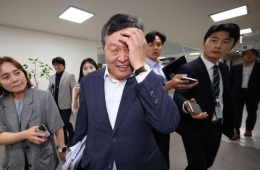
Kim I-bae, CEO of Jeju Air, "Aiming for Profit Turnaround Next Year... Focusing on Medium and Short Haul"

[Asia Economy Reporter Choi Dae-yeol] Kim I-bae, CEO of Jeju Air, said on the 7th, "It is difficult to say for sure that we will be profitable this year, but we will turn around to profitability next year."
At a meeting marking his 2nd anniversary in office, Kim responded to a question about future prospects by saying this. He said, "Although it won't be at the 2019 level, I think normalization will occur in the second half of next year," and added, "Korea's outbound proportion is 60%, which is more resilient compared to Japan, so recovery will be faster."
He also presented a plan to focus on short-haul flights, which are the core of the low-cost carrier (LCC) business model. Kim said, "There has been no case where an LCC has succeeded in long-haul flights," and stated, "From a strategic perspective, I believe solidifying the No.1 LCC position is a way to give back to the public."
He also expressed the view that it is better to switch to new aircraft models and build an efficient fleet rather than operate long-haul flights. He said, "The long-term goal is to become the second-largest operator in Korea (including FSCs) and to be reborn as the leader of LCCs." Recently, some LCCs have been trying to improve their structure by increasing medium- and long-haul routes, but Jeju Air intends to maintain a clear comparative advantage in short-haul routes where it already has strengths.
Regarding the launch of the integrated LCC (Jin Air, Air Busan, Air Seoul) following the merger of Korean Air and Asiana Airlines, he said, "Since the three companies have different aircraft types, I doubt they will quickly generate synergy," and predicted, "(The government) will not be able to grant all traffic rights to the integrated LCC." He also said, "If long-haul route traffic rights are given to LCCs operating long-haul flights, Jeju Air should receive short-haul rights," and added, "Japanese or Chinese competition authorities are likely to view competition restrictions more strictly than our Fair Trade Commission."
Hot Picks Today
!["Rather Than Endure a 1.5 Million KRW Stipend, I'd Rather Earn 500 Million in the U.S." Top Talent from SNU and KAIST Are Leaving [Scientists Are Disappearing] ①](https://cwcontent.asiae.co.kr/asiaresize/93/2026051914165468840_1779167814.png) "Rather Than Endure a 1.5 Million KRW Stipend, I'd Rather Earn 500 Million in the U.S." Top Talent from SNU and KAIST Are Leaving [Scientists Are Disappearing] ①
"Rather Than Endure a 1.5 Million KRW Stipend, I'd Rather Earn 500 Million in the U.S." Top Talent from SNU and KAIST Are Leaving [Scientists Are Disappearing] ①
- Given Grants, Then Says "No Launch" ... Innovative Korean Technology Ultimately Forced Overseas
- [Breaking] Chairman Park Sookeun: "Possibility of Agreement Instead of Samsung Electronics Labor-Management Mediation Proposal"
- "If That's the Case, Why Not Just Buy Stocks?" ETFs in Name Only, Now 'Semiconductor-Heavy' and a Playground for Short-Term Traders
- "No Cure Available, Spread Accelerates... Already 105 Dead, American Infected"
He also said that new businesses such as cargo operations and urban air mobility (UAM) will be accelerated. He explained, "Demand for e-commerce cargo continues to grow," and "UAM shares many similarities with the aviation industry in terms of requirements and know-how needed during the operational phase."
© The Asia Business Daily(www.asiae.co.kr). All rights reserved.
![Cheaper Than Candy, Yet Impossible to Find... Fears of a 'Pediatric Medical Crisis' as Pharmaceutical Companies Halt Production [Why&Next]](https://cwcontent.asiae.co.kr/asiaresize/307/2026051910065268365_1779152813.jpg)