President's Office Exits Korea-US Strategic Forum... Yoon's Economic Security Advisor Wang Yoon-jong "Supply Chain Cooperation Needed" (Comprehensive)
From 'Military' to 'Economic Security' as the Main Agenda... "Supply Chain Management Difficult Due to Export Controls... Time for Cooperation with the US and Others"

Wang Yunjong, Secretary for Economic Security, National Security Office / Presidential Office
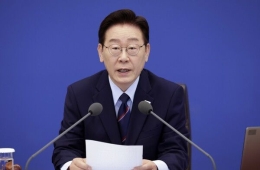
View original image[Asia Economy Reporter Baek Kyunghwan] Wang Yoonjong, the economic security secretary of the National Security Office and a key advisor on economic security to President Yoon Seok-yeol, will participate in the Korea-US Strategic Forum. This is the first occasion to explore concrete cooperation measures following the emphasis on supply chain cooperation by the two heads of state at last month's Korea-US summit. Considering that in Korea, the Deputy Foreign Minister usually attended such events, the participation of the Presidential Office this time is interpreted as reflecting the increased importance of economic security. Secretary Wang plans to emphasize Korea-US cooperation on the supply chain, the top priority policy of the Yoon administration’s economic security agenda.
According to a compilation of Asia Economy’s coverage on the 3rd, Secretary Wang will attend the '2022 Korea-US Strategic Forum' held on the morning of the 6th (local time) in Washington DC and via online video conference, delivering a keynote speech on the significance of the Korea-US summit and economic security. In a phone interview with this outlet, Wang said, "I will propose topics for discussion including the necessity of supply chain management discussed at the Korea-US summit, as well as the difficulties in managing supply chains in the global market due to export controls," adding, "Ultimately, I will emphasize the need for cooperation among key countries including Korea and the US."
The Korea-US Strategic Forum is a high-level annual dialogue channel involving policymakers and government and academic officials from both countries in major fields such as politics, diplomacy, security, defense, and economic trade. It is a venue where experts from both countries discuss government policy directions and mutual cooperation measures. Until now, the main agenda has focused on Korea-US cooperation on North Korean issues, including denuclearization of the Korean Peninsula and peace settlement measures.
However, this year, the core agenda has shifted from military to economic security. This indicates that the scope of Korea-US agenda has broadened, with economic security being the most critical domestic and international economic management issue that President Yoon has consistently emphasized since taking office, and a key topic at the recent Korea-US summit.
Secretary Wang views the current global supply chain as being in crisis. He stated, "The collapse of logistics systems has caused production disruptions, and the geopolitical crisis caused by the Russia-Ukraine conflict has led to a complex shock in the supply chain market," adding, "It is an important era where the state must manage supply chains and build capabilities to prevent disruptions to citizens’ daily lives, such as food supply."
However, Wang explained that supply chains can be managed. Rather than leaving the current supply chain crisis solely to companies, he intends to find solutions at the national level. Through his keynote speech, he plans to emphasize the need for alliances to establish a stable procurement system within the tightly intertwined supply chain network. Wang said, "A kind of alliance system for supply chains is necessary," adding, "This is precisely the emerging discussion and the core of economic security."
Following this forum, Secretary Wang’s role in the Yoon administration’s economic security policy is expected to grow further. Last month, he directly took part in establishing the 'Economic Security Dialogue,' a communication channel between the White House and the Korean Presidential Office overseeing economic security. The creation of this dialogue is significant for cooperation in advanced technologies such as semiconductors, secondary batteries, and artificial intelligence (AI). In particular, he will play a role in closely coordinating policies between the two countries on key agenda items related to technology alliances, including supply chain construction. Moreover, the US side has invited Secretary Wang to visit Washington DC in June and requested the first face-to-face meeting.
Hot Picks Today
 "Stocks Are Not Taxed, but Annual Crypto Gains Over 2.5 Million Won to Be Taxed Next Year... Investors Push Back"
- "Don't Throw Away Coffee Grounds" Transformed into 'High-Grade Fuel' in Just 90 Seconds [Reading Science]
- Signed Without Viewing for 1.6 Billion Won... Jamsil and Seongbuk Jeonse Prices Jump 200 Million Won in a Month [Real Estate AtoZ]
- [Breaking] Lee Targets Samsung Electronics Union: "Collective Bargaining Should Not Be Abused... There Is an Appropriate Limit"
- "Even With a 90 Million Won Salary and Bonuses, It Doesn’t Feel Like Much"... A Latecomer Rookie Who Beat 70 to 1 Odds [Scientists Are Disappearing] ③
Meanwhile, the forum will also include a session to reassess the significance of the Korea-US summit. Participants include former US Ambassador to Korea Mark Lippert, Robert Lapson, former Deputy Chief of Mission at the US Embassy and known as a Korea expert in the US, and former Foreign Minister Yoon Young-kwan. Attention will also be focused on a session where Korean and US officials discuss Korea-Japan relations. The agenda will cover the direction of Korea-Japan relations newly established under the Yoon administration and possible cooperation measures with the US. Sheila Smith, a researcher responsible for Japan at the Council on Foreign Relations (CFR), plans to evaluate the US government’s efforts and policies to resolve Korea-Japan conflicts.
© The Asia Business Daily(www.asiae.co.kr). All rights reserved.