Accelerated Foreign Capital Outflow Amid Dollar Strengthening
After March US Rate Hike, Selling Expands
Won-Dollar Exchange Rate Forced Up...Also Affected by Weak Yuan
Semiconductors and Batteries 'Sell'...Kia and Samsung Biologics 'Buy'

[Asia Economy Reporter Hwang Yoon-joo] Amid a sharp rise in the exchange rate, foreign investors are increasingly selling off stocks in the domestic market. As the U.S. begins to raise its benchmark interest rate in earnest, risk-averse sentiment is strengthening, and the strong dollar is accelerating capital outflows.
According to the KOSPI investor trading trends on the 13th, foreign investors have net sold 1.4963 trillion won so far this month until the previous day. Excluding the Children's Day holiday, they have sold about 187 billion won worth of stocks every trading day over eight trading days. Monthly trends show a clear outflow of foreign funds since March. This year, foreign investors recorded △January net selling of 1.4617 trillion won △February net buying of 798.3 billion won △March net selling of 5.1174 trillion won △April net selling of 4.9427 trillion won.
◆Negative Outlook... Increase in Futures Selling= Futures trading trends are similar. During the same period, △January net selling of 4.5621 trillion won △February net buying of 1.3593 trillion won △March net selling of 219.5 billion won △April net selling of 2.2082 trillion won △May (as of the 12th) net selling of 2.3658 trillion won were recorded. The largest net selling in the KOSPI futures market occurred at the beginning of the year. Although it turned to net buying in February, selling resumed from March onward. Taking a short position in the futures market indicates an expectation that stock prices will fall.
The interest rate hikes have increased risk-averse sentiment, and the strong dollar is stimulating foreign selling pressure. Especially in March, when the Fed raised the benchmark interest rate, the exchange rate fluctuated severely between 1,200 and 1,250 won, with net selling in spot and futures exceeding 7 trillion won. As of May, net selling in spot and futures amounts to 4 trillion won.
As a result, the foreign ownership ratio in the KOSPI market stood at 31.3% as of the previous day. It slightly increased from 30.0% on April 29, but the foreign KOSPI balance fell from 648.2204 trillion won (April 29) to 637.7614 trillion won as of the previous day.
◆Selling Semiconductors and Batteries, but Automobiles...= Since the Fed began tightening in earnest in March, among the top 10 market capitalization stocks, selling pressure was prominent in the semiconductor sector. Battery, big tech, and chemical sectors also ranked high in selling. The top net selling by foreigners was Samsung Electronics (-5.7171 trillion won), followed by SK Hynix (-977.8 billion won). Next were LG Energy Solution (-732.9 billion won), Naver (-656.1 billion won), and LG Chem (-307.7 billion won).
Looking at the monthly foreign trading trends of Samsung Electronics, which has the largest weight in the KOSPI, the net selling scale has been expanding: △January +621.2 billion won △February -2.4 billion won △March -1.6355 trillion won △April -3.4242 trillion won △May (as of the 12th) -657.7 billion won.
On the other hand, selective buying in automobiles stands out. Kia (+250.5 billion won) was net bought, but Hyundai Motor was net sold by 151.2 billion won. Samsung Biologics (+47.8 billion won) was also net bought, though in a small amount.
Reflecting this, foreign trading trends show that since March, the top net selling sectors alternated between manufacturing and electrical/electronics. The top net selling sector in March, when the Fed raised the benchmark rate, was manufacturing (-5.2151 trillion won). April was electrical/electronics (-5.148 trillion won), and May was manufacturing (-1.3576 trillion won). The chemical sector ranked third in foreign net selling in March (-837.7 billion won) and May (-404.8 billion won).
Hot Picks Today
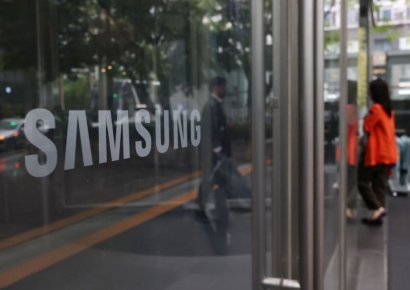 Samsung Electronics Union Reaches Tentative Agreement on Bonus Negotiations... "General Strike Postponed"
- "It Has Now Crossed Borders": No Vaccine or Treatment as Bundibugyo Ebola Variant Spreads [Reading Science]
- "Was It You Again?" Elementary Student Involved in Last Week's Vehicle Theft Drives Off Himself This Time
- "Stocks Are Not Taxed, but Annual Crypto Gains Over 2.5 Million Won to Be Taxed Next Year... Investors Push Back"
- "Who Is Visiting Japan These Days?" The Once-Crowded Tourist Spots Empty Out... What's Happening?
Lee Da-eun, a researcher at Daishin Securities, said, "Recently, the won has weakened more than other currencies due to the depreciation of the yuan, contributing to foreign selling pressure," adding, "The won-dollar exchange rate's critical threshold is 1,300 won; if this is breached, the exchange rate could surge further, expanding foreign capital outflows."
© The Asia Business Daily(www.asiae.co.kr). All rights reserved.




![[Breaking] Samsung Electronics Labor and Management Officially Sign Tentative Agreement](https://cwcontent.asiae.co.kr/asiaresize/307/2026052022492353201A.jpg)


