Minister Lee Jong-ho Takes Office at Ministry of Science and ICT... Faces Mounting Challenges Including Controversy Over 'Neglect of Science and ICT'
Inaugurated on the morning of the 11th, Sets Goal to Build a Top 5 Science and Technology Powerhouse and Digital Economy Hegemony
Faces Numerous Challenges Including Overcoming Neglect of Science, Technology, and ICT

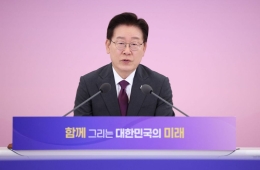
Minister of Science and ICT nominee Lee Jong-ho is delivering an opening statement at the confirmation hearing held at the National Assembly on the 3rd. Photo by Yoon Dong-joo doso7@
View original image[Asia Economy Reporters: Kim Bong-su, Lim Hye-seon, Kang Na-hum] Lee Jong-ho, the new Minister of Science and Technology and ICT, the first head of the Ministry of Science and ICT under the Yoon Seok-yeol administration, has set the goal of building a top five science and technology power and a digital economy hegemony nation. At the inauguration ceremony held on the morning of the 11th at the Ministry of Science and ICT building in Sejong City, Minister Lee stated, "At the crossroads of a technological revolution that will determine the nation's fate, we must become leaders rather than followers to leap forward as a global leading country." In the era of the Fourth Industrial Revolution, where science and technology are rapidly advancing and changing, coupled with drastic international environmental changes, global warming, and infectious disease crises, Minister Lee faces numerous challenges ahead. While there has been little distinction from the previous administration so far, attention is focused on what principles, directions, and driving forces Minister Lee will use to resolve various pending issues.
According to the science and ICT sectors, Minister Lee first needs to address the controversy over the neglect of science and ICT that arose before and after the administration's launch. The Yoon government pledged to prioritize science and technology in national governance by promoting the appointment of science and technology talents and expanding private sector participation, raising expectations both inside and outside with the appointment of Ahn Cheol-soo as the transition committee chairman. However, early in the transition committee, there were controversies such as not dispatching personnel for the ICT sector and some officials' inappropriate remarks. Additionally, the administration ignored demands to establish a Presidential Office Secretary for Science Education and pushed forward with the pledge to establish the Aerospace Agency in Gyeongnam, drawing criticism for prioritizing 'politics' over 'science.' Despite President Yoon meeting with KAIST students and Nobel laureates before and after his inauguration, his failure to visit government-funded research institutes and other science and technology sites has also sparked controversy over neglect.
As the Yoon administration emphasizes 'scientific quarantine,' the role of the Ministry of Science and ICT is also drawing attention. It is expected to support 'scientific quarantine' through research and development in basic medicine and bio fields at government-funded research institutes, developing vaccines, treatments, or innovative quarantine technologies. For Minister Lee, a world-renowned semiconductor scholar, the future of Korea's semiconductor industry is also a key task. Currently, Korea's semiconductor industry, centered on Samsung Electronics, faces an existential moment amid the US-China technological hegemony, the Russia-Ukraine war, the global supply chain restructuring caused by Korea-Japan conflicts, and technological innovation.
There are also numerous challenges in the space sector, such as the planned successful second launch of the Nuri rocket scheduled for mid-next month. Experts believe it is time to decide whether Korea's space development will catch up with major powers like the US or settle for an 'outsourcing' level. If Korea decides to add a 'booster,' it could strengthen efforts in developing next-generation launch vehicles and promoting asteroid and lunar exploration, which are currently under review. Other representative tasks for Minister Lee include addressing the rapid digitalization such as the metaverse, resolving the shortage of science and engineering talents amid a declining school-age population, developing technologies for securing eco-friendly energy and resources to cope with global warming and trade barriers, securing stable nuclear power technologies such as small reactors and nuclear fuel recycling technologies, overcoming difficulties in the 1.5 trillion won heavy ion accelerator project, and improving research and development systems (such as abolishing PBS and preliminary feasibility studies).
In the ICT field, a primary task is to reasonably coordinate the level of regulation on domestic portals. Earlier, the transition committee raised concerns about bias in portal news and hinted at abolishing news editing rights. The plan includes establishing an algorithm transparency committee as a legal entity within portals and gradually converting the portal news partnership system to outlink.
The key issue is how to resolve concerns raised by the industry. Currently, the industry points out the possibility of discrimination between domestic and foreign operators. The industry's argument is that foreign operators like Google provide news services in Korea, but if domestic operators are blocked by regulations from offering such services, discrimination will occur, and service competitiveness will be lost.
In fact, Google actively arranges and provides news on its mobile version and displays ads on the top of the Google News app. However, since it is not registered as an internet news service provider under the Newspaper Act, it is exempt from regulation.
Minister Lee stated in an additional written response submitted to the National Assembly's Science, ICT, Broadcasting and Communications Committee, "Considering the current status of domestic and international news services, characteristics of portal news provision methods, user convenience, and other relevant factors, it is necessary to ensure that the competitiveness of domestic companies is not undermined."
There is also a demand for the government to take active measures against the forced in-app payment policies of global app market operators such as Google and Apple. Although the National Assembly passed the 'Google Gapjil Prevention Act' prohibiting forced in-app payments by app market operators, these operators have set high commission rates for third-party payment methods, effectively nullifying the law. Consequently, prices for in-app payments for various content, including online video services (OTT), are rising one after another. The industry is placing its hopes on Minister Lee, who has announced plans to investigate violations of related laws by Google and Apple. Minister Lee said, "Users should have choices when making app payments, and there are issues in this regard," adding, "We will review and correct these issues to prevent future problems."
The '5G mid-tier plan' is also expected to be a major issue. Minister Lee mentioned the need to introduce a 5G mid-tier plan, and the three mobile carriers are positive about expanding user choice. However, the carriers emphasize the need for close consultation with operators, as the introduction of a mid-tier plan is expected to cause subscriber migration to lower-priced plans, leading to a decrease in average revenue per user (ARPU). Other challenges include the concentration of the MVNO market among large corporations, 5G network investment, additional frequency allocation, and the world's first 6G technology demonstration.
Hot Picks Today
 At President Lee's Call to "Give Enough to Shock," Whistleblower Rewards Become a Real Lottery
- "If Both Spouses Work There, How Much Would They Make?" "They Earn More Than Me, and I'm a Doctor"... Envy Erupts Over Samsung Electronics' Bonus
- Lived as Family for Over 30 Years... Daughter-in-Law Cast Aside After Husband's Death
- "Who Is Visiting Japan These Days?" The Once-Crowded Tourist Spots Empty Out... What's Happening?
- Park Minshik Shaves Head: "I Will End Han Donghoon's Predatory and Parasitic Politics"... Ongoing Calls for Conservative Consolidation in Busan Buk-gu Gap within PPP
Meanwhile, at the inauguration ceremony, Minister Lee presented key policy priorities, including expanding private sector participation and redesigning a mission-oriented, problem-solving national innovation system, which were campaign pledges of President Yoon. Minister Lee also pledged to focus on early securing of core technologies with super gaps such as semiconductors, artificial intelligence (AI), space, and bio; strengthening basic research; fostering new digital industries and supporting the digital platform government; enhancing cybersecurity and realizing a digitally inclusive society; nurturing talent; maximizing budget investment efficiency; improving technological competitiveness; and creating new industries.
© The Asia Business Daily(www.asiae.co.kr). All rights reserved.