[25 Years of Turmoil in the Business World] Increasing Dynamism and Risk Diversification in the Korean Economy
High Concentration in Samsung, SK, Hyundai Motors
Significant Advances by IT-Based Naver and Kakao
"Effect of Diversifying Economic Domestic and External Risks"
Domestic Wealth Rankings Also Shifting Away from Large Corporations
![[Image source=Yonhap News]](http://www.asiae.co.kr/news/img_view.htm?img=2022042805503847062_1651092638.jpg)
[Asia Economy Reporters Oh Hyung-gil and Jung Dong-hoon] It has been revealed that the asset concentration of the top 10 groups in South Korea's economy is decreasing.
Although the influence of the four major groups?Samsung, SK, Hyundai Motor, and LG?remains significant, accounting for half of the total assets of large corporations, changes are being detected as IT companies make significant advances.
This is interpreted as a positive sign of increasing economic dynamism, with the economy strengthening its structure by diversifying various internal and external risks.
According to the Fair Trade Commission's Corporate Group Portal on the 9th, the total assets of large corporate groups this year amounted to 2,617.7 trillion won, a 12.0% increase from 2,336.4 trillion won last year. Compared to 327.4 trillion won in 1997, when statistics were first recorded, the growth rate is an astonishing eightfold.
The total assets of the top 10 groups also surged from 265.8 trillion won in 1997 to 1,718.6 trillion won.
However, the asset share held by the top 10 groups dropped by 15.5 percentage points over 25 years, from 81.2% to 65.7%. This is attributed to the noticeable growth of companies centered around IT in recent years, compared to the past when asset concentration in the top 10 groups was more pronounced.

President-elect Yoon Suk-yeol is attending a luncheon meeting with the heads of six economic organizations at the Presidential Transition Committee in Tongui-dong, Jongno-gu, Seoul on the 21st, delivering a greeting./Photo by Yoon Dong-ju doso7@
View original imageThe asset share of the top 10 groups (excluding 2016 when public enterprises were included in large corporate groups, from 2002) recorded 77.4% in 2017 but sharply declined to 68.6% in 2018. It slightly increased to 69.7% in 2019 but has been decreasing for three consecutive years since. During the same period, IT groups such as Naver and Kakao made significant strides.
The term ‘Chaebol,’ listed in the Oxford English Dictionary, once symbolized South Korea's economic growth. It refers to a unique form of large family-owned conglomerates.
Although chaebol groups still exist, the decreasing asset concentration is interpreted as evidence of improvement in the Korean economy.
Professor Lee Jung-hee of the Department of Economics at Chung-Ang University stated, "It is not desirable for the top 10 groups to have an increasing share in our economy," adding, "This change in share reflects the emergence of diverse companies and helps disperse many internal and external risks our economy faces." He further explained, "The increase in companies following behind is a positive sign."
![[25 Years of Turmoil in the Business World] Increasing Dynamism and Risk Diversification in the Korean Economy](http://www.asiae.co.kr/news/img_view.htm?img=2022050910225259443_1652059372.jpg)
Last month, in the ranking of South Korea's wealthiest individuals released by the American business magazine Forbes, Kim Beom-su, Chairman of Kakao, overtook Lee Jae-yong, Vice Chairman of Samsung Electronics, for the first time, serving as a representative example.
Additionally, within the top five, Kim Byung-joo, Chairman of MBK Partners; Seo Jung-jin, Honorary Chairman of Celltrion; and Kwon Hyuk-bin, CVO (Chief Vision Officer) of Smilegate Holdings were included, indicating a trend of ‘deconglomeration’.
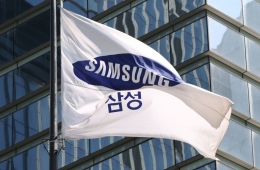
However, when looking at each group, the share of the top-tier groups in the economy remains high. Samsung Group's assets skyrocketed by 949%, from 51.6 trillion won in 1997 to 483.9 trillion won this year. Its asset share also increased by 2.7 percentage points, from 15.7% to 18.4%.
SK Group, ranked second in the business rankings for the first time this year, also saw its assets surge from 22.9 trillion won to 291.9 trillion won during the same period. Its asset share rose by 4.2 percentage points to 11.1%.
Hot Picks Today
![Airlines Set to Benefit in the Long Term Despite Fuel Cost Surge: "It's Actually Good" [Weekend Money]](https://cwcontent.asiae.co.kr/asiaresize/93/2025062508161320621_1750806973.jpg) Airlines Set to Benefit in the Long Term Despite Fuel Cost Surge: "It's Actually Good" [Weekend Money]
Airlines Set to Benefit in the Long Term Despite Fuel Cost Surge: "It's Actually Good" [Weekend Money]
- "Suspicious Timing?"...Trump Traded Stocks After Praising Wartime Capabilities
- "I Went to 10 Convenience Stores and Still Couldn't Buy It": The Bread Sensation That Sold 100 Million Units Already [The Way We Shop Now]
- There Is a Distinct Age When Physical Abilities Decline Rapidly... From What Age Do Strength and Endurance Drop?
- "Contact Me First If Houses Are Built": Wealthy Clients Eyeing... Will Ultra-High-End Residences Worth 20 Billion Won Be Developed? [Real Estate AtoZ]
Professor Sung Tae-yoon of Yonsei University's Department of Economics pointed out, "The concentration at the top of large corporate groups is still maintained, which is inevitable," adding, "Since the top tier competes internationally, such concentration is necessary from the perspective of international competition, and it is important to enhance global competitiveness."
© The Asia Business Daily(www.asiae.co.kr). All rights reserved.